
Gear · Protect
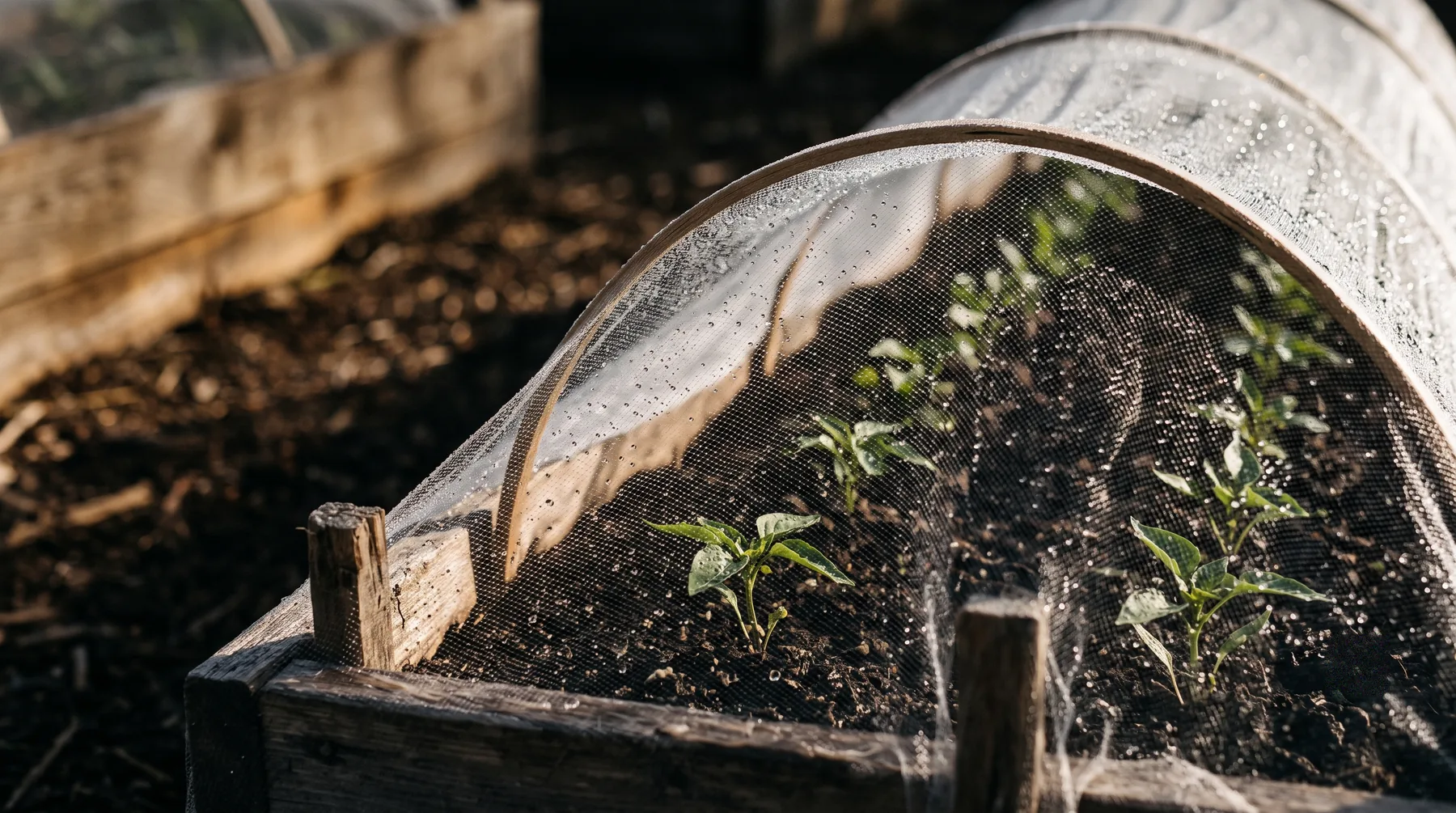
Protecting the crop — netting first, spray second
The four problems that actually take a sauce garden, in order of likelihood, and the cheapest intervention that works for each. Exclusion beats chemistry every time.
Protect Frost, hornworms, aphids, and the fungal pressure that follows a wet July.
The order here matters. Exclusion is cheaper, more effective and has no resistance problem. Reach for a spray when exclusion has failed, not first.
1. Tomato hornworm
A single caterpillar strips a branch overnight, and it is genuinely invisible against a green stem in daylight.
- Prevention: fine insect netting from transplant. The moth never lands, so there is nothing to kill. Peppers and tomatoes are self-pollinating, so netting costs you nothing in fruit set.
- Detection: a UV torch at dusk. Hornworms fluoresce bright green and become obvious.
- Treatment: hand-pick, or Bt (Bacillus thuringiensis) if there are many. Bt kills caterpillars and nothing else — harmless to bees, ladybirds and you.
- Leave the parasitised ones. A hornworm covered in white rice-like cocoons is being consumed by braconid wasps. Leave it; those wasps are your next generation of control.
2. Aphids
Colonies on soft new growth, worse under heavy nitrogen feeding.
- First response: a hard jet of water. This genuinely works and costs nothing.
- Second: neem oil, at dusk only — it burns foliage in sun or above 90 °F.
- Do not blanket-spray. Ladybirds and lacewings usually settle an aphid problem within two weeks if you have not killed them along with the aphids.
3. Early blight and septoria
Yellow leaves with dark ringed spots, working up from the bottom of a tomato in a wet July.
- Mulch. The infection route is soil splashing onto low leaves. Mulch breaks it.
- Remove the lowest 12 inches of foliage at transplant and keep it clear.
- Water at the root, never overhead.
- Copper fungicide is preventative. Applied after you see lesions, you are already losing. Start at the onset of humid weather.
4. Thrips and everything else
When neem has not held and something is actively taking the crop, spinosad is the escalation. Soil-bacterium derived, OMRI-listed, and genuinely effective on thrips, caterpillars and leaf miners.
It is toxic to bees while wet. Apply at dusk, never onto open flowers. Short residual, so expect to repeat in 7–10 days.
Frost, at both ends
Row cover at AG-30 weight buys roughly 6 °F while passing about 70% of light — often two weeks of season at each end. That can be the difference between a 95-day habanero finishing and not.
Six degrees, not twenty. A hard freeze goes straight through it.
The one tool
A clean cut heals; a crushed or torn one invites disease. Bypass pruners for anything woody, fine snips for everything else. Wipe the blades between plants when you are removing diseased material — otherwise you are the vector.
What we are not going to tell you
There is no product on this page that makes a garden “chemical-free,” and that framing is meaningless — water is a chemical, and so is capsaicin. What these products are is targeted: Bt kills only caterpillars, spinosad has a short residual, copper is a protectant. Targeted and correctly timed beats broad-spectrum and panicked, and that is an agronomic argument, not an ideological one.
The picks
RIFNY
Ultra-Fine Garden Netting, 10×33 ft, 2 pcs
Paid link · commission may be earned
A hornworm is a moth's decision made in June. Fine mesh over the bed at transplant means the moth never lands, and you never spray anything at all.
Why this one
- Mesh fine enough to exclude moths and flea beetles
- Physical exclusion — no residue, no resistance, nothing to time
- Passes nearly full light and rain
The tradeoff
- Must go on BEFORE the moths, not after you find the caterpillars
- Peppers and tomatoes are self-pollinating so netting is fine; do not net a squash
Agribon
AG-30 Frost Protection Row Cover
Paid link · commission may be earned
AG-30 buys roughly 6 °F of frost protection while passing about 70% of light — enough to carry a crop through an early-October cold snap that would otherwise end your season two weeks short.
Why this one
- The industry-standard weight for frost protection specifically
- Passes enough light to leave on for days at a time
- Also excludes flea beetles and moths on the way in
The tradeoff
- 6 °F, not 20 °F. A hard freeze goes through it.
- Very few reviews on this listing — Agribon is the reference brand, this SKU is thinly reviewed
Bonide
Thuricide BT Concentrate, 16 oz
Paid link · commission may be earned
Bacillus thuringiensis kills caterpillars and nothing else. For tomato hornworms — which can strip a plant in 48 hours — it is the most targeted tool that exists.
Why this one
- Caterpillar-specific: harmless to bees, ladybugs, and you
- Works within a day on hornworms
- Concentrate makes gallons; one bottle is several seasons
The tradeoff
- Only works on caterpillars. Useless against aphids, mites or beetles.
- Breaks down in UV — reapply after rain and every 5–7 days during pressure
Bonide
Captain Jack's Neem Max Concentrate, 16 oz
Paid link · commission may be earned
Cold-pressed neem is the broad first response to aphids, mites and early fungal pressure. It is not a nuke, and treating it like one is how people get leaf burn.
Why this one
- Cold-pressed — retains the azadirachtin that actually does the work
- One product covers insect, mite and mild fungal duty
- OMRI-listed for organic growing
The tradeoff
- Burns foliage if applied in direct sun or above 90 °F — evening only
- Kills beneficials on contact too. Spot-treat; do not blanket the bed.
Bonide
Captain Jack's Deadbug Brew, 32 oz RTU
Paid link · commission may be earned
Spinosad is what you reach for when neem has not held and thrips or caterpillars are actively taking the crop. It works fast and it is approved for organic production.
Why this one
- Genuinely effective on thrips, caterpillars and leaf miners where neem is marginal
- Soil-bacterium derived, OMRI-listed
- Ready to use — no mixing errors
The tradeoff
- Toxic to bees while the spray is wet. Apply at dusk, never on open flowers.
- Short residual — expect to repeat in 7–10 days
Bonide
Captain Jack Copper Fungicide, 16 oz
Paid link · commission may be earned
Early blight and septoria arrive with a wet July and work up the plant from the bottom. Copper is preventative — sprayed after you see it, you are already losing.
Why this one
- Broad protectant against the fungal complex that hits tomatoes
- OMRI-listed for organic production
- Concentrate; a bottle covers several seasons
The tradeoff
- Preventative, not curative. Start at first sign of humid weather, not first spot.
- Copper accumulates in soil over years — rotate and do not over-apply
FELCO
F5 Pruning Shears
Paid link · commission may be earned
Swiss-made, fully rebuildable, and sharpenable forever. The blade and the spring are both replaceable parts, which is why gardeners hand these down instead of replacing them.
Why this one
- Every wearing part is a replaceable spare — a lifetime tool in the literal sense
- Clean bypass cut that does not crush stems and invite disease
- Hardened steel blade that takes and holds an actual edge
The tradeoff
- This is the F5, not the smaller F2 — a larger hand size
- Real money for a pruner. The Fiskars snips below cover most sauce-garden work for a tenth of it.
As an Amazon Associate I earn from qualifying purchases. Amazon is the seller on every item above; check each listing for current seller, price, and availability. Full disclosure. Reviewed 2026-09-01.