
Sauce · Refrigerator only
Smoked Jalapeño Adobo (Chipotles en Adobo)
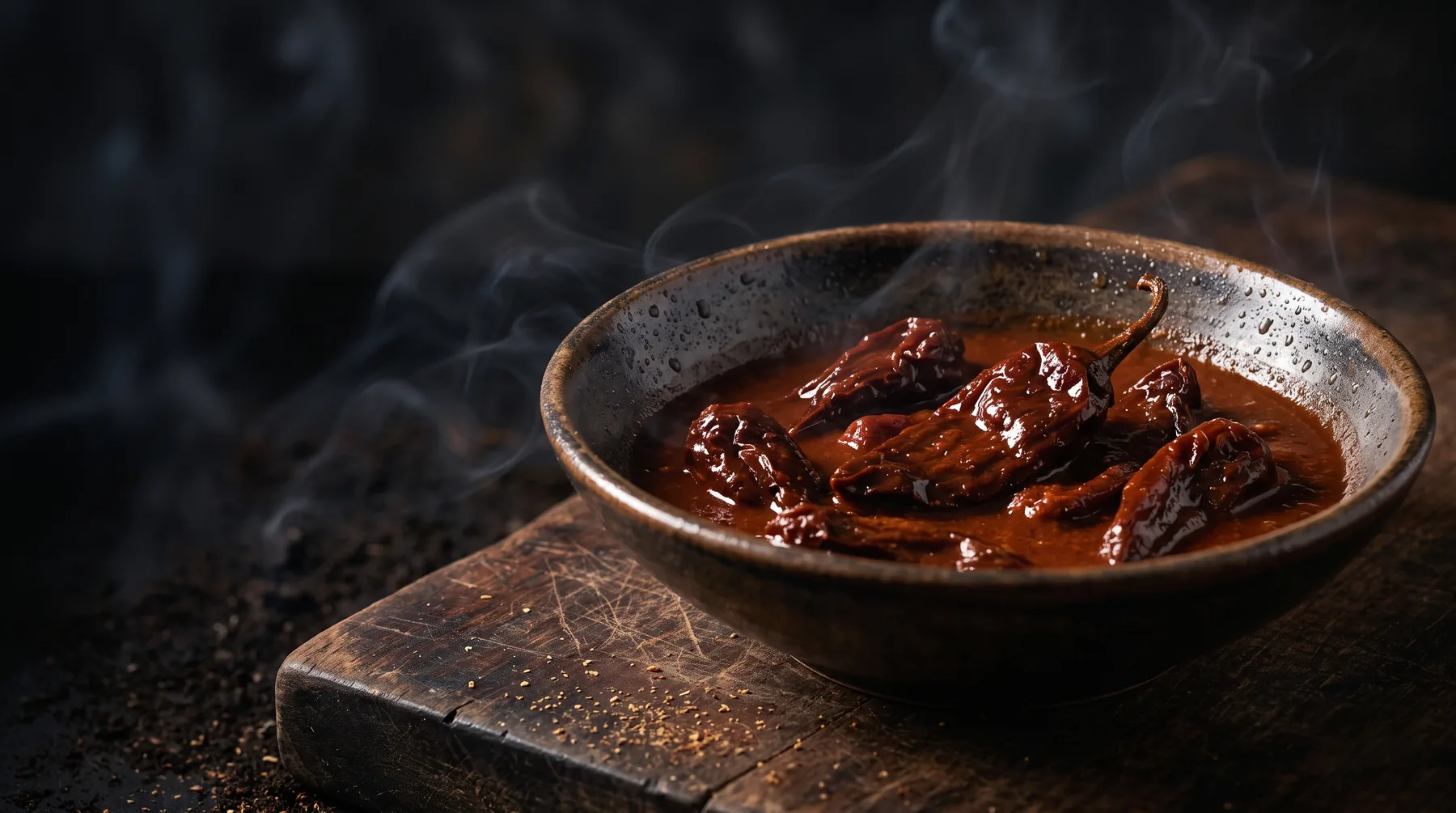
Red jalapeños, eight hours of cold smoke, then a braise in a dark ancho-and-vinegar sauce. The single most useful jar in a kitchen.
Not a tested canning process
There is no NCHFP tested process for chipotles en adobo. It is a dense, low-acid chile paste in a sauce — density and low acidity are exactly the two things that defeat water-bath processing. Refrigerate it (3–4 weeks) or freeze it in portions (a year). Do not water-bath or pressure-can this recipe. If you want a shelf-stable smoked chile product, dry the chipotles fully and store them dry — dried chiles are safe indefinitely because there is no water for anything to grow in.
If you started today, in Zone 6, in pots
3 plants. 4 jars. Sauce on Jul 26.
Worked from Zone 6's average last frost (Apr 21) and each cultivar's days to maturity. Your zone and your space change every date below — the builder does that for you.
- Jan 6Order seeds and starting supplies
- Jan 27Sow indoors under lights
- Apr 21Average last frost (Zone 6)
- Jun 12First Hardneck Garlic harvest
- Jul 12First Jalapeño harvest
- Jul 12First Spanish Onion harvest
- Jul 26Sauce day — Chipotles en Adobo
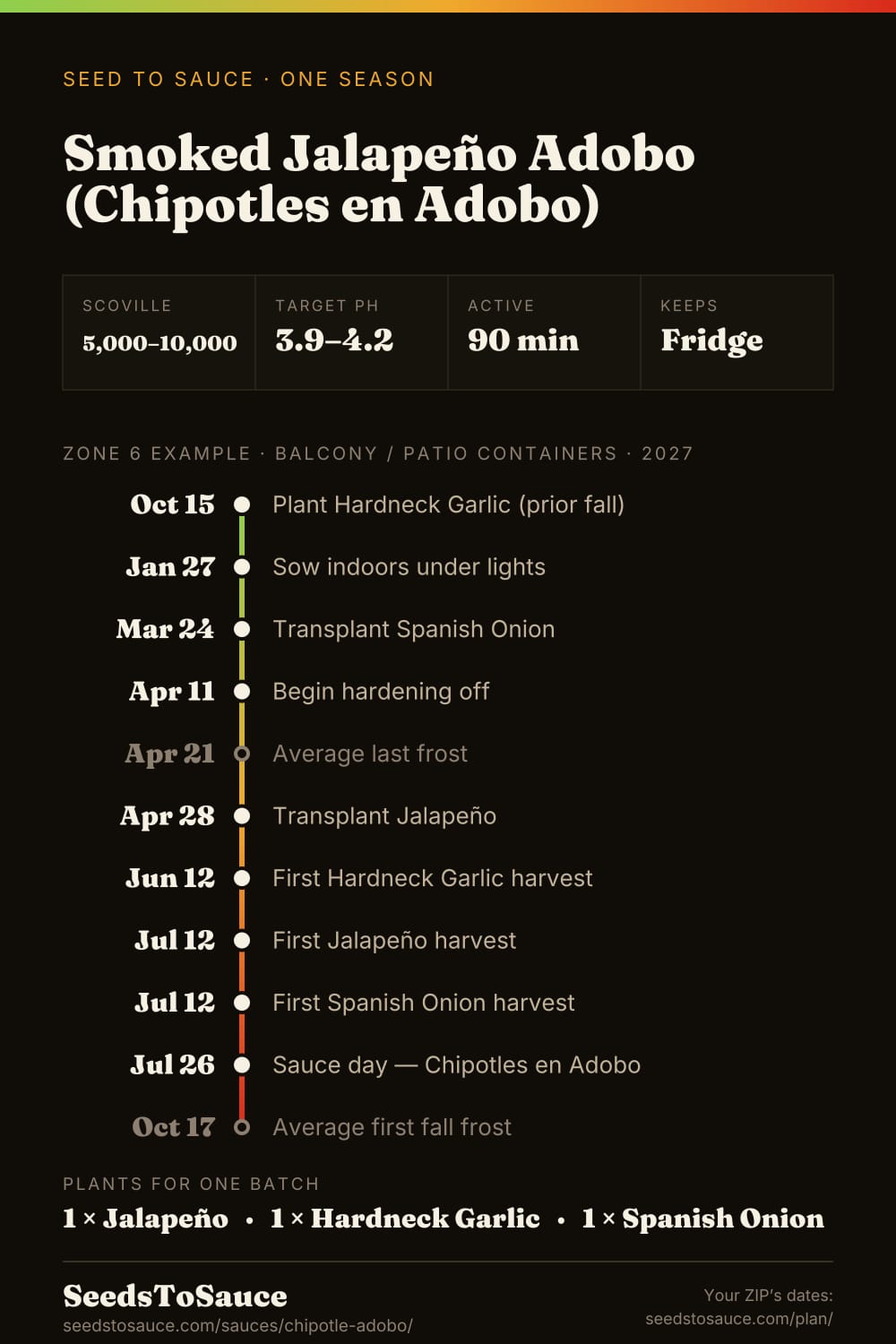
Save it
The whole season, one pin
| Yield | About 4 half-pints — 4 half-pint jars |
|---|---|
| Active time | 90 minutes |
| Total time | 8 hours smoking, 12 hours drying, 90 minutes cooking |
| Heat | 5,000–10,000 SHU |
| Target finished pH | 3.9–4.2 |
| Preservation | Refrigerator only |
| Fruit this batch eats | 3 lb Jalapeño0.1 lb Hardneck Garlic0.5 lb Spanish Onion |
What you have to grow
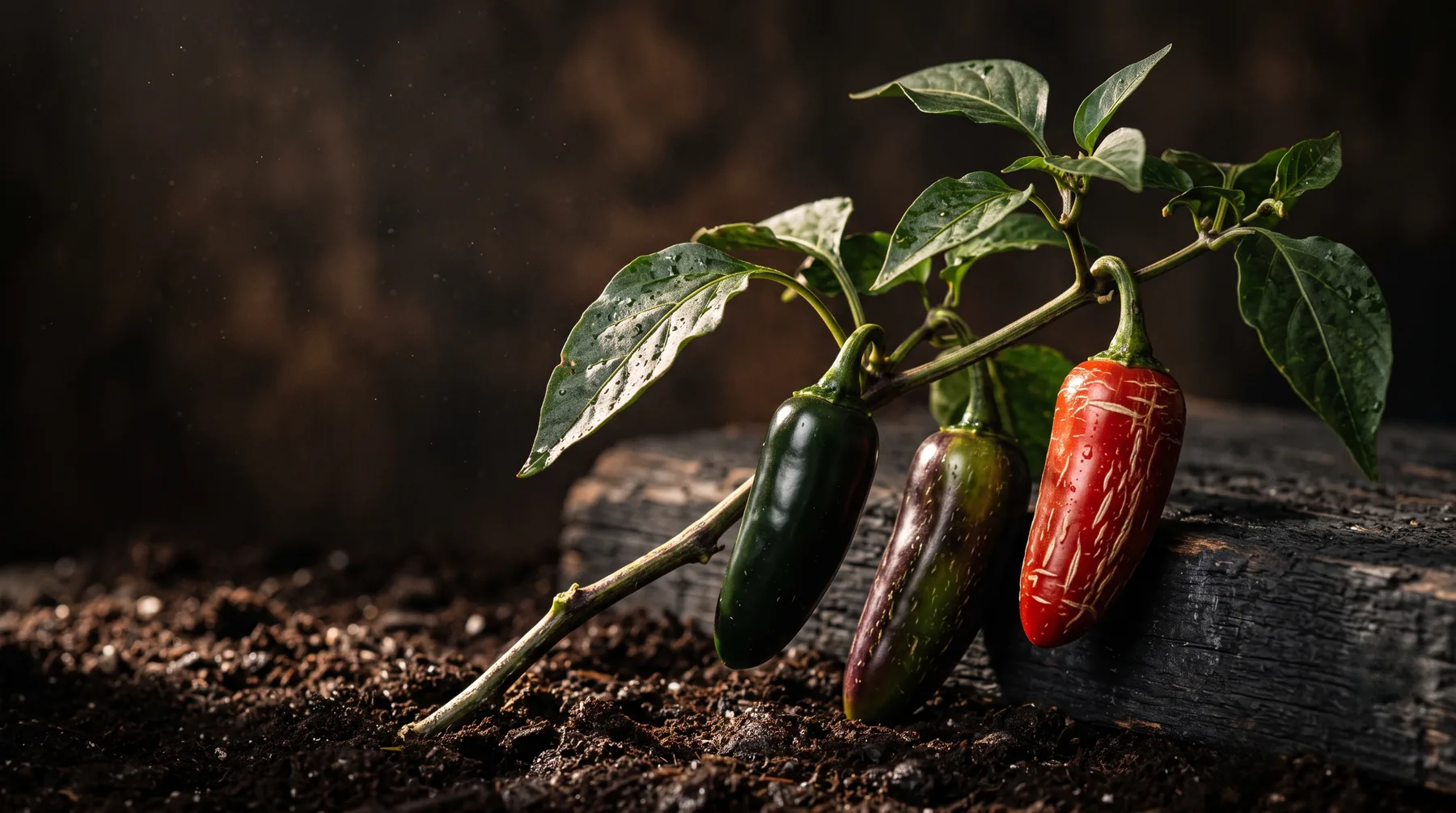
A chipotle is not a variety of chile. It is a jalapeño that stayed on the plant until it went red, and was then smoked and dried. That is the whole definition, and it is why it tastes like nothing else: you are eating a fully ripe pepper plus eight hours of hardwood smoke.
Then you braise them in adobo — ancho, vinegar, garlic, onion, a little sweetness — and you have a jar that makes almost anything better.
What you need
| Red jalapeños | 3 lb |
| Dried ancho chiles | 4, stemmed and seeded |
| Yellow onion, sliced | 8 oz |
| Garlic | half a bulb |
| Apple cider vinegar | 8 oz |
| Water | 16 oz |
| Tomato paste | 3 tbsp |
| Brown sugar or piloncillo | 2 tbsp |
| Mexican oregano | 1 tsp |
| Cumin, ground | 1 tsp |
| Salt | 1 tbsp |
Method
1. Smoke (6–8 hours)
Halve the jalapeños lengthwise or slit them. Load a pellet tube with hardwood — oak, pecan or mesquite — light it, and put it in a covered grill with the burners off. Lay the chiles on the grate. Vent for real airflow: stagnant smoke turns acrid fast.
Six to eight hours. They should be shrunken, leathery and deeply smoky, not cooked.
2. Dry (10–14 hours)
Into the dehydrator at 125 °F until they are leathery but still slightly pliable — morita style. Higher temperatures cook off the aromatics you just spent eight hours creating.
If shelf-stable is what you want, dry them all the way to brittle and stop here. Fully dried chiles store indefinitely at room temperature.
3. Adobo (90 minutes)
- Toast the anchos in a dry pan 30 seconds a side, until they smell of raisins. Cover with hot water, soak 20 minutes.
- Sweat onion in oil until soft; add garlic for the last minute.
- Blend soaked anchos, onion, garlic, vinegar, water, tomato paste, sugar, oregano, cumin and salt until smooth.
- Pour into a Dutch oven, add the chipotles, and simmer very gently for 45–60 minutes until the sauce is thick and the chipotles have rehydrated and softened.
- Cool, jar, refrigerate.
Storage
- Refrigerator: 3–4 weeks.
- Freezer: a year. Freeze in an ice-cube tray — one cube is one recipe’s worth, and that is how you will actually use it.
- Canning: no tested process exists. Don’t.
What it tastes like
Smoke first, then sweetness, then a slow moderate heat, with a sour vinegar edge holding it together. One chipotle plus a spoon of the adobo turns a pot of beans into something worth serving to people.
The kit for this sauce
Each item is selected for a job in this recipe. Amazon listings, sellers, and prices can change; check the current details before you buy.
Jalapeño Pepper Seed
The one you smoke into chipotle. Left on the plant to red and corked, then cold-smoked, a jalapeño stops being a taco garnish and becomes the backbone of an adobo.
Siberian Hardneck Seed Garlic, 1 lb
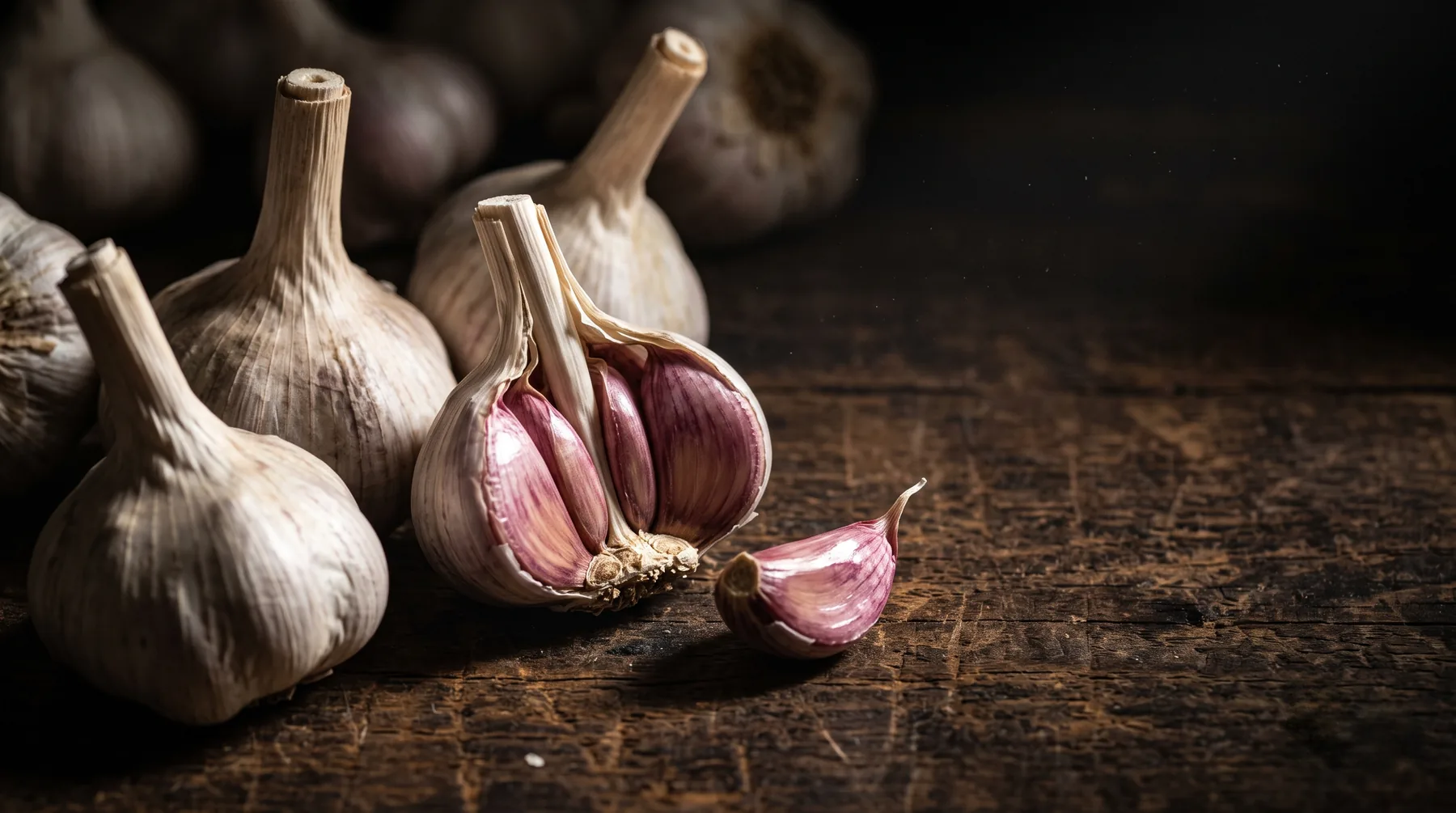
Planted in October, pulled in July. Hardneck garlic has bigger, easier-peeling cloves and gives you scapes in June — a free second crop that is itself excellent in green sauce.
Yellow Sweet Spanish Onion Seed
A long-day storage onion with enough sugar to sweat down without scorching. The aromatic base under every tomato sauce on this site.
6" Micro-Tip Pruning SnipsMust have
Ninety percent of sauce-garden cutting is snipping a pepper stem or a basil node, and a fine-tipped snip does it better than any pruner. Pulling peppers by hand tears the branch.
Digital Kitchen Scale, 11 lb, g/ozMust have
Fermentation brine is a percentage of weight, not a number of spoons. Without a gram scale you are not following a fermentation recipe — you are guessing at the one number that determines whether it is safe.
Hydrion Short-Range pH Strips, 0.0–6.0
The budget answer, and a genuinely usable one: a 0–6 range in 0.5 steps tells you whether a ferment has crossed 4.6. Universal 1–14 strips cannot — they are useless for this job.
Pellet Smoker Tube, 12", Set of 2
Chipotle is nothing but a red jalapeño that has been cold-smoked for hours. A pellet tube turns any covered grill into a cold smoker for eighteen dollars.
Food Dehydrator, 6 Stainless Trays
Sun-drying chiles works in Oaxaca and fails in Ohio — humidity lets mould win the race. Controlled 125 °F airflow dries a full cayenne harvest overnight, every time.
Variable Speed Hand Blender KHBV53
Blends the sauce in the pot it cooked in. No transferring boiling liquid to a jug, no splitting a batch, no second vessel to wash — and for a rustic marinara it is the *right* texture, not a compromise.
Essential Enameled Cast Iron Dutch Oven, 6 qtMust have
Tomato sauce is acidic enough to strip bare cast iron and pick up a metallic tang from aluminium. Enamel is non-reactive, and the thermal mass holds a low simmer for three hours without scorching the bottom.
Half Pint (8 oz) Regular Mouth Mason Jars, 12Must have
Eight ounces is the right jar for a sauce you use by the spoonful. Open a quart of hot sauce and you are racing the fridge; open a half-pint and you finish it while it is still good.
Canning Jar Labels, 360 pcs, removable
Date every jar. In March, three jars of red sauce are indistinguishable, and 'it's probably the one from August' is not a food-safety practice.
Paid links. We earn a commission from Amazon if you buy; you pay the same. Disclosure.
Questions people actually ask
Do I need an actual smoker?
No. A pellet smoker tube in any covered grill, with the burners off, produces five hours of cold smoke for under twenty dollars. You want smoke and airflow, not heat — the chiles should dry, not cook.
Why red jalapeños? I only ever see green.
Because supermarkets won't wait. A jalapeño takes about three extra weeks on the plant to go red, and in that time the sugars concentrate and the flavour rounds out. Chipotle is defined by that stage. This is one of the clearest cases on this site where growing your own gets you an ingredient you cannot simply buy.
Can I can this?
No. It is dense, low-acid and oil-adjacent — the combination that defeats a water bath. Refrigerate or freeze. If you want something shelf-stable, stop after the drying step: fully dried chipotles keep indefinitely at room temperature because there is no available water.
What's the difference between chipotle meco and morita?
Meco is smoked longer and dried harder — tan-grey, intensely smoky, and the traditional style. Morita is smoked less and retains moisture, staying dark purple-red and fruitier. Most tinned Mexican chipotle is morita. This recipe makes morita-style.
Last reviewed 2026-09-01 by the SeedsToSauce Test Kitchen. Spotted something wrong?Tell us — corrections get published.