
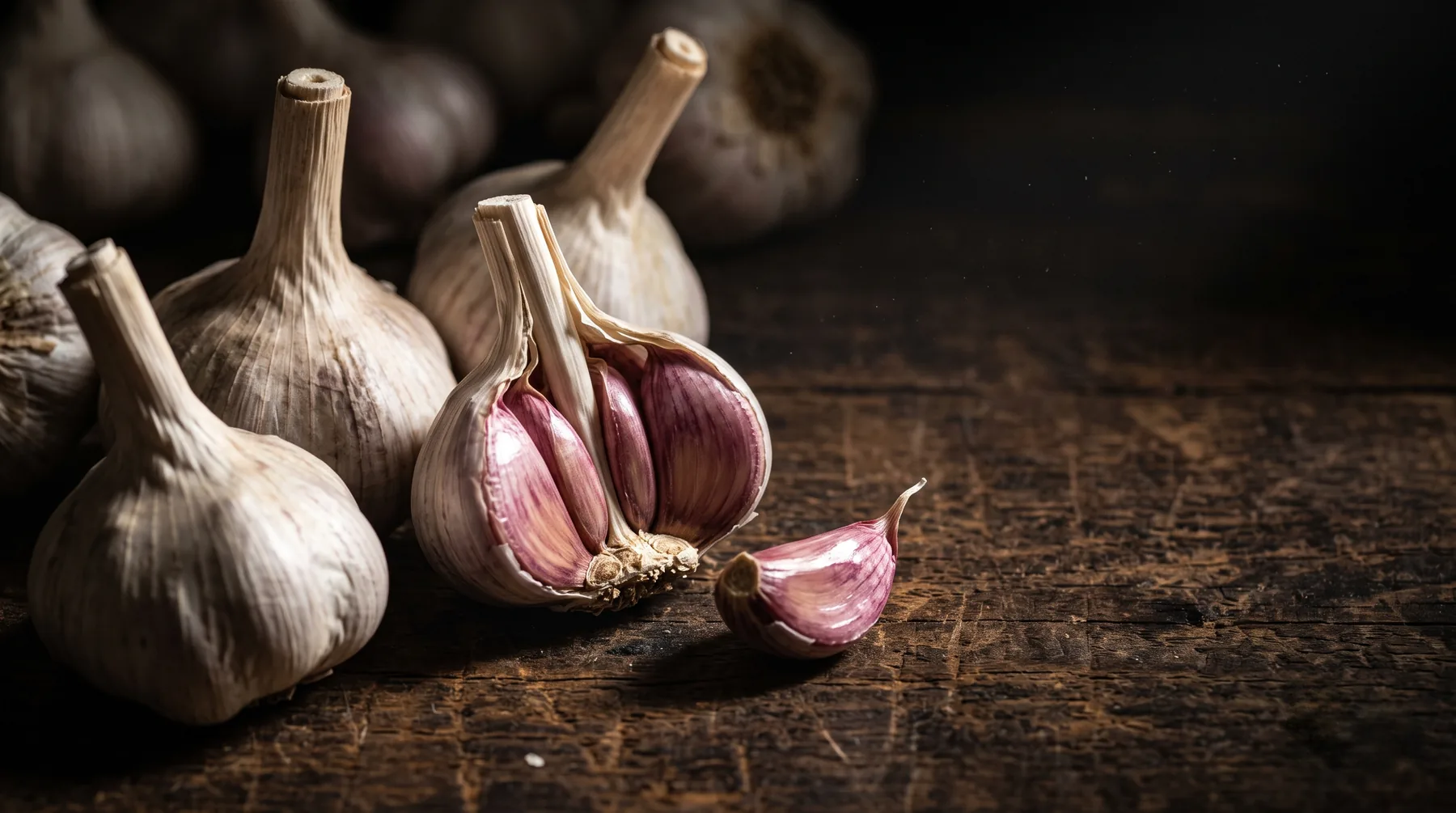
Grow file · Siberian (porcelain hardneck)
Hardneck Garlic
Allium sativum var. ophioscorodon
Planted in October, pulled in July. Big easy-peeling cloves, plus scapes in June — a free second crop that is itself excellent in a green sauce.
| Days to maturity | 240 days from sow |
|---|---|
| Days to germinate | 4–8 weeks to visible shoot; roots form first |
| Germination soil temp | 50–60 °F at planting |
| Start indoors | Direct sow — no indoor start |
| Transplant | At last frost |
| Spacing | 6″ between plants |
| Sun | 6+ hours direct |
| Container size | Ground or raised bed only |
| Realistic yield | 0.2 lb per healthy plant, per season |
Your dates, by zone
Built from each zone's average last frost and this cultivar's 240-day maturity. Zone averages are not your garden — look up your city's NOAA frost dates or enter your ZIP in the builder to shift every row.
| Zone | Sow indoors | Transplant | First pick |
|---|---|---|---|
| Zone 3 | — | May 15 | Jan 10 tight |
| Zone 4 | — | May 12 | Jan 7 tight |
| Zone 5 | — | Apr 30 | Dec 26 tight |
| Zone 6 | — | Apr 21 | Dec 17 tight |
| Zone 7 | — | Apr 3 | Nov 29 tight |
| Zone 8 | — | Mar 28 | Nov 23 tight |
| Zone 9 | — | Feb 28 | Oct 26 |
| Zone 10 | — | Jan 31 | Sep 28 |
| Zone 11+ | — | Jan 15 | Sep 12 |
Tight means first pick lands within two weeks of that zone's average first fall frost. It is doable, with zero slack in the indoor start.
Harvest visual
Ready when you see this
Harvest when the lowest 3–4 leaves have browned but the upper leaves are still green. The bulb should have tight wrapper skins and a firm neck; dig one test bulb before lifting the row.
The crop that runs a year ahead
Every other plant on this site is sown in spring for a September sauce. Garlic is planted in October for the following July — which means if you want your own garlic in this year’s marinara, that decision was made last autumn.
Plant it anyway. Next year’s sauce will be better for it, and garlic is close to the lowest-maintenance crop in a vegetable garden: put it in, mulch it, ignore it for eight months, pull it.
Hardneck versus softneck
| Hardneck | Softneck | |
|---|---|---|
| Cloves | Fewer, larger, easy to peel | Many, small, fiddly |
| Flavour | Stronger, more complex | Milder |
| Scapes | Yes — a June crop | No |
| Cold hardiness | Excellent | Moderate |
| Storage | ~6 months | ~9–12 months |
| Braids | No | Yes |
For sauce, hardneck wins on peeling alone. Peeling forty small softneck cloves for a batch of marinara is a genuinely miserable job.
Planting
- October, two to four weeks before the ground freezes.
- Split the bulb into cloves the day you plant, not before.
- Pointed end up, 2 inches deep, 6 inches apart.
- Mulch 4 inches deep with straw for insulation.
Scapes — the June bonus
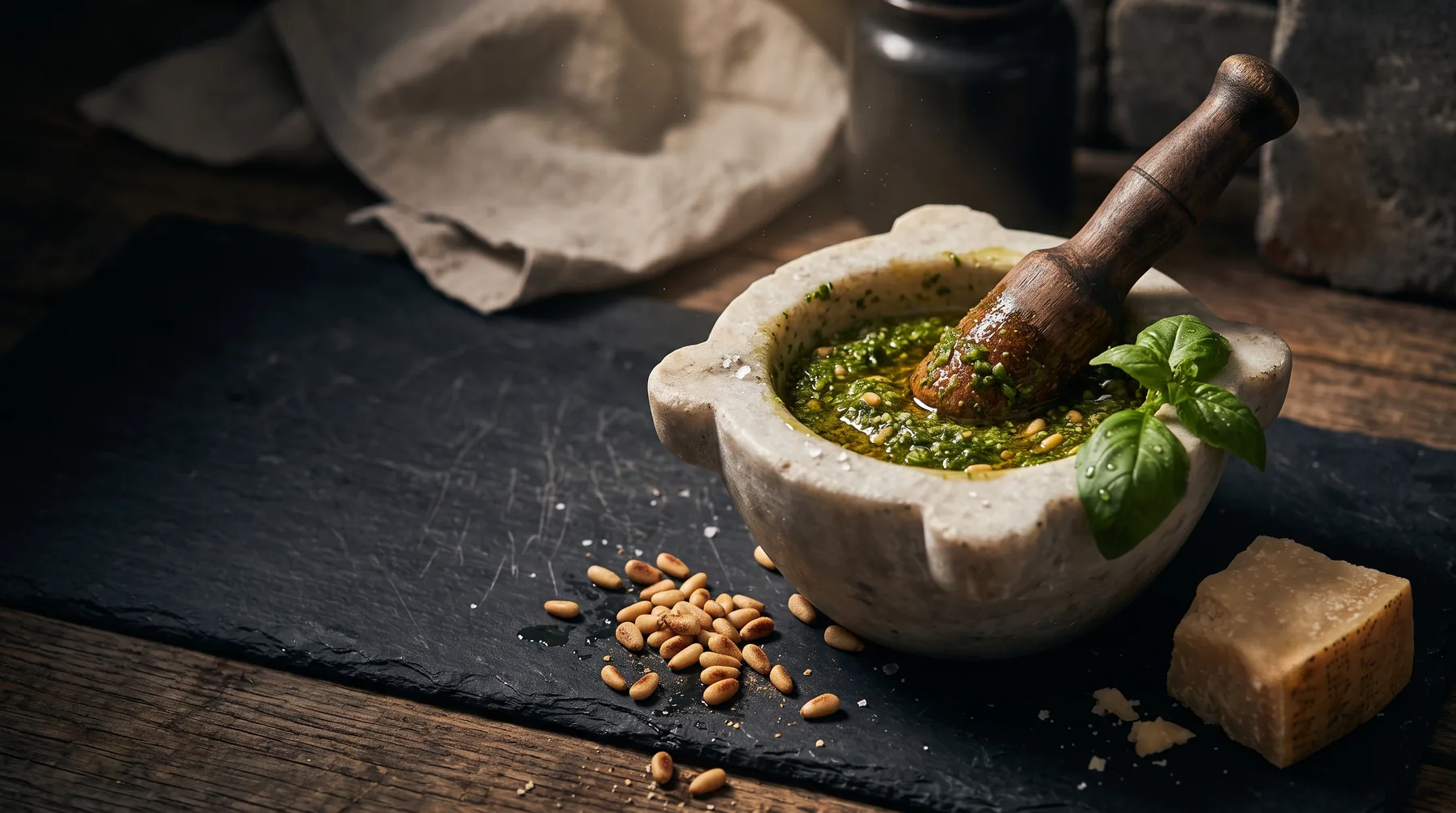
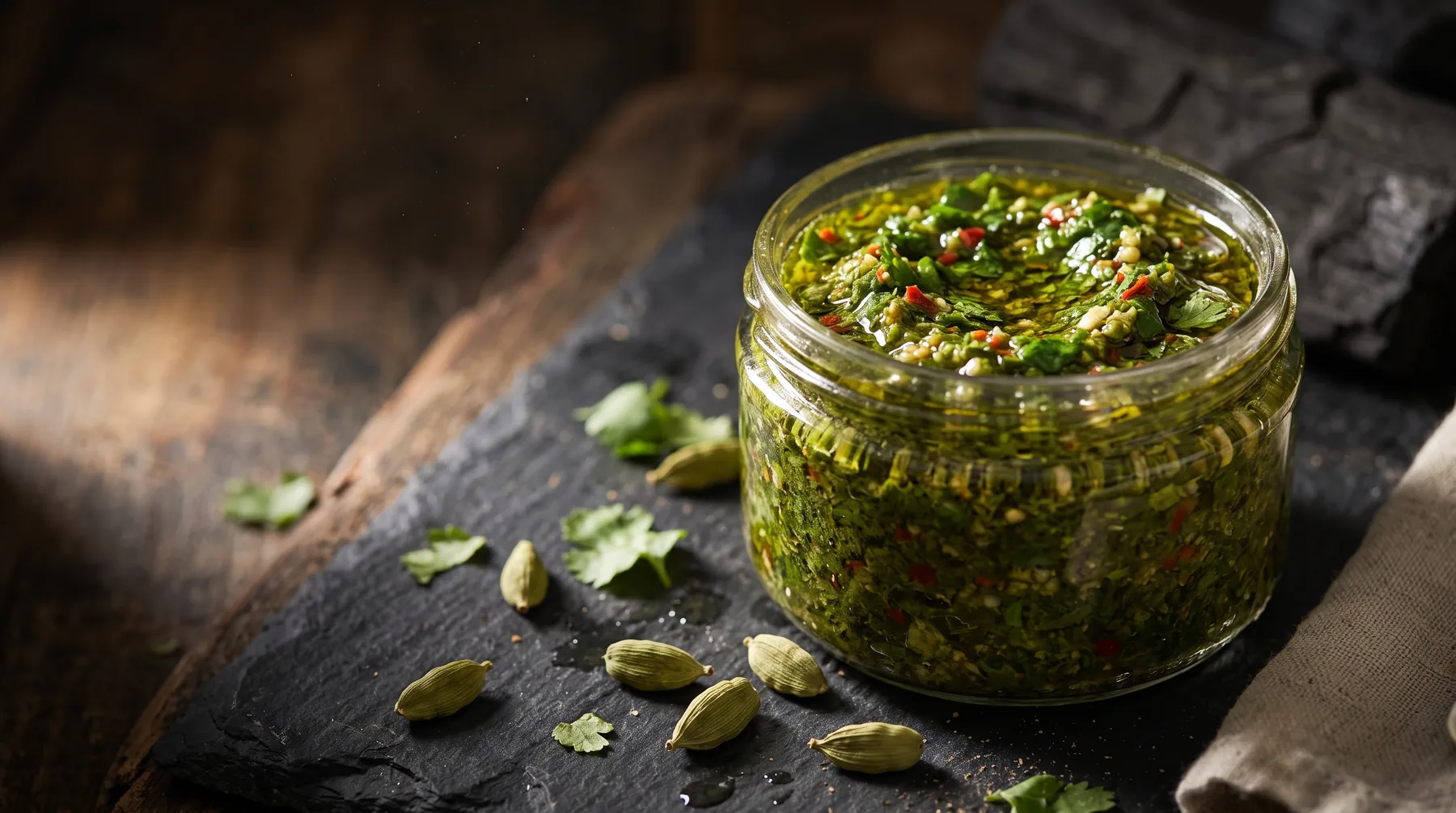
In June a hardneck sends up a curling flower stalk. Cut it as soon as it makes its first full curl. This does two things: it increases final bulb size, and it gives you scapes, which are mild, green and garlicky and make an outstanding pesto or an addition to zhoug.
Harvest and curing
Pull in July when the lower three or four leaves have browned but the upper ones are still green. Each remaining green leaf is a wrapper layer on the bulb — wait too long and the wrappers split and the bulb will not store.
Cure with the tops on in shade with airflow for three to four weeks, then trim. About 0.2 lb per plant, so a dozen plants is a year of sauce garlic.
How this crop actually fails
Named, specific, and in the order you're most likely to meet them.
Small, single-clove bulbs at harvest
Cause Planted in spring instead of autumn. Garlic needs a cold period (vernalisation) to divide into cloves.
Fix Plant in October. Spring-planted garlic produces a "round" — one undivided bulb. Edible, but not what you wanted.
Bulbs rot in the ground over winter
Cause Waterlogged soil. Garlic tolerates deep cold and does not tolerate sitting wet.
Fix Plant in a raised bed or well-drained ground, and mulch for insulation rather than for moisture.
Bulbs are small even though the plants looked healthy
Cause Scapes left on. The flower stalk diverts a substantial share of the plant's energy away from the bulb.
Fix Cut scapes as soon as they curl, in June. Bulb size improves noticeably, and the scapes are the best thing garlic gives you all year.
Grocery-store garlic never came up
Cause Supermarket garlic is often treated with a sprout inhibitor, and is usually a softneck variety unsuited to cold winters.
Fix Buy untreated seed garlic from a seed supplier.
What hardneck garlic needs
Siberian Hardneck Seed Garlic, 1 lb
Planted in October, pulled in July. Hardneck garlic has bigger, easier-peeling cloves and gives you scapes in June — a free second crop that is itself excellent in green sauce.
Pure Organic Worm Castings, 15 lb
Not a fertiliser so much as a soil-biology inoculant with a mild nutrient charge. A cup in each planting hole is a cheap, unglamorous improvement you can measure by August.
Rapitest Soil Test Kit
In-ground growers are guessing until they test. pH outside 6.0–6.8 locks nutrients out no matter how much fertiliser you add, and no amount of feeding fixes that.
6" Micro-Tip Pruning SnipsMust have
Ninety percent of sauce-garden cutting is snipping a pepper stem or a basil node, and a fine-tipped snip does it better than any pruner. Pulling peppers by hand tears the branch.
Garden Harvest Basket with Tool Caddy
A harvest basket that doubles as a colander means the hose rinse happens in the garden, and the dirt stays outside. On a 20-pound tomato day that is a genuine time saving.
One-Touch Coffee & Spice Grinder
Dried cayenne into powder in fifteen seconds. Dedicate one to chiles — grind coffee in it afterwards and you will find out exactly how well capsaicin sticks to plastic.
Paid links. We earn a commission from Amazon if you buy; you pay the same. Disclosure.
Sauces this plant is for
Last reviewed 2026-09-01. Numbers are cultivar-typical, not guarantees —tell us if yours ran different and we'll say so on the page.