Grow file · Garnet Giant (Brassica juncea)
Mustard greens
Brassica juncea
Cool-season mustard for fast baby leaf, full-size greens, and a small seed crop you can grind into homemade brown mustard.
| Days to maturity | 30 days from sow |
|---|---|
| Days to germinate | 7–10 days at 55–65 °F |
| Germination soil temp | 55–65 °F |
| Start indoors | Direct sow — no indoor start |
| Transplant | At last frost |
| Spacing | 3″ between plants |
| Sun | 4–8 hours; afternoon shade extends the spring harvest |
| Container size | 3 gal minimum per plant |
| Realistic yield | 0.5 lb per healthy plant, per season |
Your dates, by zone
Built from each zone's average last frost and this cultivar's 30-day maturity. Zone averages are not your garden — look up your city's NOAA frost dates or enter your ZIP in the builder to shift every row. Statewide dates: when to plant mustard greens in every state.
| Zone | Sow indoors | Transplant | First pick |
|---|---|---|---|
| Zone 3 | — | May 15 | Jun 14 |
| Zone 4 | — | May 12 | Jun 11 |
| Zone 5 | — | Apr 30 | May 30 |
| Zone 6 | — | Apr 21 | May 21 |
| Zone 7 | — | Apr 3 | May 3 |
| Zone 8 | — | Mar 28 | Apr 27 |
| Zone 9 | — | Feb 28 | Mar 30 |
| Zone 10 | — | Jan 31 | Mar 2 |
| Zone 11+ | — | Jan 15 | Feb 14 |
Tight means first pick lands within two weeks of that zone's average first fall frost. It is doable, with zero slack in the indoor start.
Harvest visual
Ready when you see this
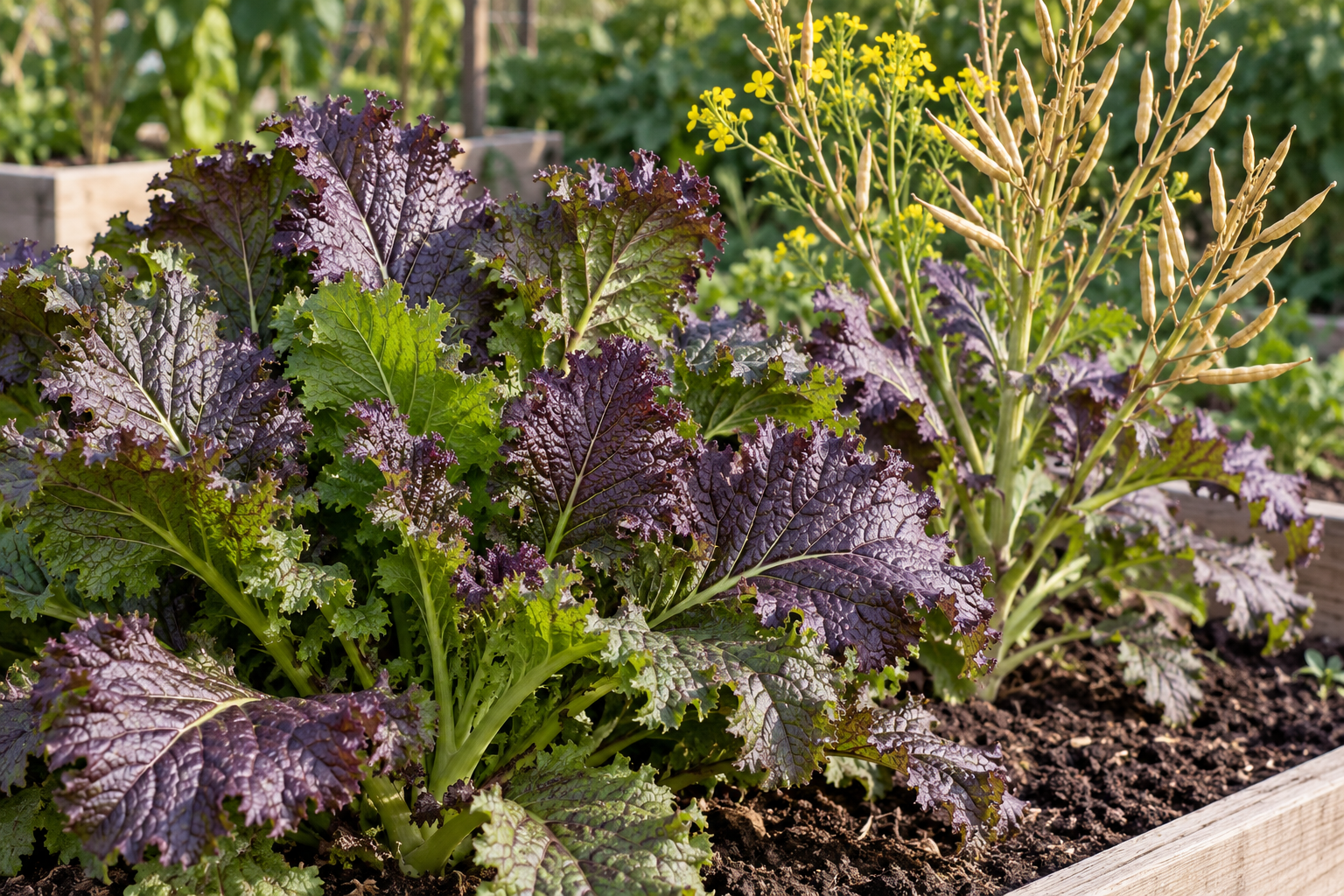
Baby leaves are ready at 2–4 inches; full-size leaves should be broad, crisp, and deeply colored before the center stalk elongates. For seed, wait until most pods are tan and the hard seeds rattle inside.
A two-speed crop
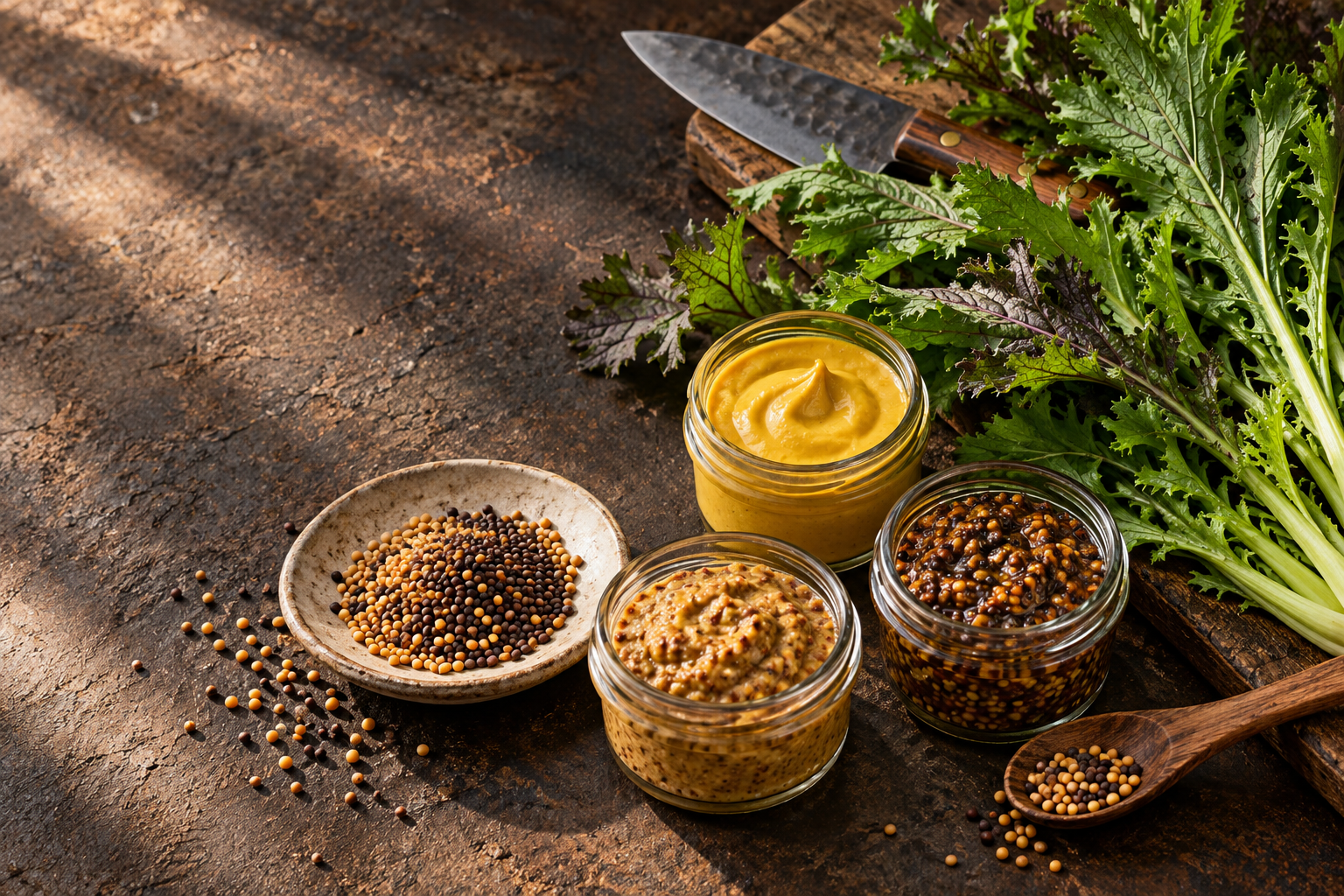
Garnet Giant is useful at two very different points. At 21–30 days, cut the young leaves for salad or a quick sauté. At roughly 40–45 days, harvest full-size leaves. Or leave two plants alone, let them flower, and collect brown mustard seed for the seed-to-mustard guide.
Sow for the cool window
Direct sow ½ inch deep as soon as the soil can be worked in spring, then sow again in late summer for fall. Seed germinates fastest at 55–65 °F and may stall in soil above 80 °F. Thin to 3 inches between plants, with 12 inches between rows. For baby leaf, sow densely and harvest young instead of thinning to full-size spacing.
Keep moisture even through emergence. Once established, mustard tolerates light frost, but row cover is cheap insurance against both flea beetles and an early freeze. In Zones 8–11, the best mustard season is usually winter.
Harvest, then choose whether to let it flower
Cut outer leaves first and leave the crown. A once-over harvest can be cut 2 inches above the soil for regrowth. Cool the leaves immediately and store unwashed in a ventilated bag.
For seed, stop harvesting two or three healthy plants. When most pods are tan and the seeds are hard, cut the stalks on a dry day and finish drying them in a paper bag for 1–2 weeks. Shake the bag to thresh, screen away the stems, and store the dry seed in an airtight jar.
The seed from this cultivar is hotter and more aromatic than yellow mustard seed. Blend it with yellow seed for a balanced whole-grain mustard, or use it alone when you want the heat to lead.
How this crop actually fails
Named, specific, and in the order you're most likely to meet them.
Flea beetles turn the seedlings into lace
Cause Small black beetles can remove enough leaf area from young mustard to collapse the stand before it establishes.
Fix Cover the row with fine insect netting or floating row cover immediately after sowing, and seal the edges.
Leaves become bitter and bolt before harvest
Cause Mustard is a cool-season crop. Heat, dry soil, and long sunny days accelerate flowering and reduce leaf quality.
Fix Sow in spring or late summer, water evenly, mulch lightly, and harvest before the stalk elongates. In warm zones, grow it through winter.
The seed crop is tiny or absent
Cause Every leaf was harvested, or the plant was pulled before flowers and pods matured.
Fix Leave two or three vigorous plants untouched after the leaf harvest. Let pods turn tan and dry before cutting and threshing.
What mustard greens needs
Organic Seed Starter Potting MixMust have
Seed-starting mix is not potting soil with a nicer label — it is finer, lighter, and low in nutrients on purpose, because a seedling's first roots want air and moisture, not fertiliser.
72-Cell Trays with 1020 Bottoms, 5-PackMust have
The cheap black nursery trays crack after one season and flex enough to break roots when you lift them. These do not. Over five seasons the price per use is lower than the throwaways.
AG-30 Frost Protection Row Cover
AG-30 buys roughly 6 °F of frost protection while passing about 70% of light — enough to carry a crop through an early-October cold snap that would otherwise end your season two weeks short.
Ultra-Fine Garden Netting, 10×33 ft, 2 pcs
A hornworm is a moth's decision made in June. Fine mesh over the bed at transplant means the moth never lands, and you never spray anything at all.
6" Micro-Tip Pruning SnipsMust have
Ninety percent of sauce-garden cutting is snipping a pepper stem or a basil node, and a fine-tipped snip does it better than any pruner. Pulling peppers by hand tears the branch.
Digital Kitchen Scale, 11 lb, g/ozMust have
Fermentation brine is a percentage of weight, not a number of spoons. Without a gram scale you are not following a fermentation recipe — you are guessing at the one number that determines whether it is safe.
One-Touch Coffee & Spice Grinder
Dried cayenne into powder in fifteen seconds. Dedicate one to chiles — grind coffee in it afterwards and you will find out exactly how well capsaicin sticks to plastic.
Half Pint (8 oz) Regular Mouth Mason Jars, 12Must have
Eight ounces is the right jar for a sauce you use by the spoonful. Open a quart of hot sauce and you are racing the fridge; open a half-pint and you finish it while it is still good.
Paid links. We earn a commission from Amazon if you buy; you pay the same. Disclosure.
Sauces this plant is for
Last reviewed 2026-09-30. Numbers are cultivar-typical, not guarantees —tell us if yours ran different and we'll say so on the page.