Grow file · Toma Verde
Tomatillo
Physalis ixocarpa
Not a green tomato. A husked, naturally acidic fruit at around pH 3.8 with its own pectin — salsa verde is a tomatillo sauce and there is no substitute.
| Days to maturity | 70 days from transplant |
|---|---|
| Days to germinate | 7–14 days at 80 °F |
| Germination soil temp | 75–85 °F |
| Start indoors | 6 weeks before last frost |
| Transplant | 1 weeks after last frost |
| Spacing | 30″ between plants |
| Sun | 8+ hours direct |
| Container size | 10 gal minimum per plant |
| Realistic yield | 6 lb per healthy plant, per season |
Your dates, by zone
Built from each zone's average last frost and this cultivar's 70-day maturity. Zone averages are not your garden — look up your city's NOAA frost dates or enter your ZIP in the builder to shift every row.
| Zone | Sow indoors | Transplant | First pick |
|---|---|---|---|
| Zone 3 | Apr 3 | May 22 | Jul 31 |
| Zone 4 | Mar 31 | May 19 | Jul 28 |
| Zone 5 | Mar 19 | May 7 | Jul 16 |
| Zone 6 | Mar 10 | Apr 28 | Jul 7 |
| Zone 7 | Feb 20 | Apr 10 | Jun 19 |
| Zone 8 | Feb 14 | Apr 4 | Jun 13 |
| Zone 9 | Jan 17 | Mar 7 | May 16 |
| Zone 10 | Dec 20 | Feb 7 | Apr 18 |
| Zone 11+ | Dec 4 | Jan 22 | Apr 2 |
Tight means first pick lands within two weeks of that zone's average first fall frost. It is doable, with zero slack in the indoor start.
Harvest visual
Ready when you see this
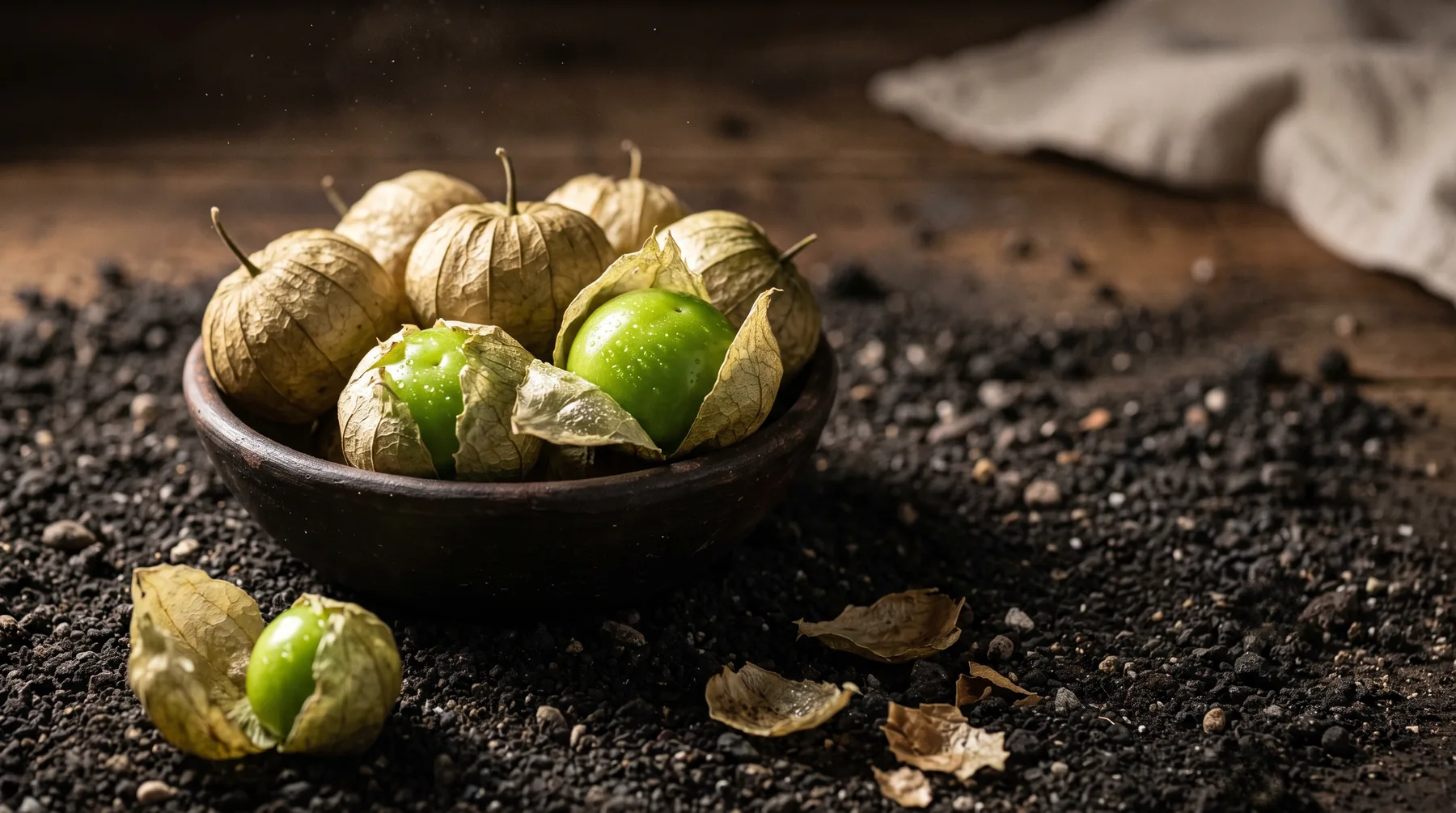
Pick when the papery husk fills completely and begins to split, or when the fruit has dropped beneath the plant. The fruit should be firm and green; a small, empty husk means it was picked too early.
Grow two. Always two.
A tomatillo is self-incompatible: its flowers will not accept its own pollen. One plant, no matter how healthy, produces a scattering of empty husks and a bewildered gardener. Two is the minimum and three is safer.
This one fact ruins more tomatillo seasons than every pest and disease combined.
Why it matters for sauce
Tomatillos come in at roughly pH 3.8 raw — well under the 4.6 line — and carry natural pectin. That does two things for a salsa verde:
- Acidity as a preservation input, not just a flavour. It gives a tested salsa recipe real headroom.
- Body without a thickener. A tomatillo sauce clings to a taco. A tomato-based green sauce does not.
You cannot substitute a green tomato. A green tomato is an unripe fruit at roughly pH 4.2–4.4, with no pectin and a flat starchy flavour. It is a different ingredient with different safety maths.
Growing
Six weeks indoors, transplant after last frost, and give it room — 30 inches, in a large cage. A tomatillo plant is much bigger than people expect and it will lean over anything you plant beside it.
They are prolific: 60+ fruit per plant is normal, about 6 lb. Two plants comfortably covers a double batch of salsa verde.
Harvest
Pick when the husk splits and the fruit fills it. The husk is papery and tan by then; the fruit inside stays green. The very best fruit is often already on the ground — check daily under the canopy from mid-season.
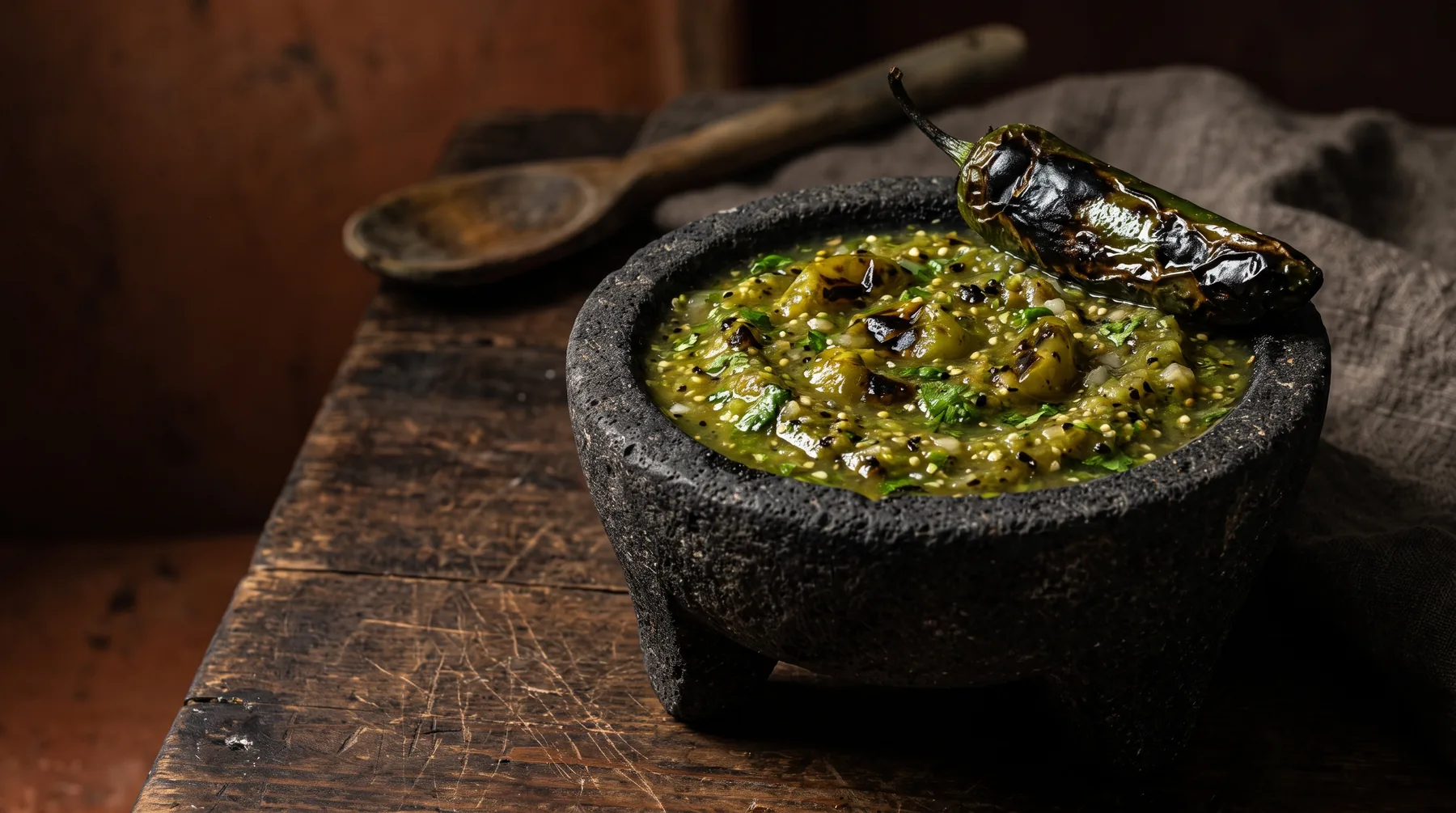
Peel the husks and wash off the sticky film before use; it is bitter. Charring the fruit under a broiler before blending deepens the flavour considerably and is worth the ten minutes.
How this crop actually fails
Named, specific, and in the order you're most likely to meet them.
Beautiful plant, flowers everywhere, no fruit at all
Cause You planted one. Tomatillos are self-incompatible — a single plant cannot pollinate itself and will set almost nothing.
Fix Always grow at least two, ideally three. This is the single most common tomatillo failure and it is unrecoverable once the season is underway.
Husks are full-size but nearly empty
Cause Poor pollination — too few plants, or a cool, wet flowering period that kept bees away.
Fix More plants and better spacing for bee access. Hand-pollinate with a soft brush in a bad week.
Plant sprawls three feet in every direction and swamps the bed
Cause Correct behaviour. Tomatillos are enormous, rangy plants, far bigger than their tomato reputation suggests.
Fix 30-inch spacing and a large cage from the start. Do not plant them at tomato spacing.
Fruit tastes bitter and hard
Cause Picked too early. An underripe tomatillo is genuinely unpleasant.
Fix Wait until the husk splits and the fruit fills it completely. Best fruit is usually the one that has already fallen — check under the plant daily.
What tomatillo needs
Toma Verde Tomatillo SeedMust have
Salsa verde is not a green tomato sauce — it is a tomatillo sauce, and the difference is the tartness and the natural pectin that makes it cling. There is no substitute.
Organic Seed Starter Potting MixMust have
Seed-starting mix is not potting soil with a nicer label — it is finer, lighter, and low in nutrients on purpose, because a seedling's first roots want air and moisture, not fertiliser.
Seedling Heat Mat + Digital ThermostatMust have
Peppers germinate on soil temperature, not air temperature. At 65 °F a habanero takes a month and half of them rot; at 85 °F it is up in eight days. The thermostat is the half that matters.
T8 Full-Spectrum Grow Lights, 1 ft 4-packMust have
A south window in March delivers a fraction of the light a pepper seedling needs, and the plant tells you by stretching. Two inches of LED above the canopy for 16 hours a day fixes it permanently.
5-Gallon Fabric Grow Bags, 5-Pack
Fabric pots air-prune roots and drain faster than a plastic pot can, which is the entire reason container tomatoes fail. Five gallons is the honest minimum for a pepper; a tomato wants ten.
Ocean Forest Potting SoilMust have
Pre-charged with enough nutrition to carry a transplant for its first month without feeding, which is exactly the window when most container plants stall.
Organic Tomato-Tone 3-4-6 with 8% CalciumMust have
The NPK ratio is the point: low nitrogen, higher potassium. Feed a tomato a high-nitrogen lawn fertiliser and you get a magnificent six-foot plant with four tomatoes on it.
58" Square Tomato Cages, 3-PackMust have
The conical wire tomato ring from the hardware store is 33 inches tall and an indeterminate San Marzano will laugh at it in July. Height and square geometry are what actually hold a loaded plant.
Garden Harvest Basket with Tool Caddy
A harvest basket that doubles as a colander means the hose rinse happens in the garden, and the dirt stays outside. On a 20-pound tomato day that is a genuine time saving.
Stainless Steel Food Mill, 3 discsMust have
A blender pulverises tomato skins and seeds into the sauce, which is where bitterness comes from. A mill separates them out — no blanching, no peeling, no ice bath. It removes an entire hour from sauce day.
Paid links. We earn a commission from Amazon if you buy; you pay the same. Disclosure.
Sauces this plant is for
Last reviewed 2026-09-01. Numbers are cultivar-typical, not guarantees —tell us if yours ran different and we'll say so on the page.