Sauce · Water-bath canned
Charred Tomatillo Salsa Verde
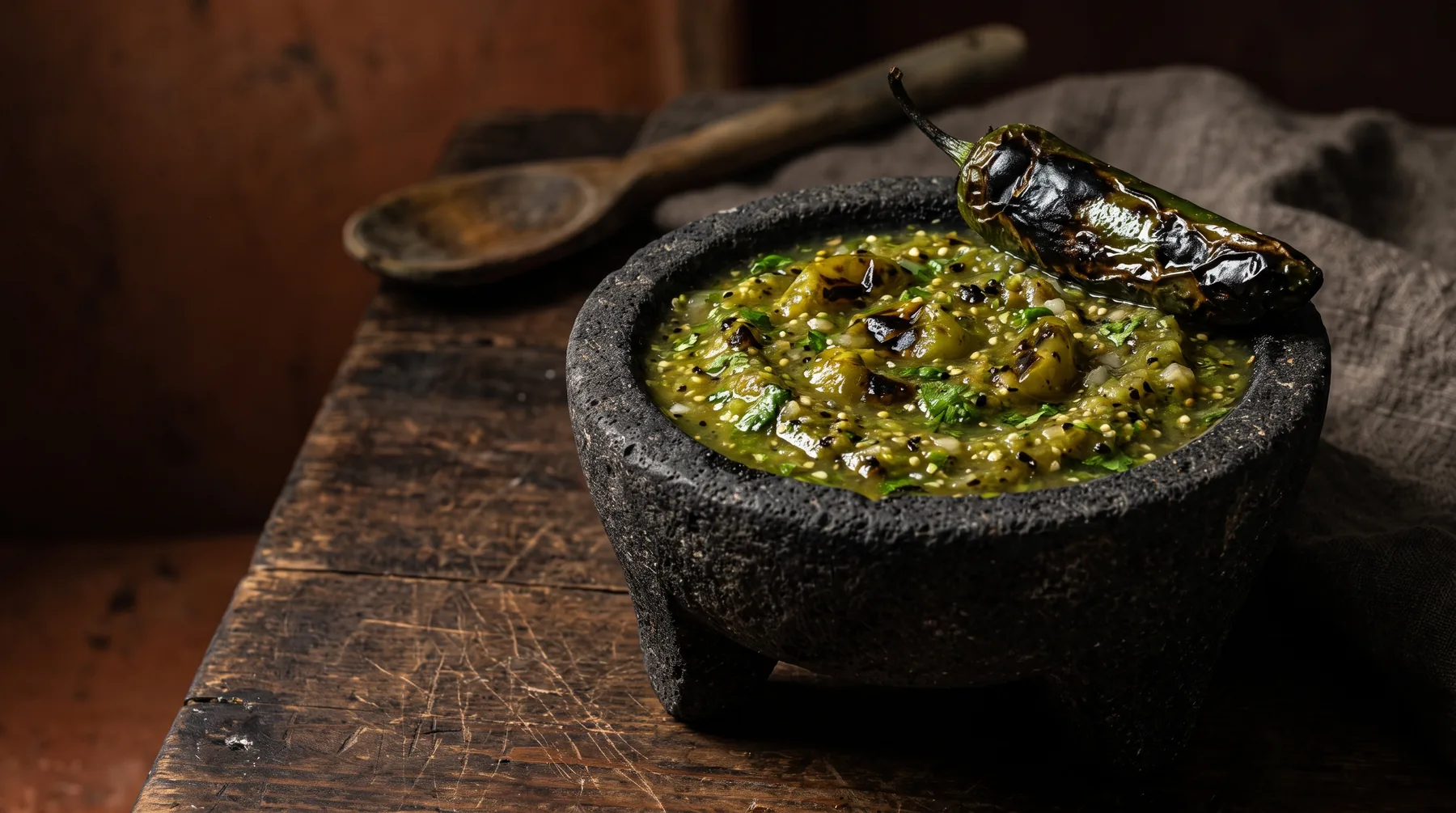
Blistered tomatillos, serrano, and a fistful of cilantro. Naturally acidic, ready in forty minutes, and it clings to a taco because tomatillos bring their own pectin.
Tested process
Tomatillos are naturally acidic (around pH 3.8), which is why tested tomatillo salsa recipes exist and tested tomato salsa recipes are far fussier. Follow the NCHFP tomatillo salsa ratio: do NOT increase the proportion of onion, pepper or garlic, because low-acid additions raise the finished pH. Process half-pints or pints 15 minutes in a boiling-water bath at 0–1,000 ft, adding 5 minutes per additional 1,000 ft. Changing the vegetable ratios voids the tested process — make it fresh instead and refrigerate it.
If you started today, in Zone 6, in pots
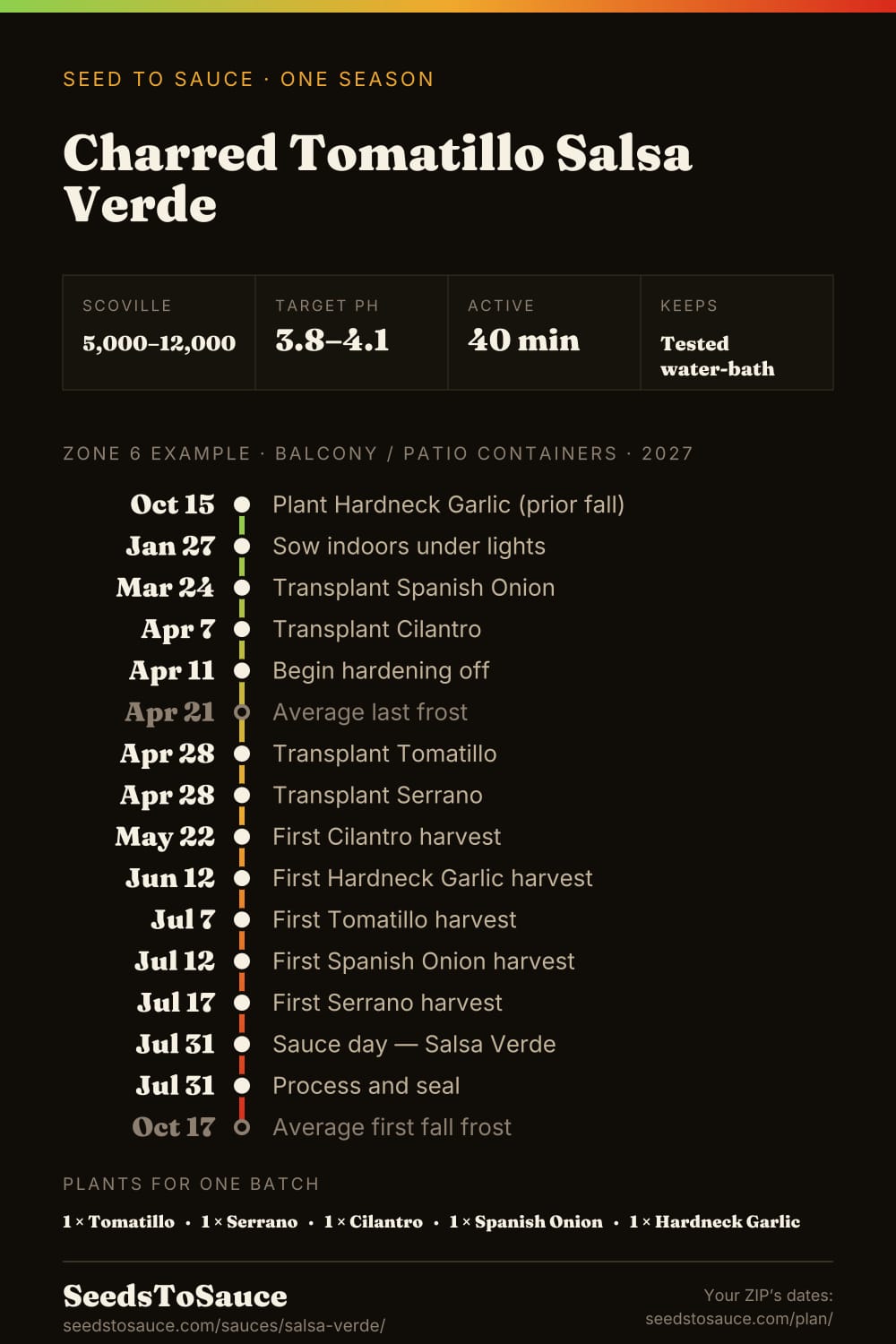
5 plants. 8 jars. Sauce on Jul 31.
Worked from Zone 6's average last frost (Apr 21) and each cultivar's days to maturity. Your zone and your space change every date below — the builder does that for you.
- Jan 6Order seeds and starting supplies
- Jan 27Sow indoors under lights
- Apr 21Average last frost (Zone 6)
- May 22First Cilantro harvest
- Jun 12First Hardneck Garlic harvest
- Jul 7First Tomatillo harvest
- Jul 12First Spanish Onion harvest
- Jul 17First Serrano harvest
- Jul 31Sauce day — Salsa Verde
- Jul 31Process and seal
Save it
The whole season, one pin
| Yield | About 4 pints — 8 half-pint jars |
|---|---|
| Active time | 40 minutes |
| Total time | 40 minutes active, 15 minutes processing |
| Heat | 5,000–12,000 SHU in the finished salsa |
| Target finished pH | 3.8–4.1 |
| Preservation | Water-bath canned |
| Fruit this batch eats | 4 lb Tomatillo0.25 lb Serrano0.1 lb Cilantro0.5 lb Spanish Onion0.1 lb Hardneck Garlic |
What you have to grow
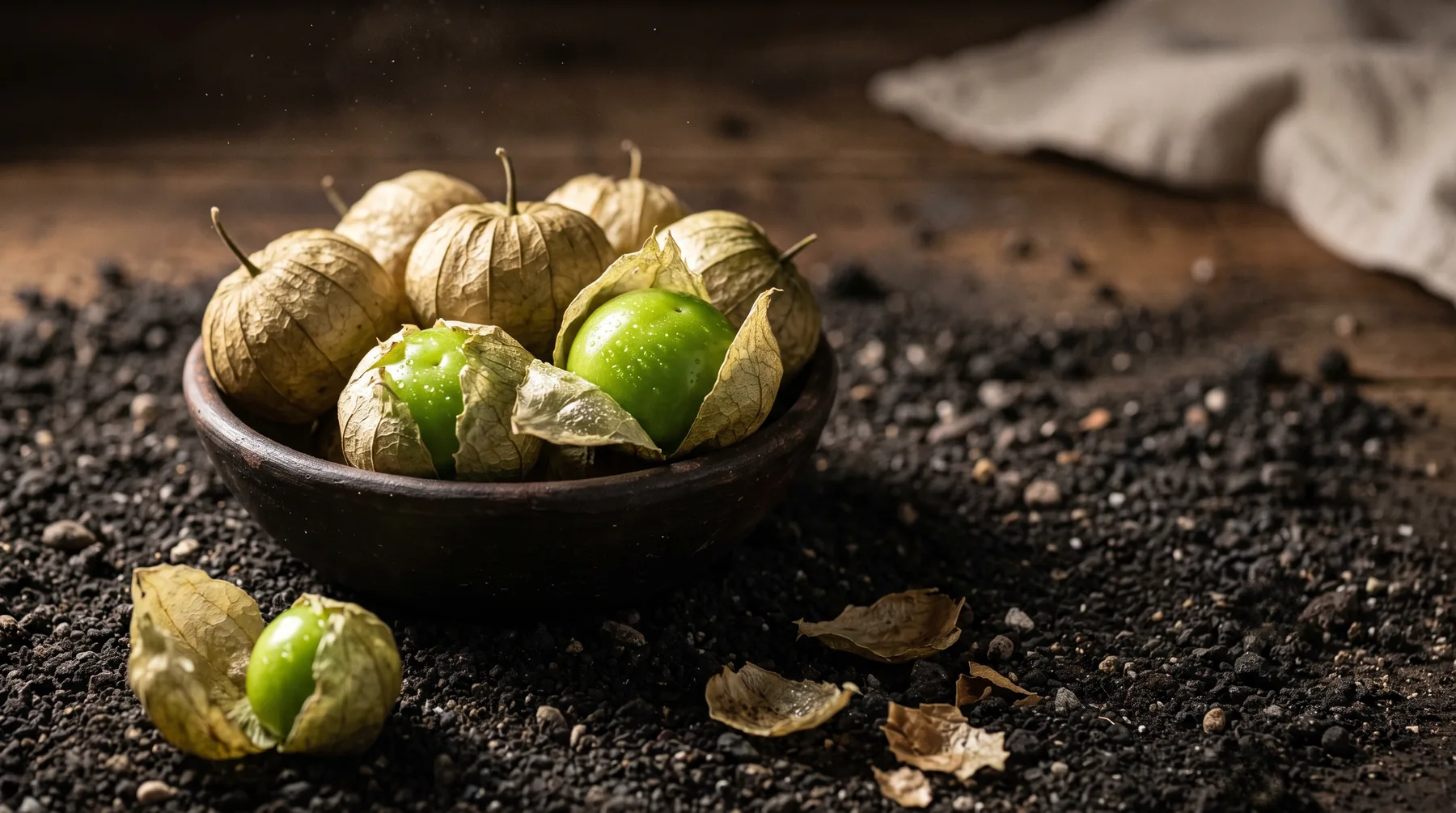
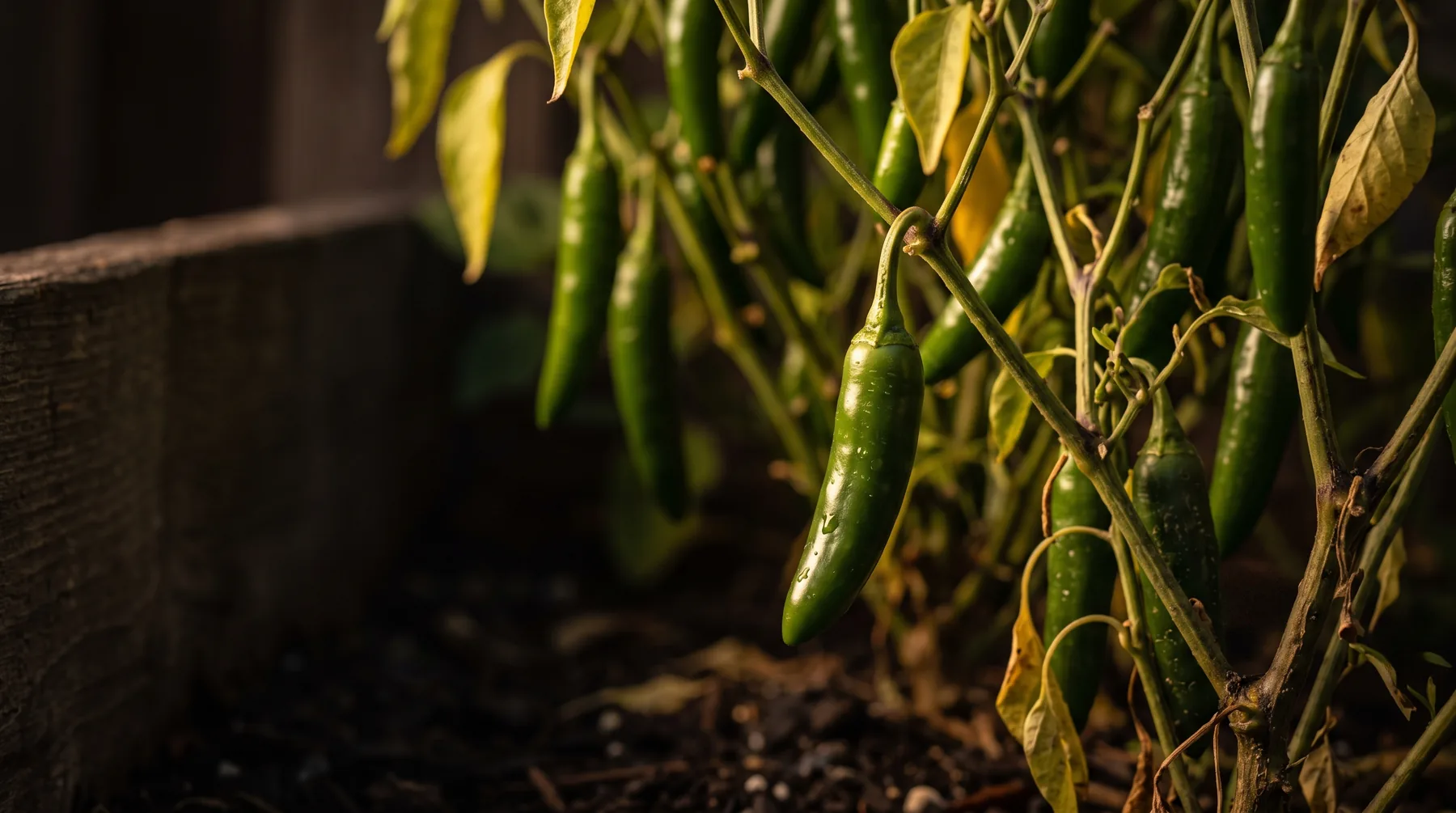
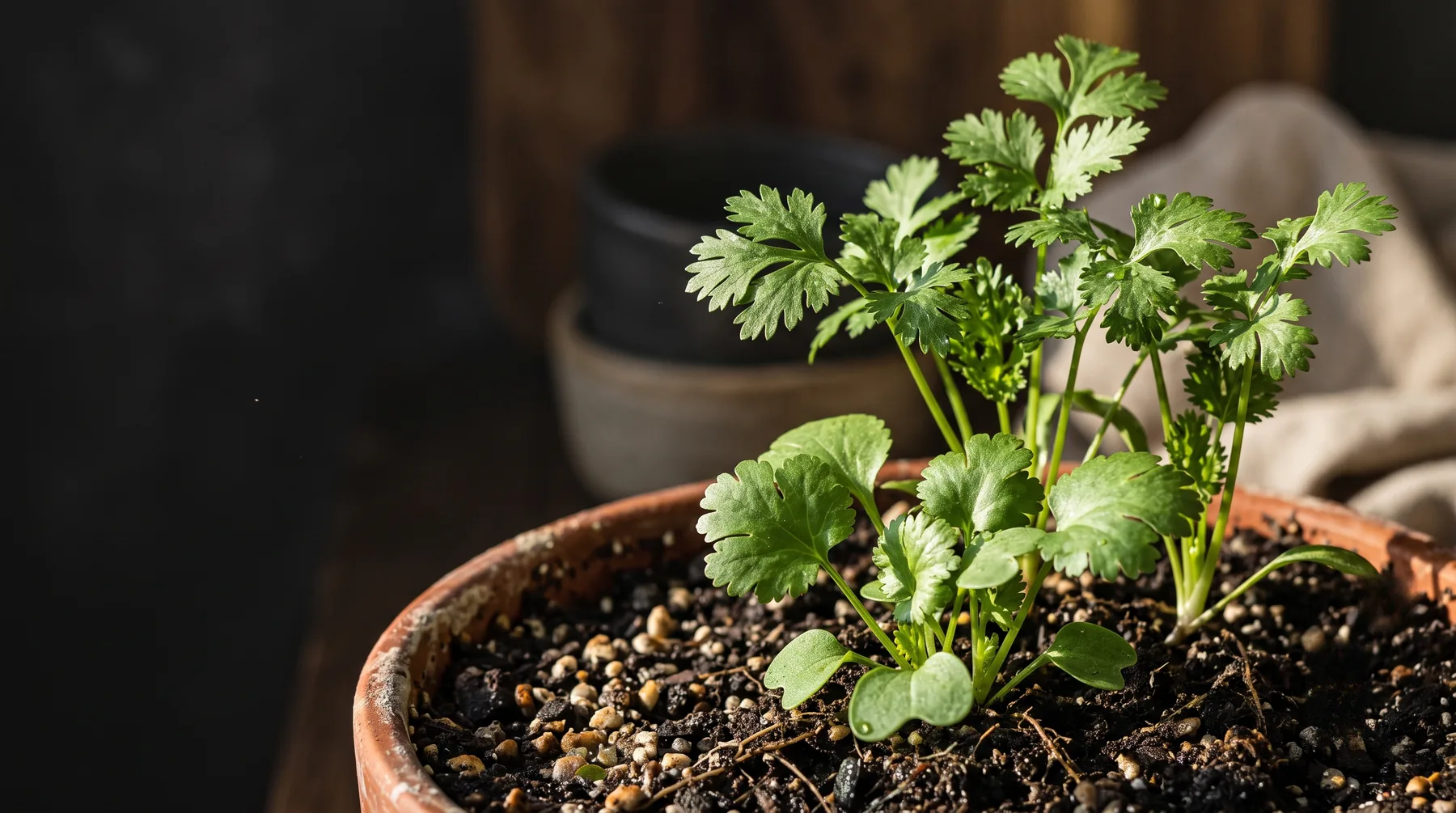
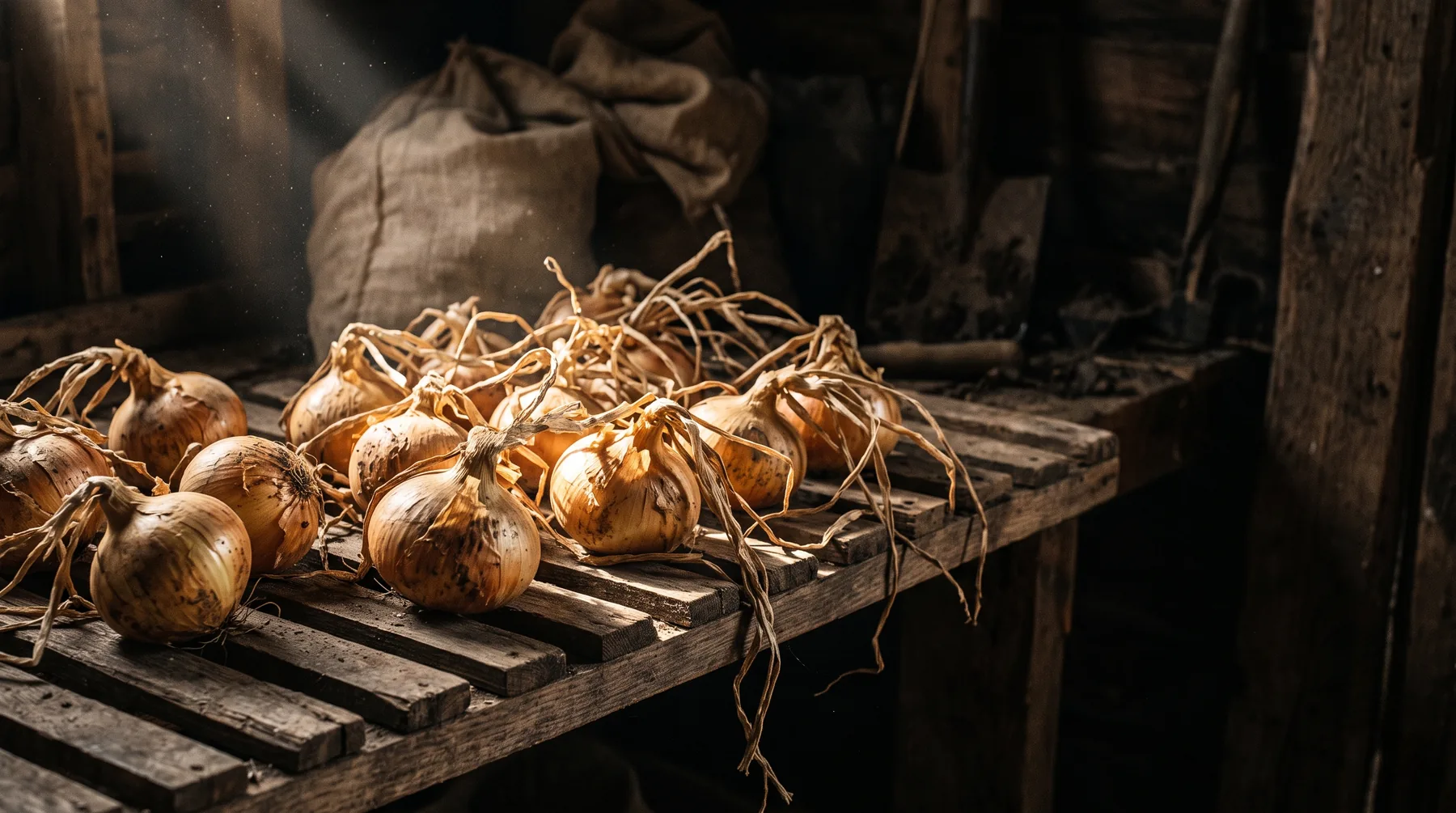
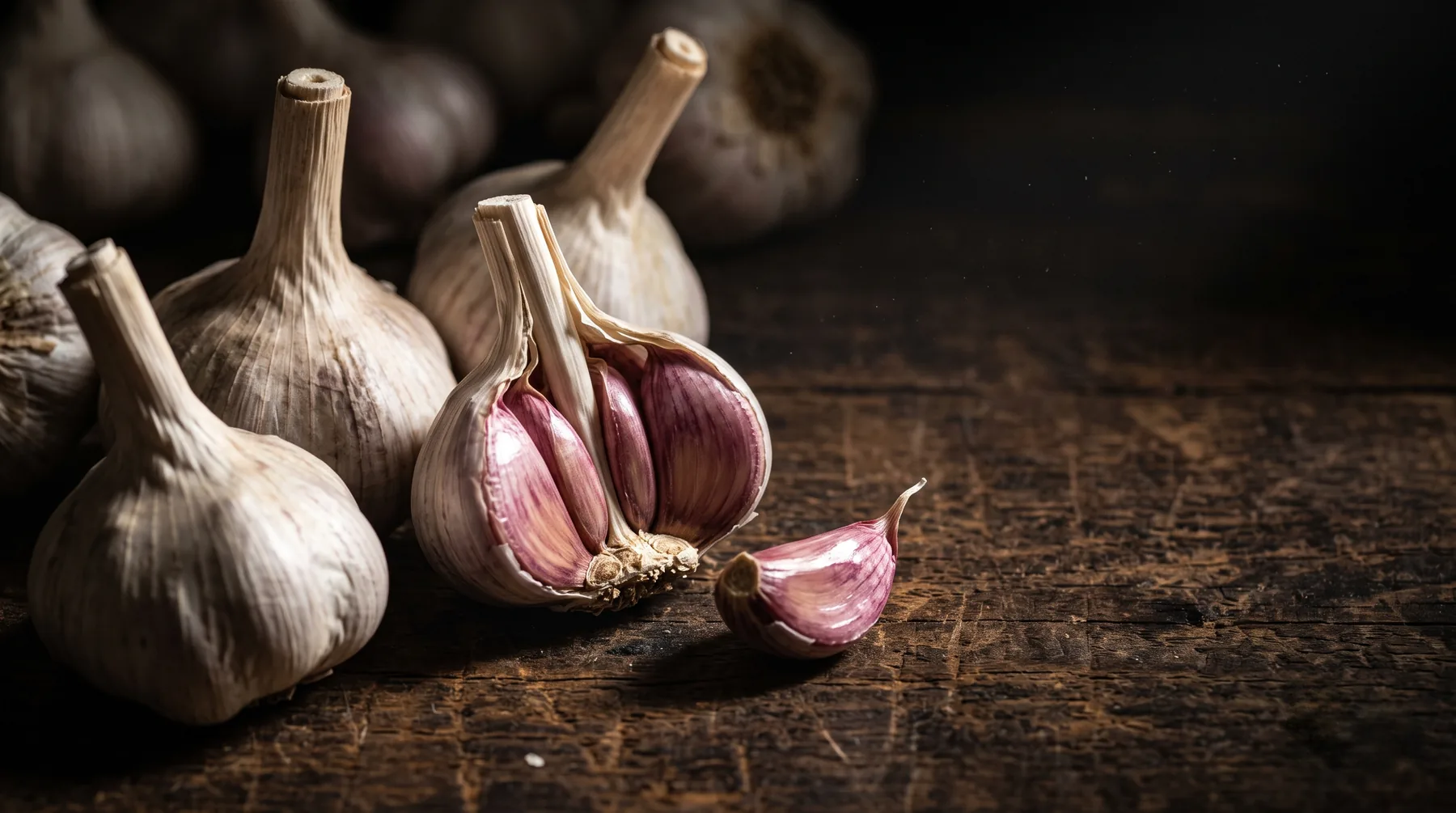
Salsa verde is a tomatillo sauce, and the tomatillo is not a green tomato. It is a Physalis — a husked fruit, related to the ground cherry — and it brings two things a tomato cannot: real acidity at around pH 3.8, and its own pectin, which is why a good verde clings to a taco instead of running off it.
Charring is the other half. Blistered under a broiler until the skins are black in patches, tomatillos go from sharp and green to smoky and sweet. It takes ten minutes and it is the entire difference between a decent salsa and one people ask about.
What you need
| Tomatillos, husked and washed | 4 lb |
| Serrano peppers | 4 oz (6–8 pods) |
| White or yellow onion, halved | 8 oz |
| Garlic, unpeeled | half a bulb |
| Cilantro, leaves and tender stems | 1 large bunch |
| Salt | 1 tbsp, to taste |
| Lime juice | 2 oz, fresh, for the refrigerator version |
Method
- Husk and wash. The husks come off dry; the sticky residue underneath is bitter, so wash it off properly.
- Char. Tomatillos, serranos, onion halves and unpeeled garlic on a sheet tray, 6 inches under a hot broiler. Turn once. You want blistered and blackened in patches, 8–12 minutes total — not evenly browned, and not incinerated.
- Rest. Five minutes on the tray. Squeeze the garlic out of its skins.
- Blend. Everything except the cilantro. An immersion blender straight in the pot is ideal; you want texture, not purée. Stop while it is still slightly coarse.
- Cilantro last. Stir it in off the heat. Blended in early it goes dull and grassy.
- Salt and taste. For a fresh salsa, add lime, cool, and refrigerate — it keeps a week and is better on day two.
If you are canning it
Follow the NCHFP tomatillo salsa recipe’s ratios exactly, and do not scale up the onion, garlic or peppers. Fill hot half-pints or pints to ½-inch headspace, wipe rims, lid, and process 15 minutes in a boiling-water bath at 0–1,000 ft (+5 min per additional 1,000 ft).
Serranos, not jalapeños
Serrano is the correct chile here and it is not interchangeable. It carries three to five times a jalapeño’s heat with a cleaner, greener flavour that sits alongside the tomatillo. Jalapeño brings a rounder, slightly vegetal sweetness that muddies a verde.
Leave the seeds in for the top of the range, take them out for something you can eat by the spoonful.
What it tastes like
Bright, sour, smoky underneath, and green all the way through. It is the salsa that makes people put down whatever they were eating and ask what is in it.
The kit for this sauce
Each item is selected for a job in this recipe. Amazon listings, sellers, and prices can change; check the current details before you buy.
Toma Verde Tomatillo SeedMust have
Salsa verde is not a green tomato sauce — it is a tomatillo sauce, and the difference is the tartness and the natural pectin that makes it cling. There is no substitute.
Serrano Pepper Seed
Cleaner and greener than a jalapeño at roughly three times the heat. The correct chile for salsa verde and zhoug, where you want brightness rather than smoke.
Cilantro / Coriander Seed
Bolts in a heartbeat and there is nothing you can do about it — so you succession-sow instead of fighting it. Non-negotiable in salsa verde and zhoug.
Yellow Sweet Spanish Onion Seed
A long-day storage onion with enough sugar to sweat down without scorching. The aromatic base under every tomato sauce on this site.
Siberian Hardneck Seed Garlic, 1 lb
Planted in October, pulled in July. Hardneck garlic has bigger, easier-peeling cloves and gives you scapes in June — a free second crop that is itself excellent in green sauce.
Garden Harvest Basket with Tool Caddy
A harvest basket that doubles as a colander means the hose rinse happens in the garden, and the dirt stays outside. On a 20-pound tomato day that is a genuine time saving.
Digital Kitchen Scale, 11 lb, g/ozMust have
Fermentation brine is a percentage of weight, not a number of spoons. Without a gram scale you are not following a fermentation recipe — you are guessing at the one number that determines whether it is safe.
Hydrion Short-Range pH Strips, 0.0–6.0
The budget answer, and a genuinely usable one: a 0–6 range in 0.5 steps tells you whether a ferment has crossed 4.6. Universal 1–14 strips cannot — they are useless for this job.
Variable Speed Hand Blender KHBV53
Blends the sauce in the pot it cooked in. No transferring boiling liquid to a jug, no splitting a batch, no second vessel to wash — and for a rustic marinara it is the *right* texture, not a compromise.
Gourmet Stainless 12-Quart Stock Pot
For twenty pounds of tomatoes, the Dutch oven is too small. Twelve quarts of non-reactive stainless is the batch-scale vessel, and it doubles as a water-bath canner in a pinch.
9-Piece Enamelware Water Bath Canning SetMust have
Water-bath canning is the tested process for high-acid foods — anything reliably below pH 4.6. The rack is not optional: jars sitting on the pot floor crack from direct heat.
Canning Essentials SetMust have
A jar lifter is a safety tool, not a convenience: you are moving glass full of 212 °F sauce. The headspace gauge is the other half — wrong headspace is the most common reason a seal fails.
Half Pint (8 oz) Regular Mouth Mason Jars, 12Must have
Eight ounces is the right jar for a sauce you use by the spoonful. Open a quart of hot sauce and you are racing the fridge; open a half-pint and you finish it while it is still good.
Mason Jar Lids, Regular Mouth, 72 countMust have
The flat lid's sealing compound is designed for one heat cycle. Reusing it is the single most common cause of a jar that seals, then quietly unseals in November.
Canning Jar Labels, 360 pcs, removable
Date every jar. In March, three jars of red sauce are indistinguishable, and 'it's probably the one from August' is not a food-safety practice.
Paid links. We earn a commission from Amazon if you buy; you pay the same. Disclosure.
Questions people actually ask
Can I substitute green tomatoes for tomatillos?
No, and not just for flavour. A tomatillo is around pH 3.8; a green tomato is roughly 4.2–4.4 with no pectin. Swapping them changes both the taste and the acid maths that a tested canning process depends on. If all you have is green tomatoes, make it fresh and refrigerate it.
Why can't I add more peppers or onion? It's my salsa.
It is, right up until you seal it in a jar. Onion, garlic and peppers are low-acid; increasing them raises the finished pH toward 4.6. A tested salsa recipe is a validated ratio, not a suggestion. Make any ratio you like for the fridge — just don't can a modified one.
Do I have to char them?
For canning, follow the tested recipe's method. For fresh salsa, charring is worth it: blistering under a broiler caramelises sugars and adds a smoky depth raw tomatillos have no route to. Raw (crudo) is a legitimate and completely different salsa.
Mine is watery. What went wrong?
Probably nothing — tomatillos release a lot of liquid. Drain some off after charring, or simmer the finished salsa 10 minutes to reduce. Do not add cornstarch or flour to anything you intend to can; thickeners interfere with heat penetration.
Last reviewed 2026-09-01 by the SeedsToSauce Test Kitchen. Spotted something wrong?Tell us — corrections get published.