Sauce · Refrigerator only
Roasted Marconi Romesco
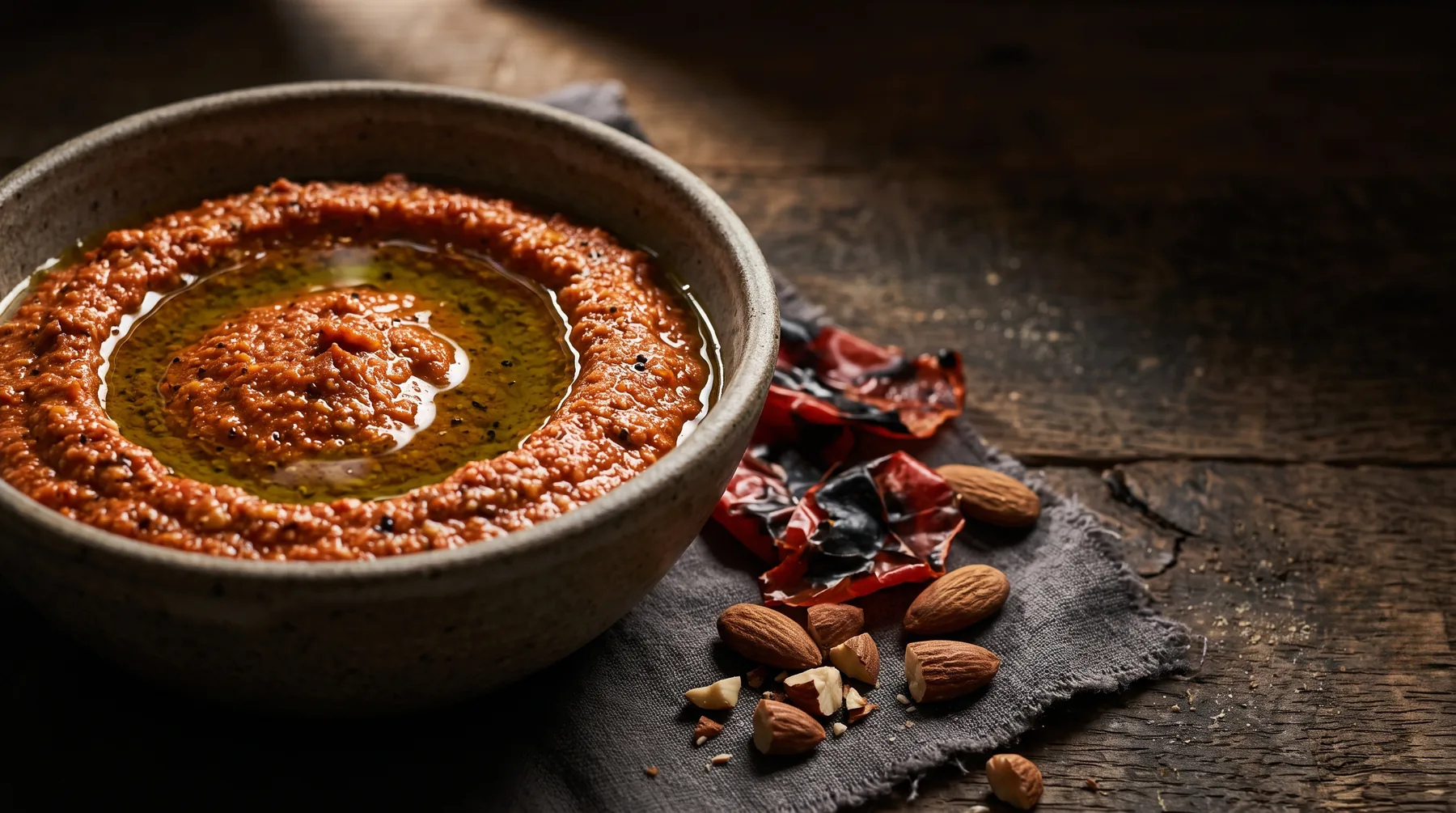
Charred red peppers, toasted almonds, bread and sherry vinegar. Catalonia's answer to pesto, and the best possible use for a glut of sweet peppers.
Not a tested canning process
Romesco is low-acid, nut-thickened and dense — three separate reasons a water bath cannot be trusted to heat it through, and no tested home process exists. Refrigerate up to a week or freeze for a year. If you want to preserve the peppers themselves, roast, peel and freeze them in their own juices, then make romesco fresh whenever you want it. That is the better plan anyway.
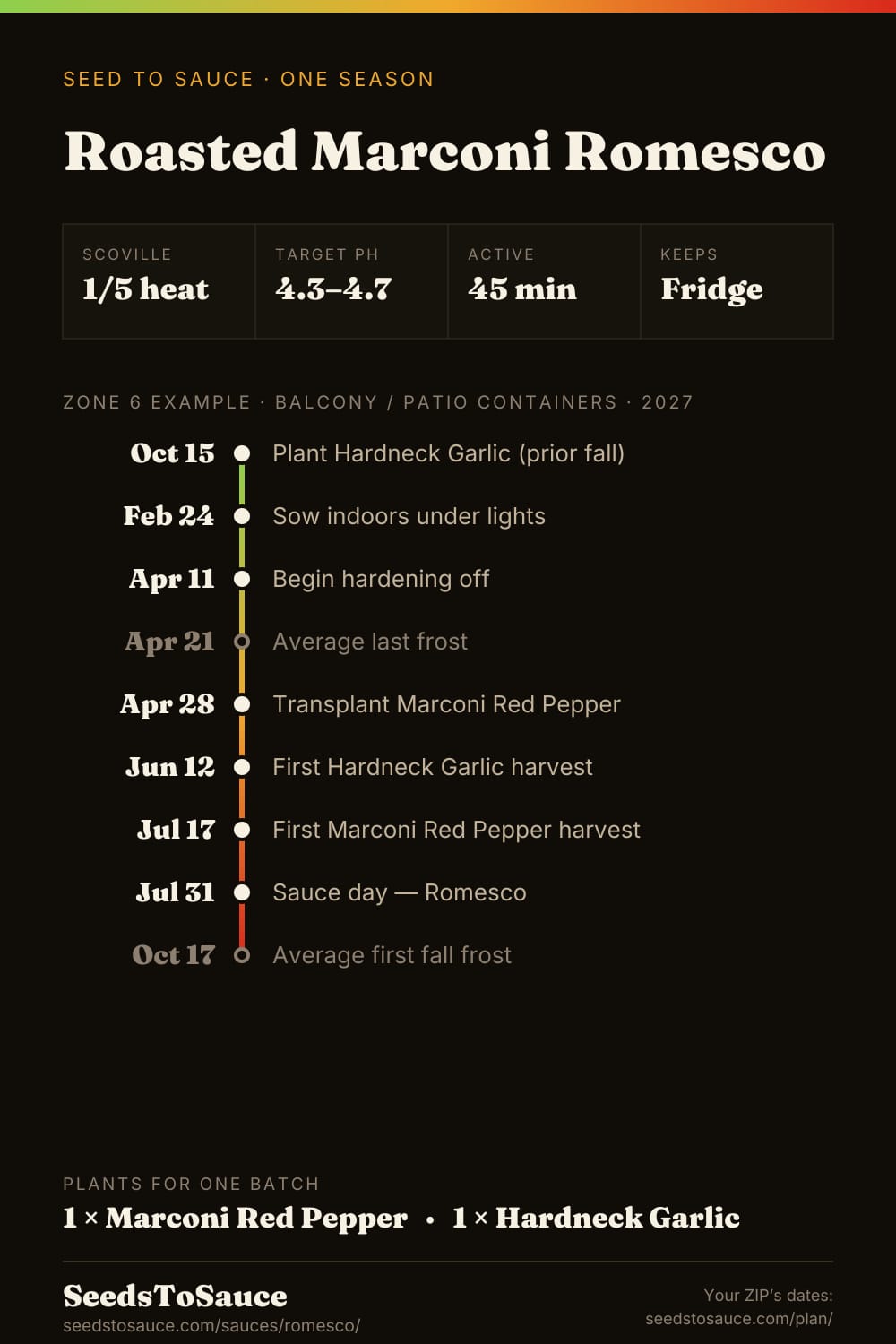
If you started today, in Zone 6, in pots
2 plants. 3 jars. Sauce on Jul 31.
Worked from Zone 6's average last frost (Apr 21) and each cultivar's days to maturity. Your zone and your space change every date below — the builder does that for you.
- Feb 3Order seeds and starting supplies
- Feb 24Sow indoors under lights
- Apr 21Average last frost (Zone 6)
- Jun 12First Hardneck Garlic harvest
- Jul 17First Marconi Red Pepper harvest
- Jul 31Sauce day — Romesco
Save it
The whole season, one pin
| Yield | About 20 oz — two and a half half-pints — 3 half-pint jars |
|---|---|
| Active time | 45 minutes |
| Total time | 45 minutes |
| Heat | Barely detectable — one dried ñora or a pinch of cayenne |
| Target finished pH | 4.3–4.7 — refrigerate or freeze |
| Preservation | Refrigerator only |
| Fruit this batch eats | 3 lb Marconi Red Pepper0.08 lb Hardneck Garlic |
What you have to grow
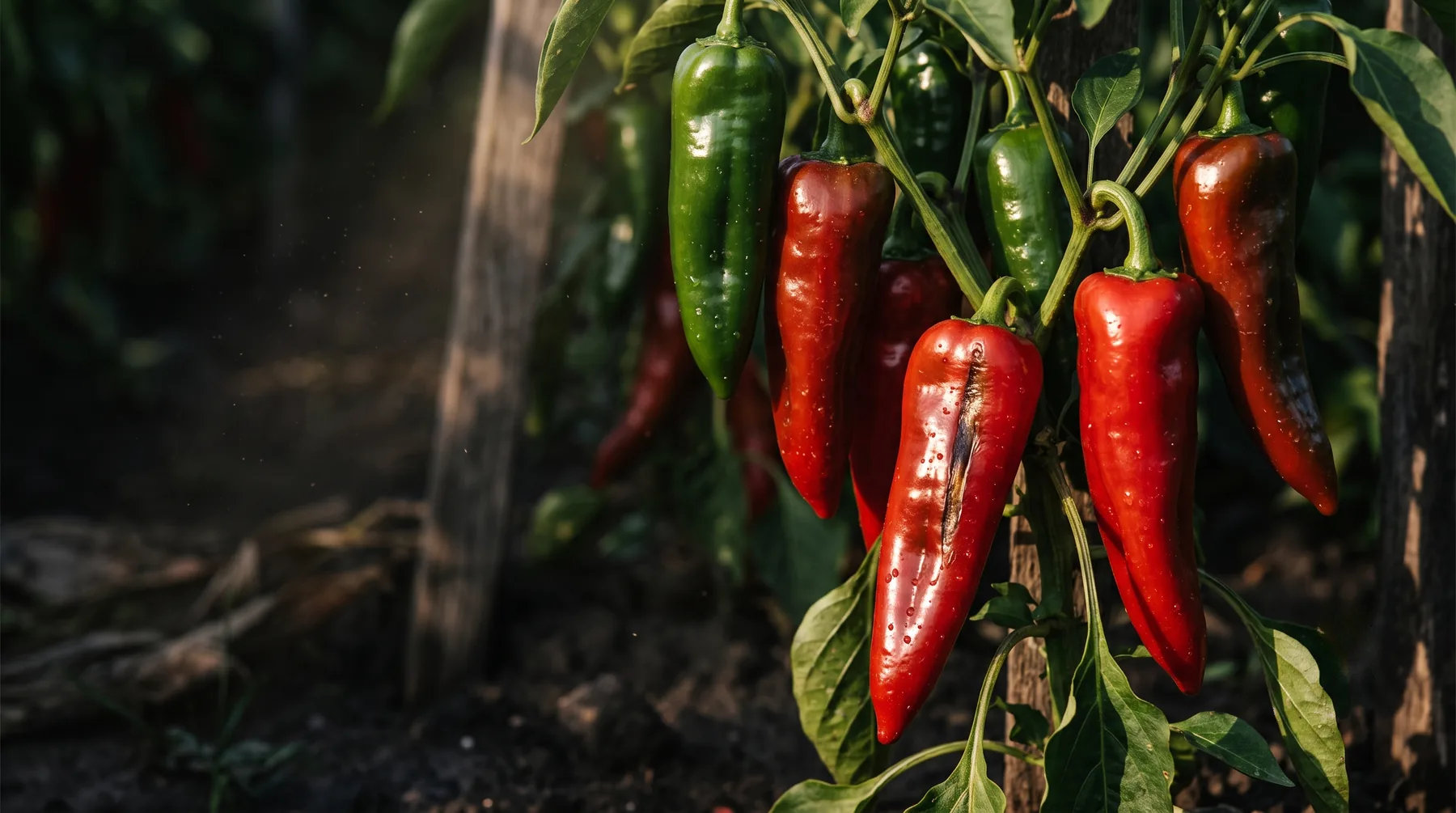
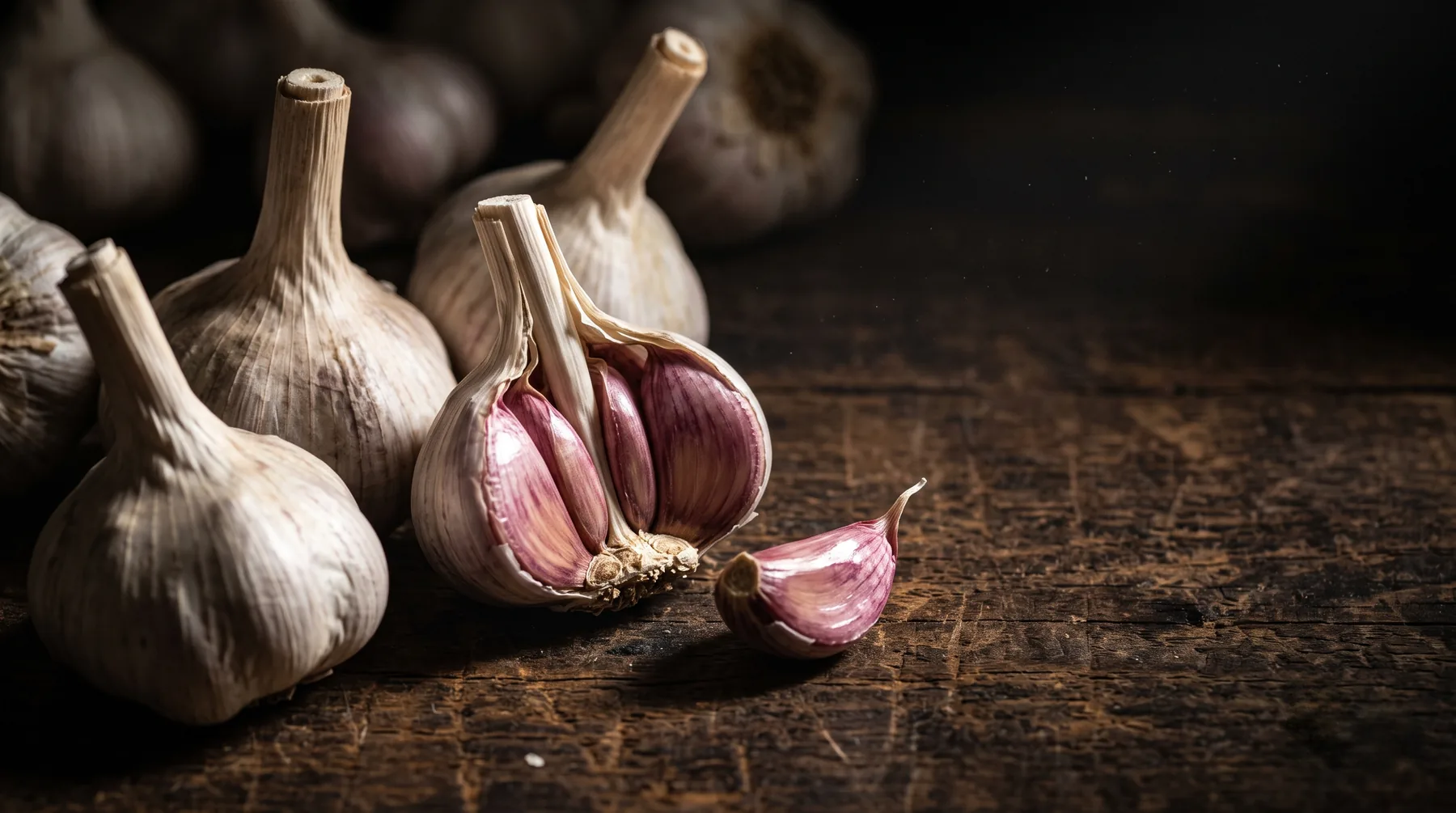
Romesco is what a glut of sweet peppers is for. Catalonia treats it the way Liguria treats pesto — an emulsified nut-and-vegetable sauce that goes with almost anything — and it is significantly more forgiving to make.
The whole thing rests on one step: charring the peppers hard enough. Not softened, not browned. Black. That is where the sweetness comes from.
What you need
| Red Marconi peppers | 3 lb (~8 large) |
| Garlic, unpeeled | 4 cloves |
| Marcona or blanched almonds | 1 cup |
| Stale country bread | 1 thick slice |
| Sherry vinegar | 3 tbsp |
| Smoked paprika (pimentón) | 1 tsp |
| Cayenne or one dried ñora | a pinch |
| Extra-virgin olive oil | 1/2 cup + 2 tbsp for frying |
| Salt | to taste |
Method
- Char the peppers. Over a gas flame, on a grill, or under a broiler 4 inches from the element. Turn until the skin is completely black on all sides — 10–15 minutes. Add the unpeeled garlic cloves for the last 5.
- Steam. Straight into a bowl, covered tightly, 15 minutes. The trapped steam lifts the skin away from the flesh.
- Peel — and do not rinse. Rub the skins off with your fingers. Running them under a tap washes away exactly the roasted oils you just made. Pull the stems and seeds.
- Toast the almonds in a dry pan until golden and fragrant. Cool.
- Fry the bread in 2 tbsp olive oil until crisp on both sides. This is not optional if you want the traditional texture.
- Blend. Almonds and bread first, to a coarse crumb. Then peppers, squeezed-out roasted garlic, vinegar, paprika and cayenne. Blend to a thick, slightly textured paste — romesco should not be a purée.
- Emulsify. Stream the ½ cup of olive oil in with the motor running. It goes from grainy to glossy and thick as it takes the oil.
- Salt, rest, taste again. It improves substantially after an hour and is better the next day.
Marconi, not bell
A bell pepper is thick-shouldered and blocky: the skin chars unevenly, blisters in fragments, and fights you off in pieces while the flesh collapses. A Marconi is long and thin-walled — it blackens evenly and the skin comes away in sheets. Fully red, it is also considerably sweeter.
Fully red is doing real work in that sentence. A green Marconi makes a thin, grassy romesco. Give it the extra two to three weeks on the plant.
Storage
Refrigerator, a week, under a film of oil. Freezer, a year.
The better move for a September glut: char, peel and freeze the peppers themselves in their own juices. Then romesco is a fifteen-minute job any evening in February, made from peppers that taste like they were roasted that afternoon.
The kit for this sauce
Each item is selected for a job in this recipe. Amazon listings, sellers, and prices can change; check the current details before you buy.
Marconi Red Sweet Pepper Seed
A long Italian sweet pepper that roasts and peels far better than a bell. Romesco and any red-pepper paste wants this, not a supermarket bell.
Siberian Hardneck Seed Garlic, 1 lb
Planted in October, pulled in July. Hardneck garlic has bigger, easier-peeling cloves and gives you scapes in June — a free second crop that is itself excellent in green sauce.
Garden Harvest Basket with Tool Caddy
A harvest basket that doubles as a colander means the hose rinse happens in the garden, and the dirt stays outside. On a 20-pound tomato day that is a genuine time saving.
5200 Professional-Grade Blender, 64 oz
The difference between a hot sauce that is smooth and one that is smooth-ish is blade tip speed. A Vitamix emulsifies chile skin into the sauce so completely you do not need to strain it.
Mesh Strainers, Stainless, 3-Count
The last pass before bottling. A fine mesh catches the skin fragments and seed shards that make a hot sauce gritty and clog a woozy bottle's dripper insert.
Essential Enameled Cast Iron Dutch Oven, 6 qtMust have
Tomato sauce is acidic enough to strip bare cast iron and pick up a metallic tang from aluminium. Enamel is non-reactive, and the thermal mass holds a low simmer for three hours without scorching the bottom.
Half Pint (8 oz) Regular Mouth Mason Jars, 12Must have
Eight ounces is the right jar for a sauce you use by the spoonful. Open a quart of hot sauce and you are racing the fridge; open a half-pint and you finish it while it is still good.
Canning Jar Labels, 360 pcs, removable
Date every jar. In March, three jars of red sauce are indistinguishable, and 'it's probably the one from August' is not a food-safety practice.
Paid links. We earn a commission from Amazon if you buy; you pay the same. Disclosure.
Questions people actually ask
Can I use jarred roasted peppers?
You can, and it will be fine, and it will not be the reason to have grown eight Marconi plants. Jarred peppers are packed in brine and taste of it. The point of charring your own is the caramelised sugar you get from blackening skin over live flame.
Why almonds and bread?
Both are structural. Almonds emulsify the oil and give the sauce body; bread — traditionally stale, fried in olive oil — thickens it and rounds the vinegar. Skip the bread and you get a thinner, sharper sauce. Marcona almonds are the traditional choice and are worth it.
Can I can it?
No. It is low-acid, dense and nut-thickened, and there is no tested process. Freeze it, or freeze the roasted peeled peppers and make it fresh.
What do I actually eat this with?
Grilled spring onions, which is its origin. Then: roast chicken, any white fish, grilled vegetables, lamb, eggs, or spread on bread under something else. It is closer to a condiment than a pasta sauce.
Last reviewed 2026-09-01 by the SeedsToSauce Test Kitchen. Spotted something wrong?Tell us — corrections get published.