
Sauce · Frozen
Genovese Pesto, Properly
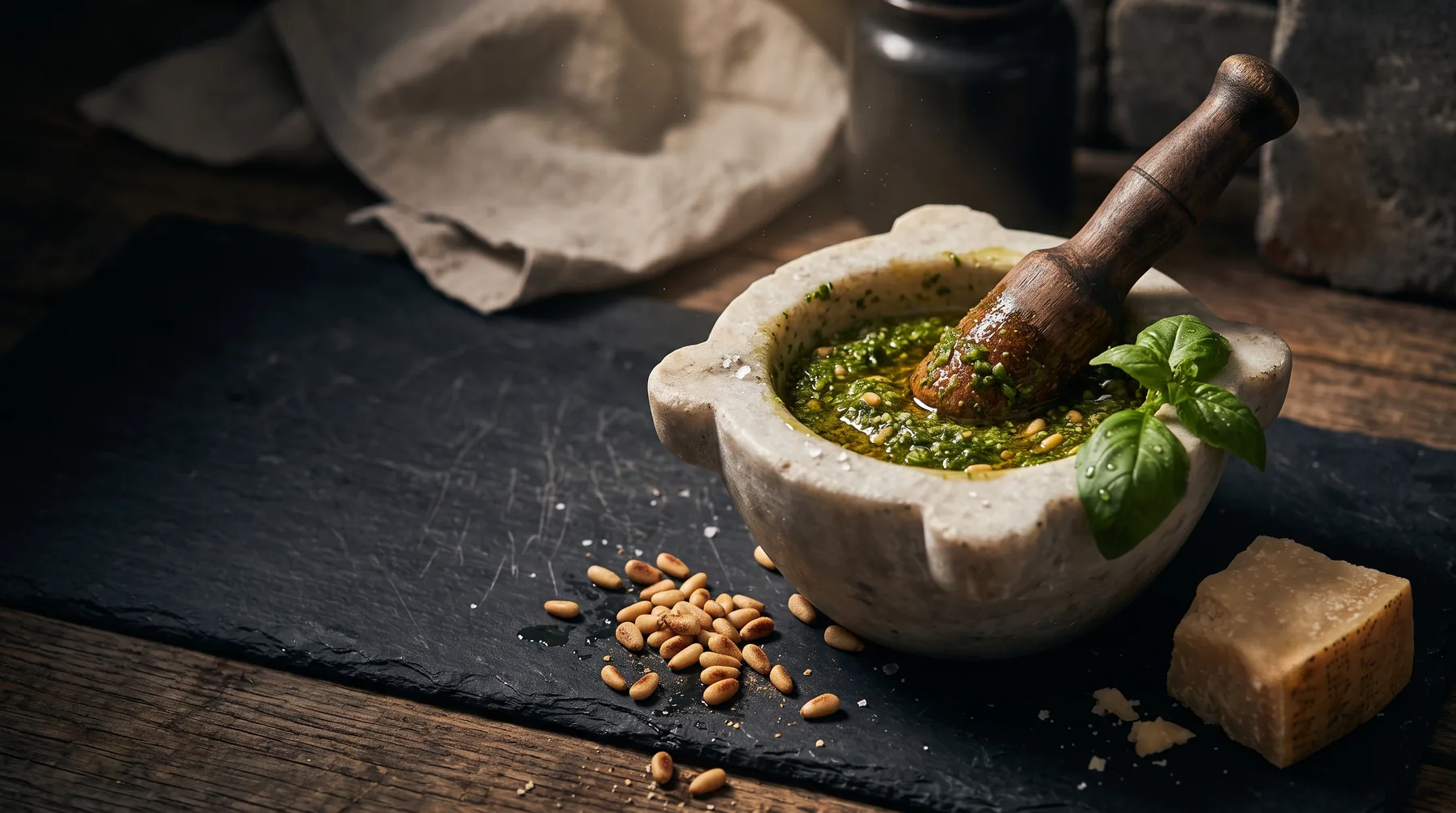
Four cups of basil, a mortar if you have the patience, and nothing that turns black by dinner. Freezes for a year; cannot be canned, ever.
Not a tested canning process
There is NO tested home-canning process for pesto and there will not be one. It is low-acid (around pH 5.5–6.0), oil-based, uncooked, and dense — every property that makes botulism a real risk in a sealed jar. Oil under anaerobic conditions is the classic vector. Refrigerate it for up to a week with a film of oil on top, or freeze it, where it holds a year with almost no loss. Never water-bath or pressure-can pesto, and never store garlic-in-oil at room temperature.
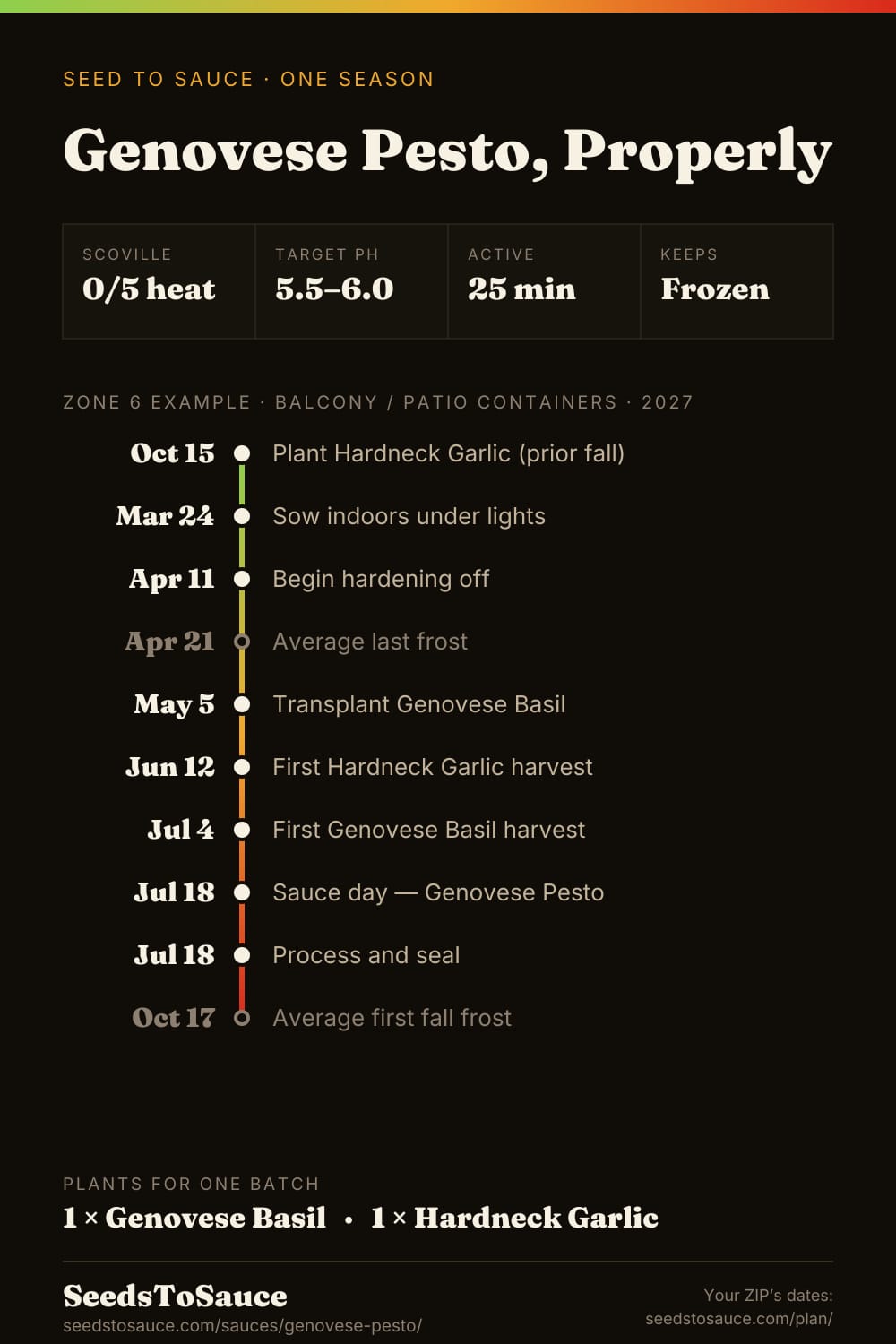
If you started today, in Zone 6, in pots
2 plants. 3 jars. Sauce on Jul 18.
Worked from Zone 6's average last frost (Apr 21) and each cultivar's days to maturity. Your zone and your space change every date below — the builder does that for you.
- Mar 3Order seeds and starting supplies
- Mar 24Sow indoors under lights
- Apr 21Average last frost (Zone 6)
- Jun 12First Hardneck Garlic harvest
- Jul 4First Genovese Basil harvest
- Jul 18Sauce day — Genovese Pesto
- Jul 18Process and seal
Save it
The whole season, one pin
| Yield | About 24 oz — three half-pint jars, or two ice-cube trays — 3 half-pint jars |
|---|---|
| Active time | 25 minutes |
| Total time | 25 minutes |
| Heat | — |
| Target finished pH | 5.5–6.0 — low acid, refrigerate or freeze only |
| Preservation | Frozen |
| Fruit this batch eats | 0.5 lb Genovese Basil0.05 lb Hardneck Garlic |
What you have to grow
Pesto is four ingredients and a technique, and almost every jarred version fails on the technique. Heat and bruising oxidise basil; a food processor delivers both. The result is the dull khaki paste you have had in restaurants.
Do it cold and fast and it stays the colour of the plant.
What you need
| Genovese basil leaves | 4 packed cups (~4 oz) |
| Garlic | 3–4 cloves |
| Pine nuts, toasted | 1/3 cup |
| Parmigiano-Reggiano, grated | 3/4 cup |
| Pecorino Romano, grated | 1/4 cup |
| Extra-virgin olive oil | 3/4 cup |
| Salt | to taste |
Method
- Toast the nuts in a dry pan until they smell nutty, 3–4 minutes. Cool completely. Warm nuts warm the basil.
- Chill everything. Bowl, blade, leaves. Twenty minutes in the fridge makes a visible difference to the final colour.
- Optional blanch for colour. Ten seconds in boiling water, straight into ice, squeeze bone dry. It costs a little aroma and buys a green that lasts days rather than hours.
- Garlic and salt first. Crush to a paste — mortar, or a coarse pulse in the processor.
- Nuts. Break them down into the garlic.
- Basil, in handfuls. Short pulses only. You are bruising it into a paste, not liquefying it. Stop the moment it is uniform.
- Oil, slowly, with the machine off or the pestle turning. Drizzled in, it emulsifies; dumped in, it splits.
- Cheese last, folded in by hand off the heat.
Storage — and the rule that has no exceptions
- Refrigerator: up to a week, in a jar with a film of olive oil covering the surface.
- Freezer: ice-cube trays, then bagged. A year, with almost no loss of colour or flavour. Leave the cheese out and add it after thawing.
- Canning: never. Not water-bath, not pressure, not “just for a minute.”
That is not caution for its own sake. Pesto sits at around pH 5.5–6.0 — nowhere near the 4.6 line — and it is an oil-based, uncooked, dense purée containing garlic. Garlic in oil at room temperature is the textbook botulism vector and has caused real, documented outbreaks. There is no tested home process for pesto because the food itself is not amenable to one.
The freezer version is genuinely excellent. This is not a compromise.
Two plants per batch
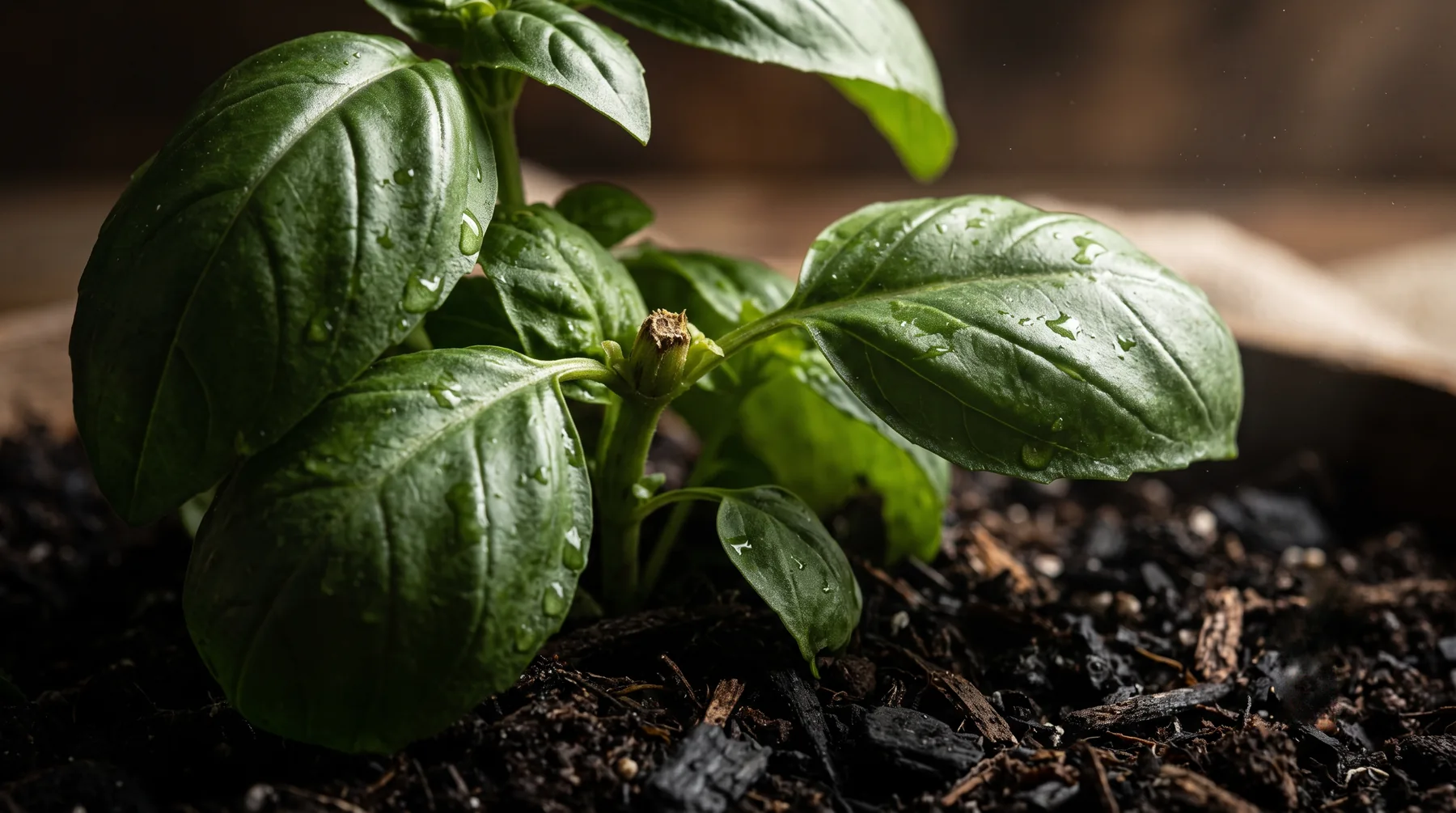
Four packed cups of leaf is about 4 oz, which is roughly two well-pinched Genovese plants across a season — and three if you also want to eat any of it fresh. Pinch weekly from six inches tall; that alone roughly quintuples what a plant gives you. See the basil grow file.
The kit for this sauce
Each item is selected for a job in this recipe. Amazon listings, sellers, and prices can change; check the current details before you buy.
Genovese Sweet Basil Seed
The large-leaf, low-anise Italian basil that pesto is defined by. Thai and lemon basils are good plants and wrong ingredients.
Siberian Hardneck Seed Garlic, 1 lb
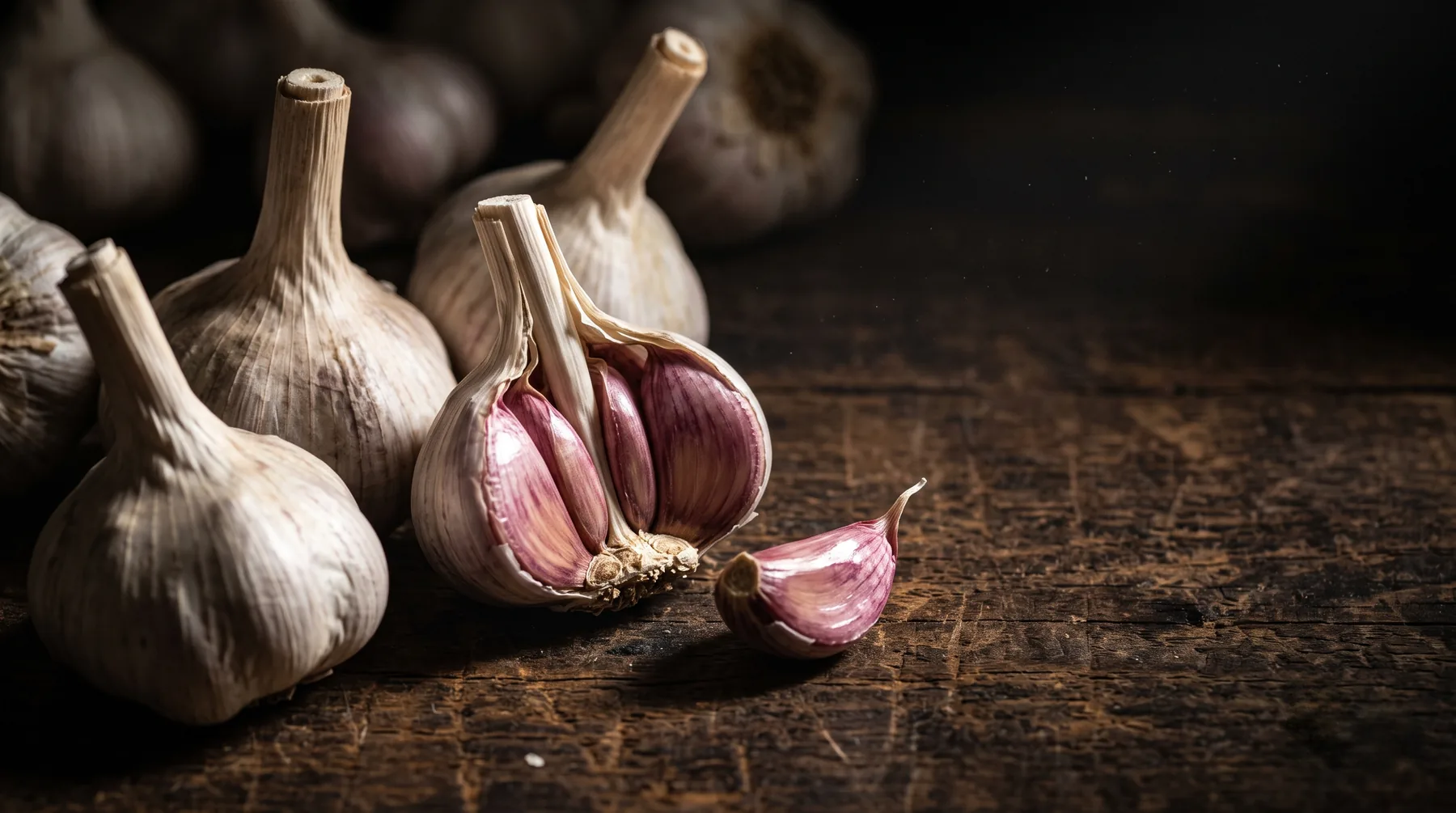
Planted in October, pulled in July. Hardneck garlic has bigger, easier-peeling cloves and gives you scapes in June — a free second crop that is itself excellent in green sauce.
6" Micro-Tip Pruning SnipsMust have
Ninety percent of sauce-garden cutting is snipping a pepper stem or a basil node, and a fine-tipped snip does it better than any pruner. Pulling peppers by hand tears the branch.
Digital Kitchen Scale, 11 lb, g/ozMust have
Fermentation brine is a percentage of weight, not a number of spoons. Without a gram scale you are not following a fermentation recipe — you are guessing at the one number that determines whether it is safe.
5200 Professional-Grade Blender, 64 oz
The difference between a hot sauce that is smooth and one that is smooth-ish is blade tip speed. A Vitamix emulsifies chile skin into the sauce so completely you do not need to strain it.
Mesh Strainers, Stainless, 3-Count
The last pass before bottling. A fine mesh catches the skin fragments and seed shards that make a hot sauce gritty and clog a woozy bottle's dripper insert.
Half Pint (8 oz) Regular Mouth Mason Jars, 12Must have
Eight ounces is the right jar for a sauce you use by the spoonful. Open a quart of hot sauce and you are racing the fridge; open a half-pint and you finish it while it is still good.
Canning Jar Labels, 360 pcs, removable
Date every jar. In March, three jars of red sauce are indistinguishable, and 'it's probably the one from August' is not a food-safety practice.
Paid links. We earn a commission from Amazon if you buy; you pay the same. Disclosure.
Questions people actually ask
Why can't I can pesto? Italian shops sell it in jars.
Commercial pesto is produced under controlled acidification, retort processing or refrigeration regimes that a home kitchen cannot replicate or verify. At home, pesto is low-acid, oil-covered and uncooked — the exact conditions Clostridium botulinum needs. There is no tested home process for it. Freeze it; it comes out of the freezer better than any jar you could have made.
My pesto went brown within an hour.
Oxidation, driven by heat and by bruising the leaf. Keep everything cold, blanch the basil for 10 seconds and shock it in ice water if colour matters to you, and cover the surface with oil. A food processor's friction heat browns pesto faster than a mortar does.
Can I leave out the cheese to freeze it?
Yes, and it is the better approach. Freeze the basil-garlic-nut-oil base and stir the parmesan in after thawing. Cheese frozen into pesto goes slightly grainy.
Pine nuts are absurdly expensive. What else works?
Walnuts are the traditional cheaper substitute in Liguria itself and are excellent. Almonds and sunflower seeds both work. Toast whatever you use.
Last reviewed 2026-09-01 by the SeedsToSauce Test Kitchen. Spotted something wrong?Tell us — corrections get published.