Guide · cooking
Harvest timing and storage: picking at the right moment, keeping what you can't use
When each crop is actually ready, why "pick it green" costs you most of the flavour, and the three ways to hold a harvest until you have enough for a batch.
The difference between a good sauce and a great one is usually decided in the garden, in the last three weeks before you pick.
When each crop is actually ready
| Crop | Ready when | The mistake |
|---|---|---|
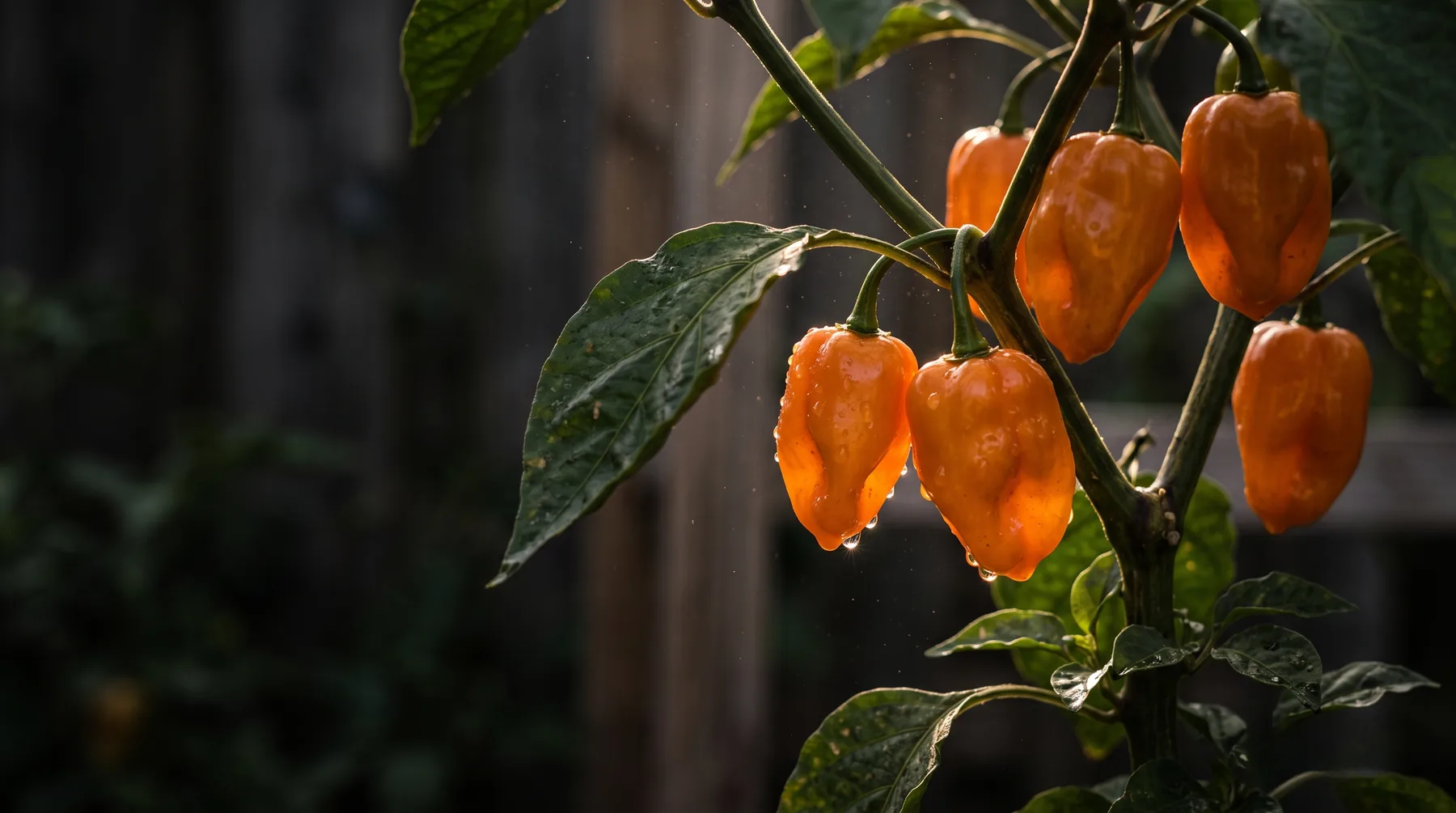
| Habanero | Fully orange, twists off easily | Picking green — hot, tastes of nothing |
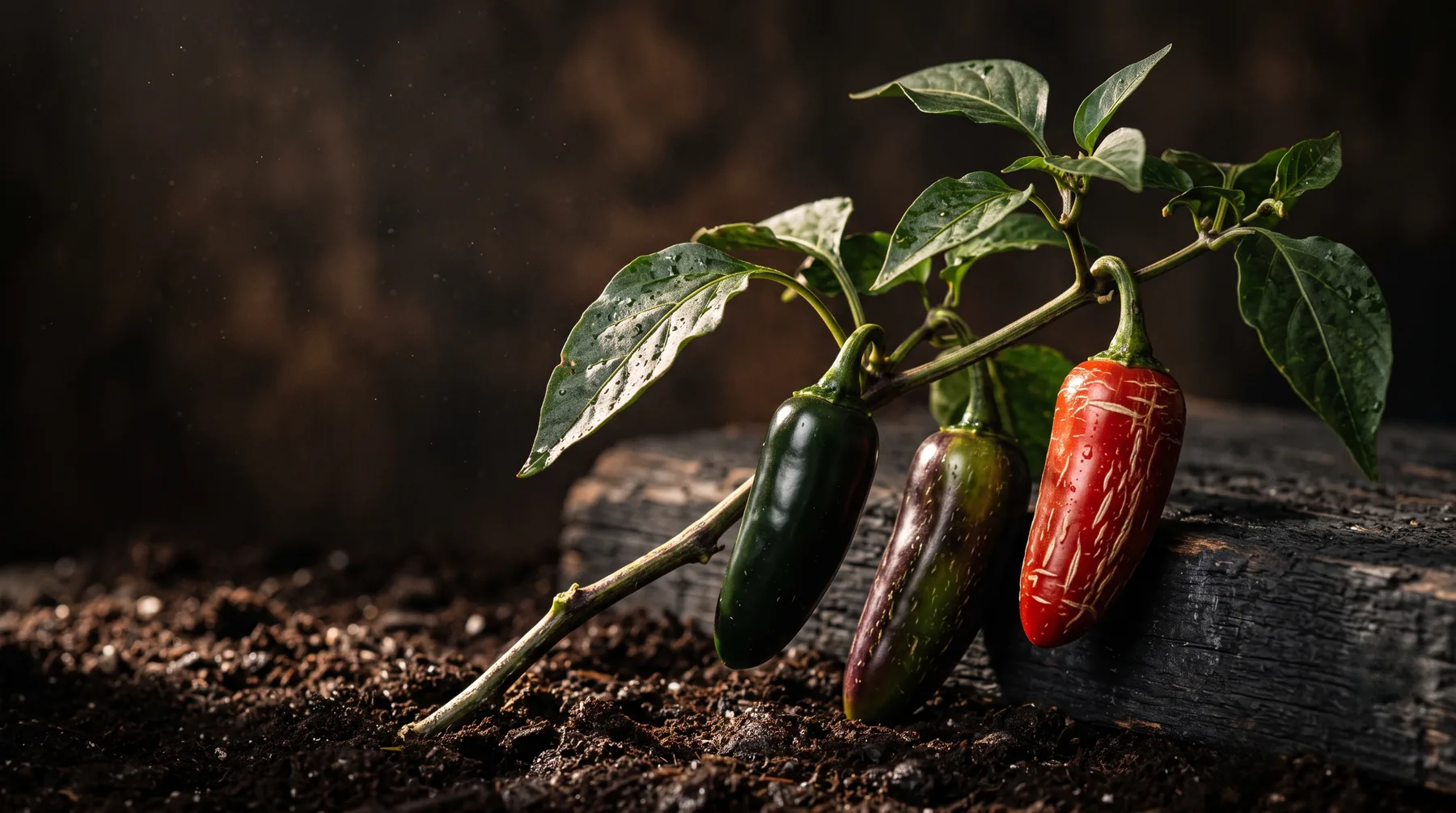
| Jalapeño (for chipotle) | Deep red, corked | Picking green, which is a different, lesser ingredient |
| Serrano | Firm and green | Waiting for red loses the grassy note verde needs |
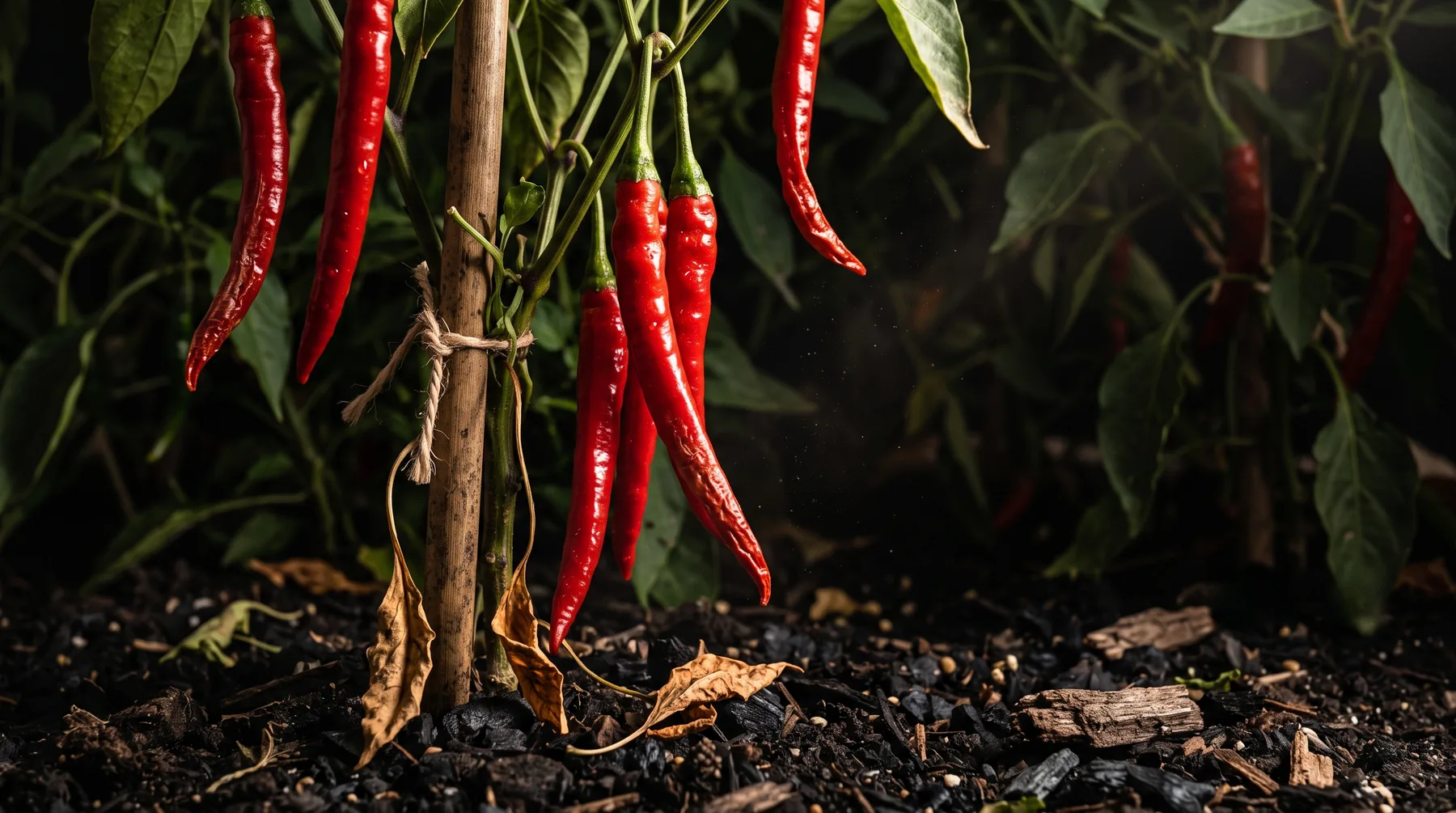
| Cayenne | Fully red, slightly leathery | Picking green: dries grey and tastes flat |
| Marconi | Fully red, shoulder to tip | Green is just a mediocre bell |
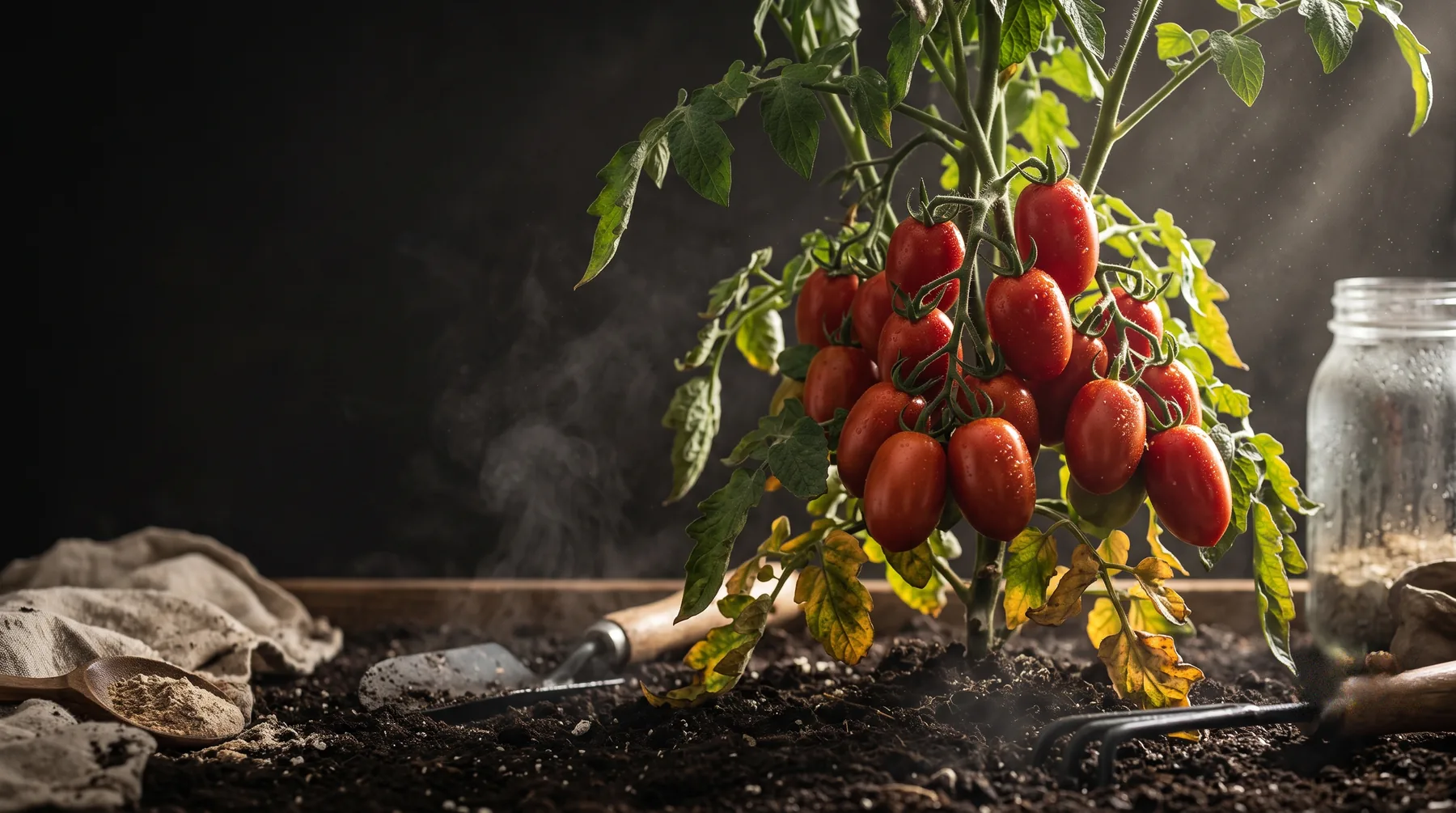
| Paste tomato | Fully coloured, slight give | Refrigerating after picking |
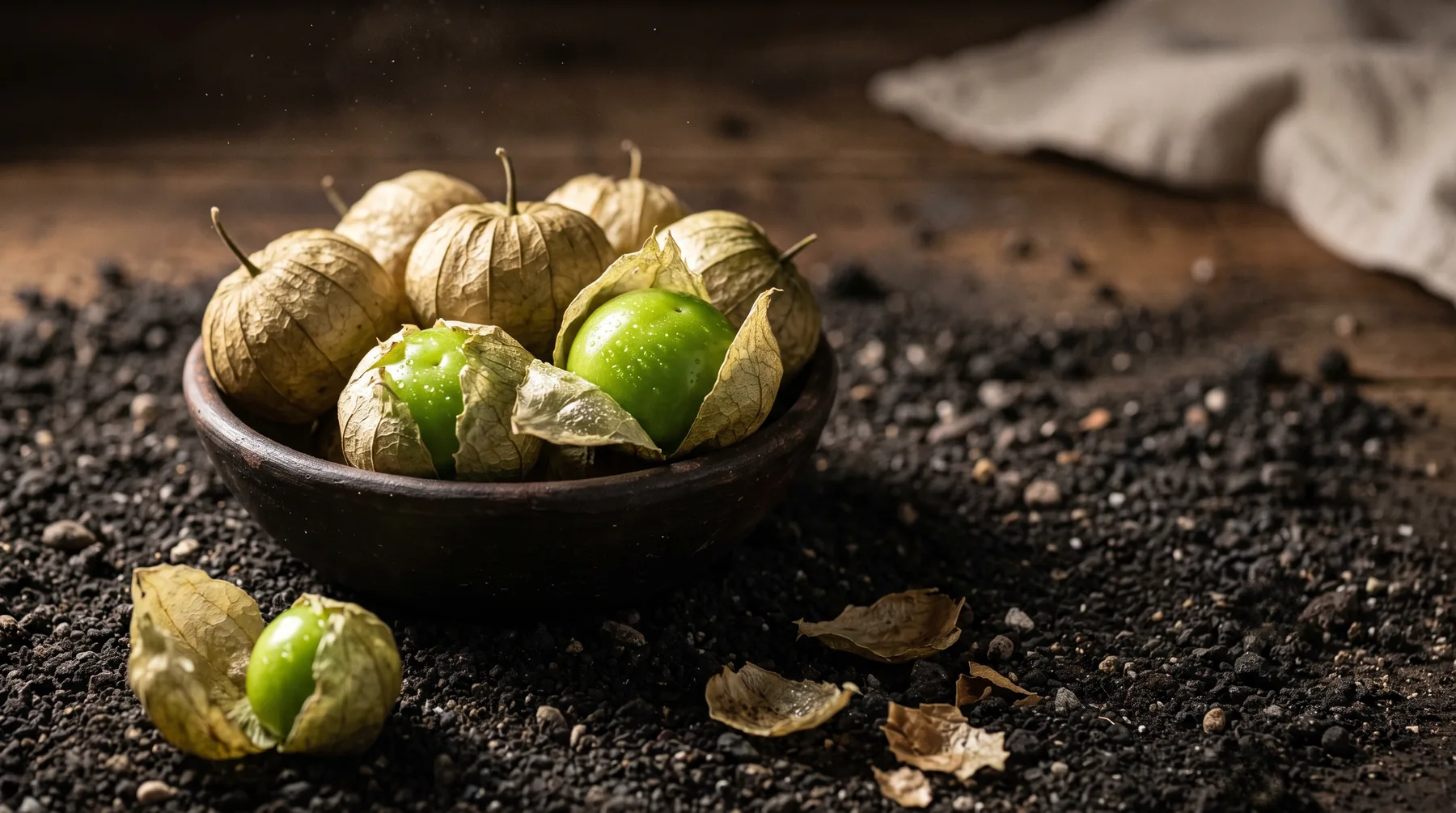
| Tomatillo | Husk splits, fruit fills it | Picking by size — underripe is bitter and hard |
| Basil | Any time, before flowering | Letting flower spikes run; leaf turns bitter |
| Cilantro | Broad lower leaves, pre-bolt | Harvesting the ferny pre-bolt leaves |
| Onion | Tops fall over on their own | Bending tops over yourself — it shortens storage |
| Garlic | 3–4 lower leaves brown, uppers green | Waiting too long; wrappers split and it won’t store |
| Carrot | Shoulder ~¾″ across | Leaving them in summer heat, which turns them bitter |
Two rules that apply to everything
Cut, don’t pull. Pulling a pepper tears the branch and opens a wound that invites disease. Snips, every time.
Pick in the morning. Turgor is highest and field heat lowest. It genuinely affects how long a harvest holds before you process it.
Holding a harvest until you have a batch
Almost nobody gets 12 pounds of tomatoes on one day. You accumulate.
Freeze — the default, and the best one
- Chiles: whole, on a sheet tray, then bagged once solid. A year. Texture goes; for sauce that is irrelevant.
- Tomatoes: whole, washed and cored, straight into bags. Under warm water the skins slip off with no blanching at all.
- Roasted peppers: char, peel, freeze in their own juices. Romesco becomes a fifteen-minute job in February.
- Herbs: as pesto or zhoug in ice-cube trays rather than as loose leaf, which goes black.
Dry — for thin-walled chiles only
Cayenne dries beautifully; a serrano gives up too much aroma. 125 °F until brittle, 8–12 hours. Above about 145 °F you cook off the volatiles you grew the plant for.
Cool completely before jarring. Store whole and grind in small batches — ground chile goes flat within months and whole pods hold for years.
Refrigerate — the short bridge
- Peppers: 1–2 weeks in a bag with a little airflow.
- Tomatoes: never. Below about 55 °F, flavour-volatile production shuts down permanently and does not restart. A refrigerated tomato is a permanently worse tomato.
- Herbs: stems in water on the counter, like flowers.
Cure the alliums
Onions and garlic are not stored, they are cured first, and skipping it is why they rot in November.
- Pull whole, tops attached.
- Lay out in shade with real airflow — not sun.
- Onions: 2–3 weeks, until necks are papery and tight.
- Garlic: 3–4 weeks, until the outer wrappers are dry and rustling.
- Trim tops to an inch, roots to a quarter inch.
- Store cool, dark and dry, never in a sealed bag.
Cured properly: onions hold 4–6 months, hardneck garlic about 6.
The frost call
When frost is forecast, strip everything.
- Green tomatoes ripen indoors at room temperature. Slower and slightly less sweet, but genuinely usable.
- Peppers finish colouring off the plant, especially if you leave a length of stem.
- Basil is destroyed at about 50 °F — well before frost. Take the whole plant a week ahead and turn it into pesto for the freezer.
Nothing on the plant survives the first hard freeze. Everything you pick the day before is a jar.
Related crops
Related sauces
Sources
Every food-safety number on this page traces to one of these. If you are going to trust one link on this site, trust these over us.
The gear this guide assumes
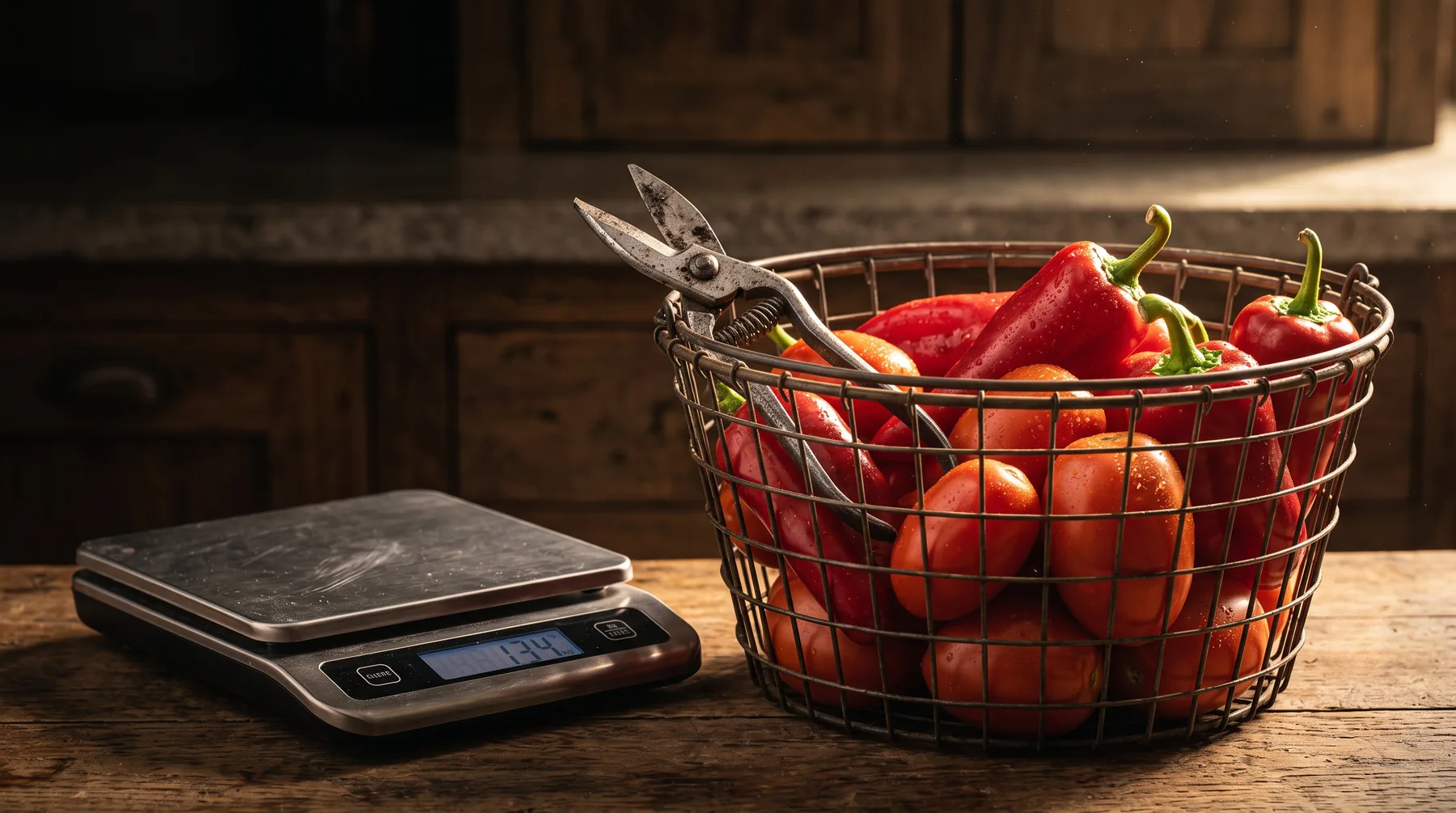
6" Micro-Tip Pruning SnipsMust have
Ninety percent of sauce-garden cutting is snipping a pepper stem or a basil node, and a fine-tipped snip does it better than any pruner. Pulling peppers by hand tears the branch.
Garden Harvest Basket with Tool Caddy
A harvest basket that doubles as a colander means the hose rinse happens in the garden, and the dirt stays outside. On a 20-pound tomato day that is a genuine time saving.
Digital Kitchen Scale, 11 lb, g/ozMust have
Fermentation brine is a percentage of weight, not a number of spoons. Without a gram scale you are not following a fermentation recipe — you are guessing at the one number that determines whether it is safe.
Nitrile Exam Gloves, 200 pcs, food-safeMust have
Capsaicin is oil-soluble and does not wash off with soap. Seeding a pound of habaneros bare-handed means eight hours of burning hands and one unforgettable mistake involving your own eye.
Food Dehydrator, 6 Stainless Trays
Sun-drying chiles works in Oaxaca and fails in Ohio — humidity lets mould win the race. Controlled 125 °F airflow dries a full cayenne harvest overnight, every time.
Pellet Smoker Tube, 12", Set of 2
Chipotle is nothing but a red jalapeño that has been cold-smoked for hours. A pellet tube turns any covered grill into a cold smoker for eighteen dollars.
One-Touch Coffee & Spice Grinder
Dried cayenne into powder in fifteen seconds. Dedicate one to chiles — grind coffee in it afterwards and you will find out exactly how well capsaicin sticks to plastic.
Pint (16 oz) Regular Mouth Mason Jars with Lids and Bands
The right size for marinara, where a jar is one dinner for a family. Same rules as the half-pints: the glass is forever, the flat lid is not.
Canning Jar Labels, 360 pcs, removable
Date every jar. In March, three jars of red sauce are indistinguishable, and 'it's probably the one from August' is not a food-safety practice.
Paid links. We earn a commission from Amazon if you buy; you pay the same. Disclosure.
Questions people actually ask
I don't have enough for a batch at once. What do I do?
Freeze as you go. Chiles freeze whole on a sheet tray then bag, tomatoes can be frozen whole and the skins slip off under warm water, and roasted peeled peppers freeze in their own juices. Accumulate over three or four weeks and run one sauce day when you have the weight. This is normal practice, not a compromise.
Can I freeze tomatoes for sauce instead of canning?
Yes, and it is easier. Wash, core, freeze whole in bags. The texture is destroyed, which does not matter because you are cooking them down anyway, and skins slip off with no blanching. The only cost is freezer space.
Frost is forecast tomorrow and the plants are loaded.
Strip everything, ripe or not. Tomatoes and peppers both continue ripening off the plant. Keep them at room temperature out of direct sun; do not refrigerate tomatoes, which permanently kills the flavour compounds.
How do I know a dried chile is dry enough?
It snaps rather than bends. Leathery means it still holds enough water to mould in storage. Cool completely before jarring — warm pods sweat and the jar fogs, which is the same problem arriving a week later.
Last reviewed 2026-09-01 by the SeedsToSauce Test Kitchen.Corrections welcome.