
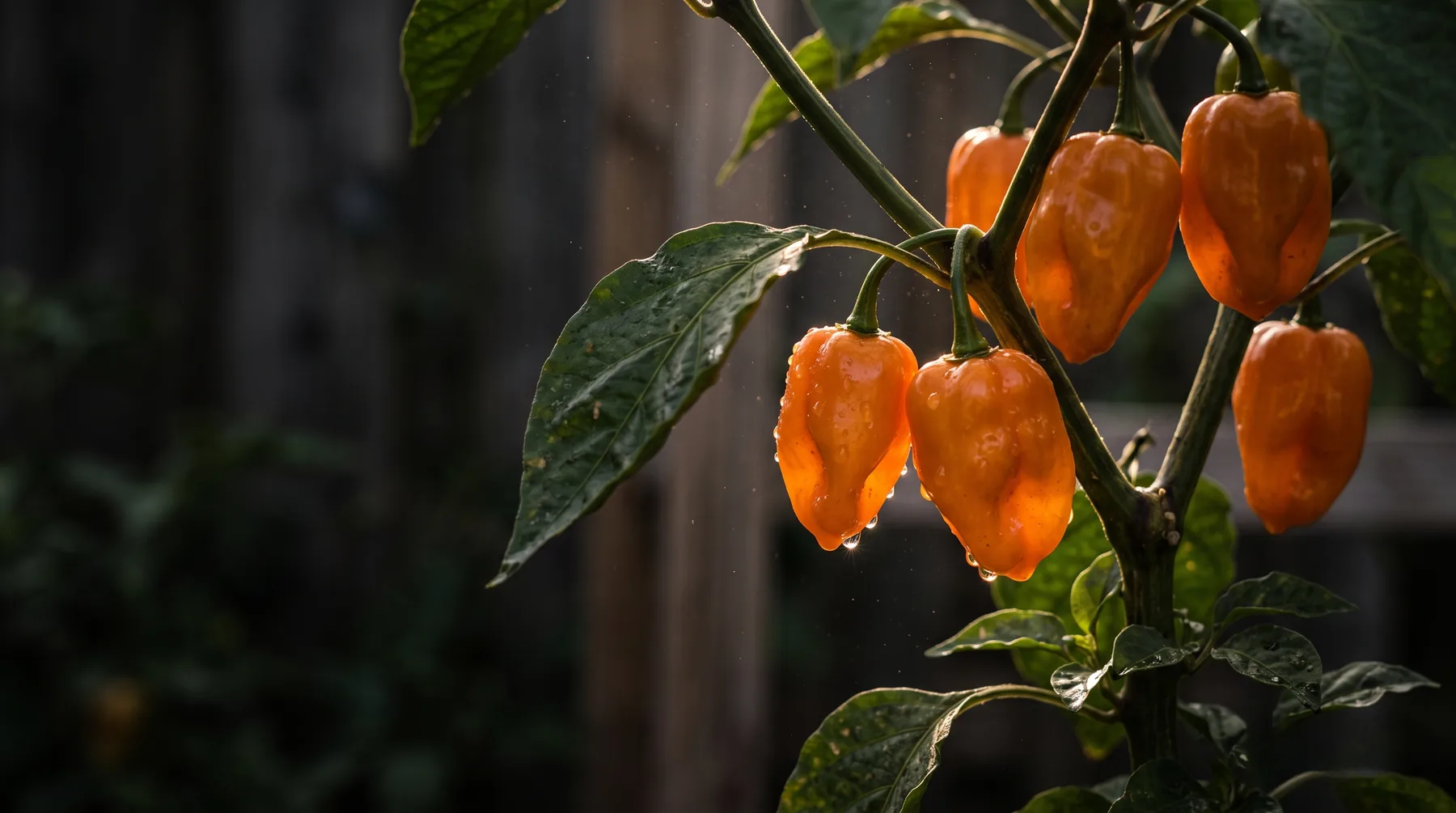
Grow file · Orange Habanero (Capsicum chinense)
Habanero
Capsicum chinense
The fruity superhot that fermented hot sauce is built on — 100,000–350,000 SHU with an apricot top note that survives three weeks in brine.
| Days to maturity | 95 days from transplant |
|---|---|
| Days to germinate | 14–28 days at 85 °F; 40+ days or never below 70 °F |
| Germination soil temp | 80–90 °F |
| Start indoors | 10 weeks before last frost |
| Transplant | 2 weeks after last frost |
| Spacing | 18″ between plants |
| Sun | 8+ hours direct |
| Container size | 5 gal minimum per plant |
| Realistic yield | 2.5 lb per healthy plant, per season |
| Heat | 100,000–350,000 SHU |
Your dates, by zone
Built from each zone's average last frost and this cultivar's 95-day maturity. Zone averages are not your garden — look up your city's NOAA frost dates or enter your ZIP in the builder to shift every row.
| Zone | Sow indoors | Transplant | First pick |
|---|---|---|---|
| Zone 3 | Mar 6 | May 29 | Sep 1 |
| Zone 4 | Mar 3 | May 26 | Aug 29 |
| Zone 5 | Feb 19 | May 14 | Aug 17 |
| Zone 6 | Feb 10 | May 5 | Aug 8 |
| Zone 7 | Jan 23 | Apr 17 | Jul 21 |
| Zone 8 | Jan 17 | Apr 11 | Jul 15 |
| Zone 9 | Dec 20 | Mar 14 | Jun 17 |
| Zone 10 | Nov 22 | Feb 14 | May 20 |
| Zone 11+ | Nov 6 | Jan 29 | May 4 |
Tight means first pick lands within two weeks of that zone's average first fall frost. It is doable, with zero slack in the indoor start.
Harvest visual
Ready when you see this
Pick when pods are fully orange, glossy, and slightly wrinkled, with a clean snap from the stem. Green fruit is immature; a dull, soft, leaking pod is past its best.
Why this is the sauce pepper
Almost every commercial hot sauce above 50,000 SHU that tastes of something rather than just burning is built on a C. chinense. The species carries volatile aromatics — apricot, citrus peel, a faint floral note — that C. annuum chiles like cayenne and jalapeño simply do not have. Those aromatics survive a three-week lacto-ferment. That is why the fermented habanero sauce in your fridge tastes complex and the cayenne one tastes hot.
The tradeoff is time. Ninety-five days from transplant, on top of ten weeks indoors, means a habanero is committed to in February for a September sauce. Miss the sowing window in Zone 5 or 6 and there is no catching up.
Germination is the whole game
Everything difficult about habaneros happens in the first month.
- 80–90 °F soil. Not air. A 68 °F room with a tray on the counter is a failed sow, and you will not know for a month.
- 14–28 days is normal. Do not throw the tray out at day 12.
- Dome on until emergence, off immediately after. Humidity gets them up; standing humidity afterwards is damping-off.
- Light within hours of emergence, 2–3 inches off the canopy, 16 hours a day. A seedling that stretches for a window never recovers its stem thickness.
Growing it out
Pot up from the 72-cell tray to a 3–4 inch pot at the second set of true leaves; habaneros will otherwise be root-bound weeks before your last frost. Transplant two weeks after last frost, not on it — chinense sulks in cold soil and a shocked plant loses more time than the two weeks you saved.
In containers, five gallons is the working minimum and seven is better. Feed a low-nitrogen, potassium-forward fertiliser monthly from first flower.
Harvest
Pick when the pod is fully orange and comes away with a light upward twist. Green habaneros are hot and taste of nothing. A healthy plant carries 30–50 pods and will keep setting until frost — around 2.5 lb per plant over a season, which is why a 6-lb sauce batch wants three plants and a margin.
Wear nitrile gloves from the first pick. Capsaicin is oil-soluble, it does not wash off with soap, and it stays on your hands for hours.
How this crop actually fails
Named, specific, and in the order you're most likely to meet them.
Seed never germinates
Cause Soil below 80 °F. Capsicum chinense is the slowest-germinating species in common cultivation and it is genuinely temperature-gated, not merely temperature-preferring.
Fix Heat mat with a soil probe held at 85 °F, dome on, and patience — three weeks is normal, not a failure. Nothing else on this list matters if you skip this one.
Plant flowers, then drops every flower
Cause Night temperatures above roughly 90 °F or below 60 °F. Pollen is sterile at both extremes, so the flower is fertilised by nothing and abscises.
Fix Nothing in the moment — it resumes when the weather does. In Zones 9–11, plan the harvest around the cool shoulders of summer, not its peak.
Sunken, leathery black patch on the bottom of the pod
Cause Blossom end rot. A calcium transport failure driven by inconsistent watering, not a calcium shortage in the soil.
Fix Consistent moisture is the actual cure — mulch, and a drip timer if you are in containers. Foliar calcium protects the next set; fruit already marked will not recover.
Enormous green plant, almost no pods
Cause Too much nitrogen. A lawn or all-purpose fertiliser tells a pepper to build leaves.
Fix Switch to a low-N, high-K feed (3-4-6 or similar). The plant redirects within two to three weeks.
What habanero needs
Habanero Orange Pepper SeedMust have
The workhorse superhot for sauce: 100,000–350,000 SHU with a genuine apricot-floral top note that survives fermentation. Nothing else in this range tastes like fruit instead of pure burn.
Organic Seed Starter Potting MixMust have
Seed-starting mix is not potting soil with a nicer label — it is finer, lighter, and low in nutrients on purpose, because a seedling's first roots want air and moisture, not fertiliser.
Seedling Heat Mat + Digital ThermostatMust have
Peppers germinate on soil temperature, not air temperature. At 65 °F a habanero takes a month and half of them rot; at 85 °F it is up in eight days. The thermostat is the half that matters.
T8 Full-Spectrum Grow Lights, 1 ft 4-packMust have
A south window in March delivers a fraction of the light a pepper seedling needs, and the plant tells you by stretching. Two inches of LED above the canopy for 16 hours a day fixes it permanently.
72-Cell Trays with 1020 Bottoms, 5-PackMust have
The cheap black nursery trays crack after one season and flex enough to break roots when you lift them. These do not. Over five seasons the price per use is lower than the throwaways.
5-Gallon Fabric Grow Bags, 5-Pack
Fabric pots air-prune roots and drain faster than a plastic pot can, which is the entire reason container tomatoes fail. Five gallons is the honest minimum for a pepper; a tomato wants ten.
Ocean Forest Potting SoilMust have
Pre-charged with enough nutrition to carry a transplant for its first month without feeding, which is exactly the window when most container plants stall.
Organic Tomato-Tone 3-4-6 with 8% CalciumMust have
The NPK ratio is the point: low nitrogen, higher potassium. Feed a tomato a high-nitrogen lawn fertiliser and you get a magnificent six-foot plant with four tomatoes on it.
6" Micro-Tip Pruning SnipsMust have
Ninety percent of sauce-garden cutting is snipping a pepper stem or a basil node, and a fine-tipped snip does it better than any pruner. Pulling peppers by hand tears the branch.
Nitrile Exam Gloves, 200 pcs, food-safeMust have
Capsaicin is oil-soluble and does not wash off with soap. Seeding a pound of habaneros bare-handed means eight hours of burning hands and one unforgettable mistake involving your own eye.
Paid links. We earn a commission from Amazon if you buy; you pay the same. Disclosure.
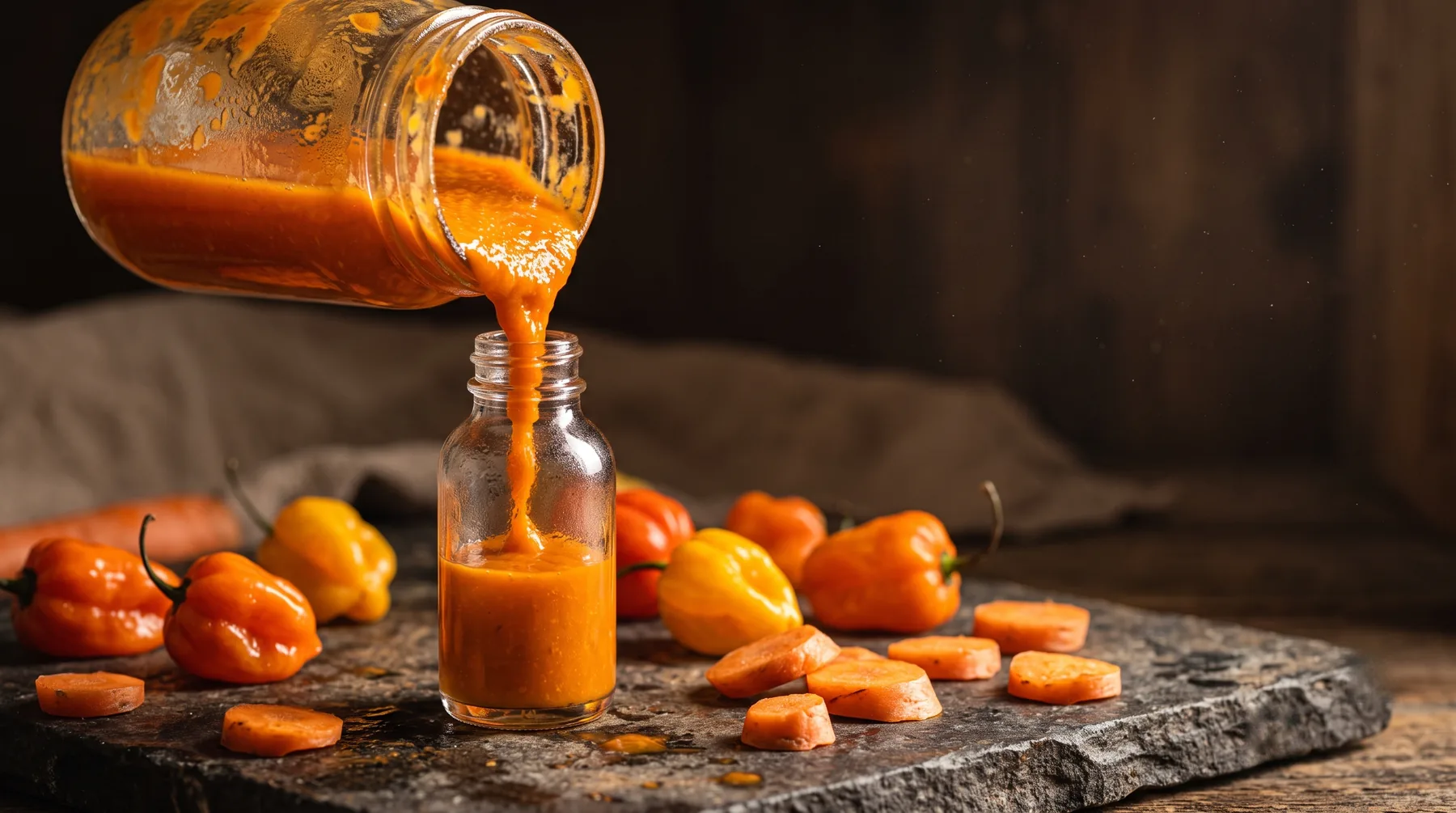
Sauces this plant is for
Last reviewed 2026-09-01. Numbers are cultivar-typical, not guarantees —tell us if yours ran different and we'll say so on the page.