
Sauce · Fermented, then refrigerated or bottled
Fermented Habanero-Carrot Hot Sauce
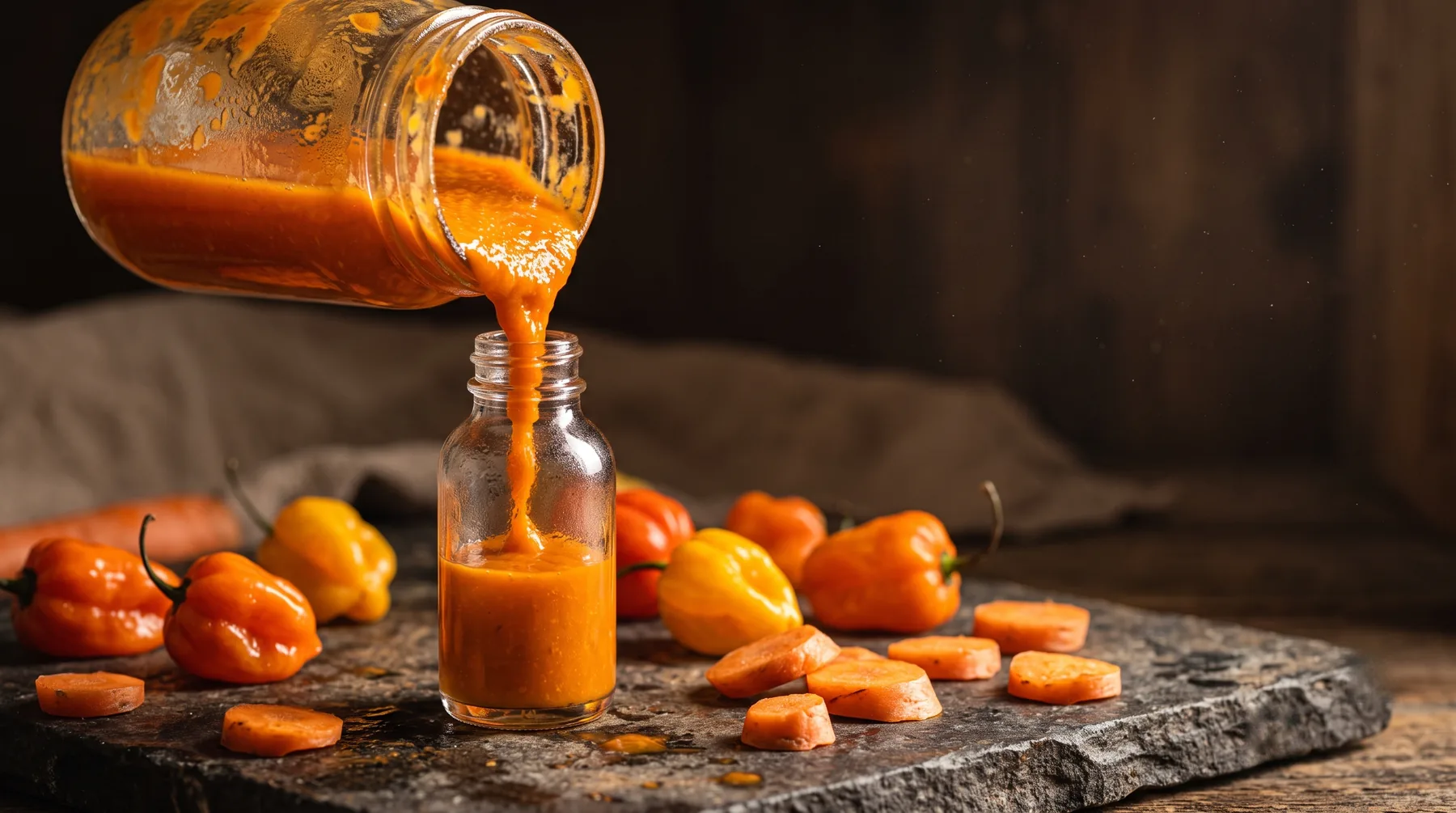
Three weeks in a 3% brine turns raw habanero heat into something layered and sour, and carrot gives it body and colour with no thickener. The reference build for a homegrown hot sauce.
Not a tested canning process
Lacto-fermentation reliably takes this sauce to pH 3.2–3.5, well under the 4.6 safety line, and the low pH is what makes it keep. But this is NOT a USDA/NCHFP tested canning process as written, and we do not publish one. Bottle it and keep it refrigerated, where it holds for a year or more. Do not water-bath it for shelf storage unless you are following a tested salsa-style recipe with a measured acid addition. Test the finished pH with a calibrated meter before you bottle anything.
How pH decides whether a jar is safe → · Brine percentage and what actually goes wrong →
If you started today, in Zone 6, in pots
17 plants. 8 jars. Sauce on Aug 22.
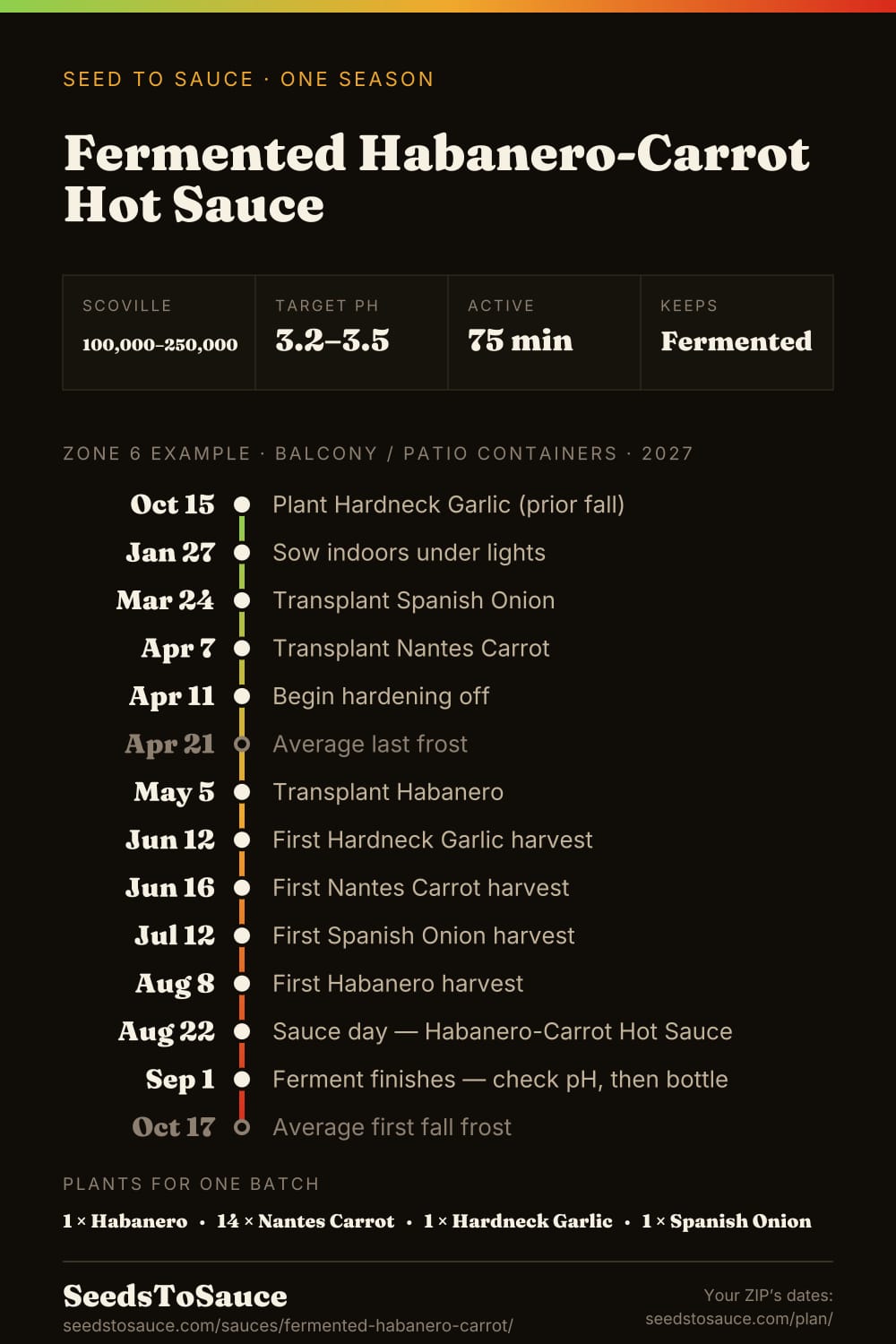
Worked from Zone 6's average last frost (Apr 21) and each cultivar's days to maturity. Your zone and your space change every date below — the builder does that for you.
- Jan 6Order seeds and starting supplies
- Jan 27Sow indoors under lights
- Apr 21Average last frost (Zone 6)
- Jun 12First Hardneck Garlic harvest
- Jun 16First Nantes Carrot harvest
- Jul 12First Spanish Onion harvest
- Aug 8First Habanero harvest
- Aug 22Sauce day — Habanero-Carrot Hot Sauce
- Sep 1Ferment finishes — check pH, then bottle
Save it
The whole season, one pin
| Yield | About 60 oz — twelve 5 oz woozy bottles — 8 half-pint jars |
|---|---|
| Active time | 75 minutes |
| Total time | 75 minutes active, 21–28 days fermenting |
| Heat | 100,000–250,000 SHU in the finished sauce |
| Target finished pH | 3.2–3.5 |
| Preservation | Fermented, then refrigerated or bottled |
| Fruit this batch eats | 1 lb Habanero2 lb Nantes Carrot0.15 lb Hardneck Garlic0.5 lb Spanish Onion |
What you have to grow
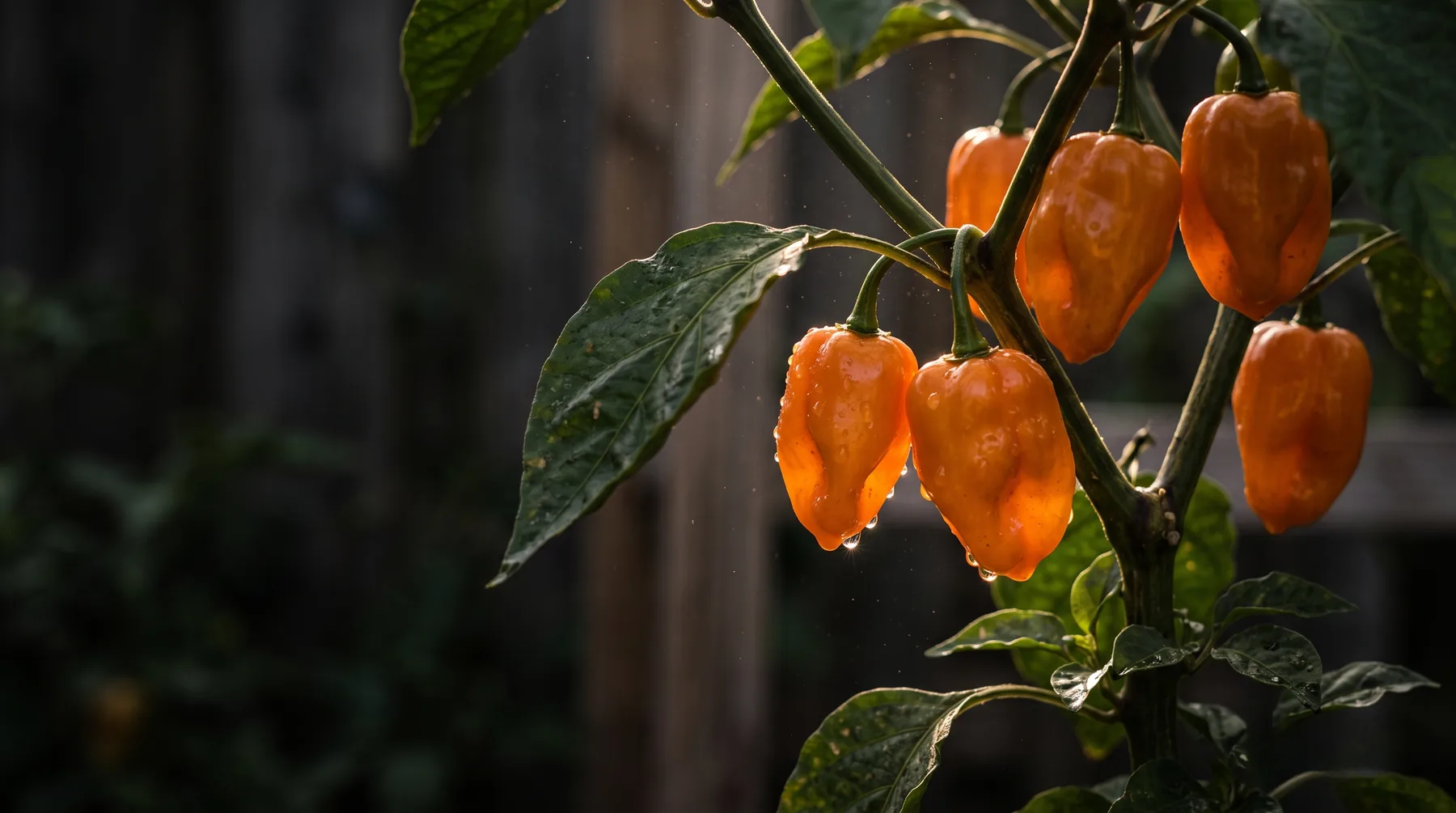
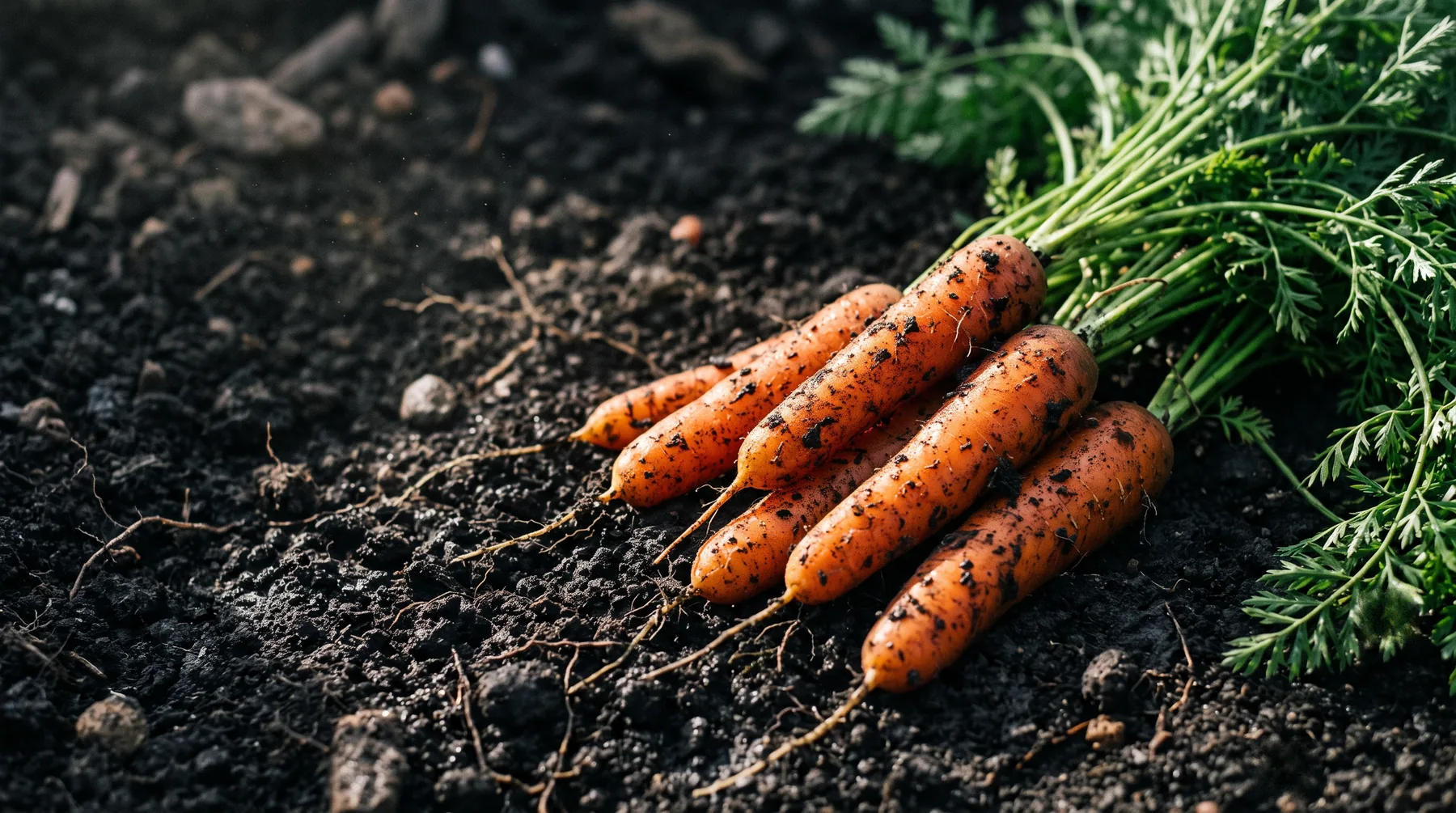
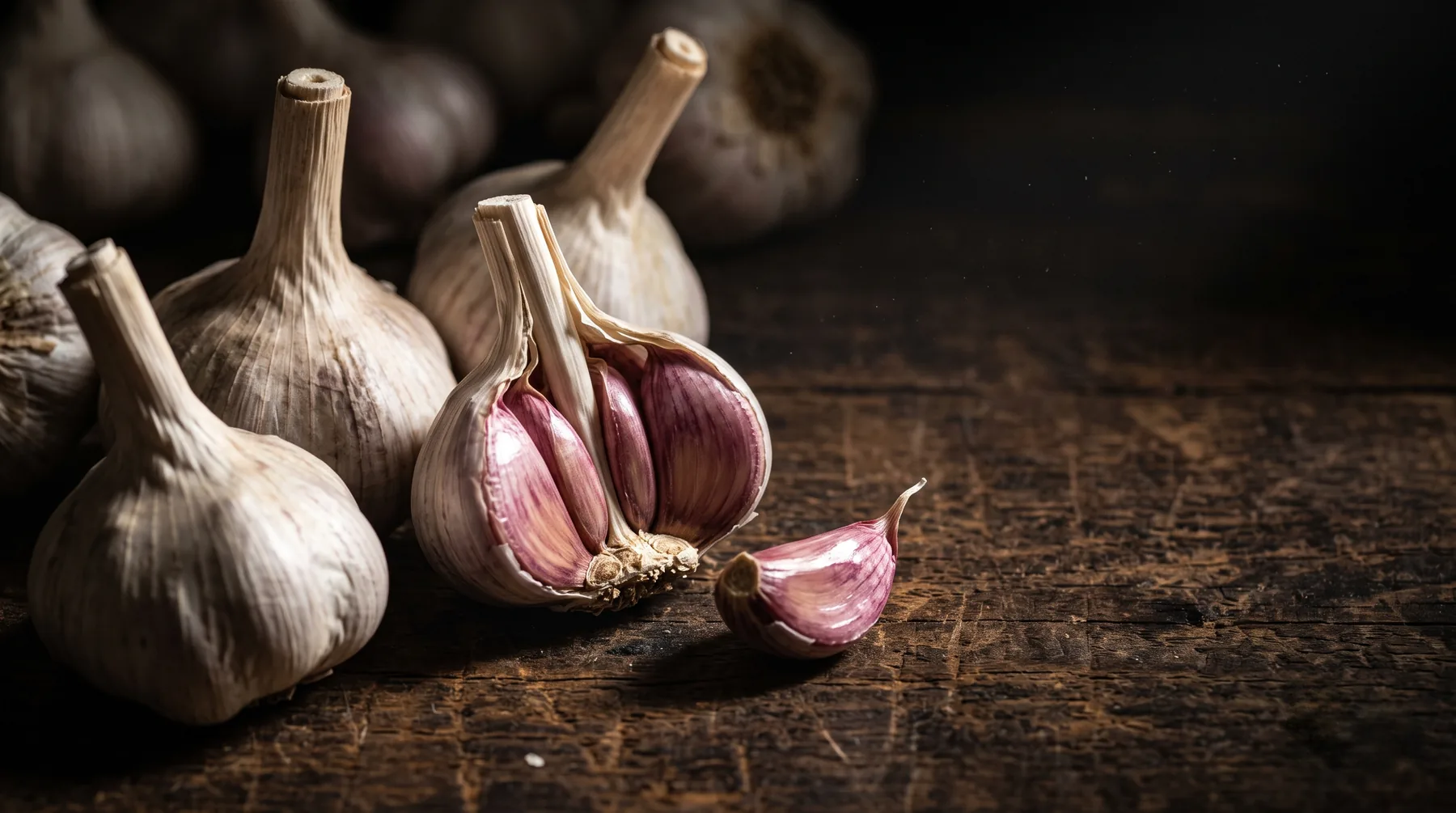
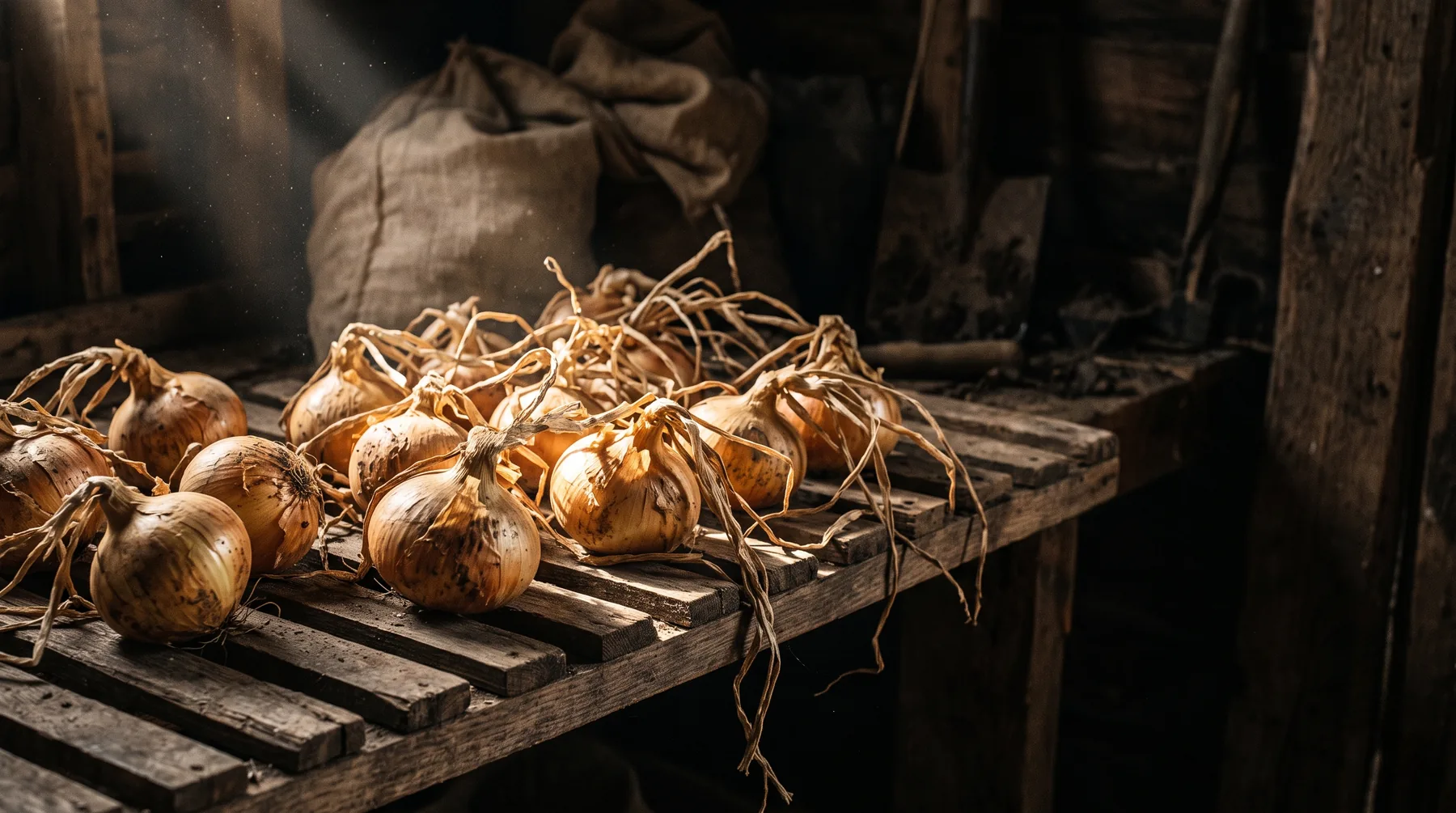
There is a reason the great Caribbean-style hot sauces are a third carrot. Habanero on its own is a spike — enormous heat and a bright apricot note over nothing. Carrot puts a floor under it: sugar for the fermentation to work on, body so the sauce coats instead of running, and a saturated orange that no amount of chile alone will produce.
Three weeks of lacto-fermentation does the rest. Raw habanero is aggressive and one-dimensional. Fermented, the heat is still all there but it arrives behind sourness and a savoury depth that a vinegar sauce simply cannot fake in an afternoon.
What you need
| Habanero, stemmed | 1 lb (~30 pods) |
| Carrot, peeled, 1″ coins | 2 lb |
| Yellow onion, rough chopped | 8 oz |
| Garlic, peeled | 1 bulb (~2 oz) |
| Canning & pickling salt | 3% of total vegetable + water weight |
| Filtered water | to cover, ~40 oz |
| Distilled white vinegar (5%) | 4–6 oz, to finish |
Salt is a percentage, not a spoon count. Weigh everything — vegetables and water together — and multiply by 0.03. For 5 lb (2268 g) of vegetables plus 40 oz (1134 g) of water, that is 3402 g × 0.03 = 102 g of salt. Use canning and pickling salt; iodine suppresses the lactobacillus you are trying to cultivate.
Method
- Glove up. Nitrile, both hands, before you touch a single habanero. Capsaicin is oil-soluble and will not wash off with soap.
- Prep. Stem the habaneros; leave the seeds in. Peel and coin the carrots. Rough-chop the onion. Peel the garlic.
- Weigh and brine. Put everything in a 1-gallon fermenting jar. Weigh vegetables plus water, calculate 3%, dissolve that salt fully in the water, and pour over.
- Submerge. Glass weight on top. Nothing may float. This single step prevents most of what goes wrong.
- Airlock and wait. Airlock lid, room temperature, out of direct light. Vigorous bubbling day 3–7, then it quiets.
- Ferment 21–28 days. Longer is more sour and more complex. Taste from day 21.
- Check pH before you go further. Calibrate the meter, then read the brine. You want 3.2–3.5. Above 4.0, something has gone wrong — do not proceed.
- Blend. Solids plus enough brine to move the blades. Run it long — a full two minutes on high — to emulsify the chile skins so the bottle does not separate.
- Balance. Add vinegar an ounce at a time to taste and to guarantee acidity. Re-check pH.
- Strain and bottle. Push through a fine-mesh strainer if you want a dripper-clean sauce. Fill woozy bottles, label with the date, refrigerate.
The pH number, and why we labour it
The line is 4.6. Below it, Clostridium botulinum cannot grow. A properly run lacto-ferment lands at 3.2–3.5 — a very comfortable margin — and that is why refrigerated fermented hot sauce is safe and keeps for over a year.
What that margin does not buy you is a shelf-stable jar. A tested canning process specifies exact ingredient ratios, a measured acid addition and a validated process time. Ours is a recipe, not a validated process. Refrigerate it. See the canning acid math for the full picture, and fermentation salt and safety for what actually goes wrong in a jar and how to recognise it.
What it tastes like
Sour first, then sweet from the carrot, then the habanero arrives late and stays. It is fruity in a way vinegar-based sauces are not, and thick enough to sit on a fried egg without running off the plate.
The kit for this sauce
Each item is selected for a job in this recipe. Amazon listings, sellers, and prices can change; check the current details before you buy.
Habanero Orange Pepper SeedMust have
The workhorse superhot for sauce: 100,000–350,000 SHU with a genuine apricot-floral top note that survives fermentation. Nothing else in this range tastes like fruit instead of pure burn.
Scarlet Nantes Carrot Seed
The carrot that makes a fermented habanero sauce work. It brings sweetness and body so the sauce has texture without thickener and heat without being one-dimensional.
Siberian Hardneck Seed Garlic, 1 lb
Planted in October, pulled in July. Hardneck garlic has bigger, easier-peeling cloves and gives you scapes in June — a free second crop that is itself excellent in green sauce.
Yellow Sweet Spanish Onion Seed
A long-day storage onion with enough sugar to sweat down without scorching. The aromatic base under every tomato sauce on this site.
Nitrile Exam Gloves, 200 pcs, food-safeMust have
Capsaicin is oil-soluble and does not wash off with soap. Seeding a pound of habaneros bare-handed means eight hours of burning hands and one unforgettable mistake involving your own eye.
Digital Kitchen Scale, 11 lb, g/ozMust have
Fermentation brine is a percentage of weight, not a number of spoons. Without a gram scale you are not following a fermentation recipe — you are guessing at the one number that determines whether it is safe.
Canning & Pickling Salt, 4 lb ×4Must have
Table salt carries iodine and anti-caking agents. Iodine suppresses the lactobacillus you are trying to cultivate and the anti-caking agent turns your brine cloudy grey.
1-Gallon Fermenting Jar with Twin-Bubble Airlock
Ten pounds of habaneros does not fit in a quart jar. A gallon vessel is what a real hot-sauce batch needs, and glass lets you watch the ferment instead of guessing.
Complete Mason Jar Fermentation KitMust have
Fermentation is anaerobic. An airlock lets CO₂ out without letting oxygen in, which is the entire difference between a clean lacto-ferment and a jar of kahm yeast and mould.
Glass Fermentation Weights, 4-PackMust have
Anything floating above the brine will mould. A glass weight holds the chile mash under the surface for three weeks without you touching it, which is the whole job.
AI311 PH60 Waterproof Pocket pH TesterMust have
The 4.6 line is not a guideline, it is the number below which Clostridium botulinum cannot grow. Strips get you to half a pH point. This gets you to ±0.1, and for anything you intend to keep, that difference is the whole ballgame.
AI1113 pH Calibration Buffer Kit (4.00 / 7.00)
A pH meter is only as honest as its last calibration. Two-point calibration at 4.00 and 7.00 brackets the entire range a sauce ever lives in.
5200 Professional-Grade Blender, 64 oz
The difference between a hot sauce that is smooth and one that is smooth-ish is blade tip speed. A Vitamix emulsifies chile skin into the sauce so completely you do not need to strain it.
Mesh Strainers, Stainless, 3-Count
The last pass before bottling. A fine mesh catches the skin fragments and seed shards that make a hot sauce gritty and clog a woozy bottle's dripper insert.
Woozy Hot Sauce Bottles, 5 oz, 24-PackMust have
A hot sauce in a mason jar is a condiment you spoon. In a woozy bottle with a dripper insert it is a hot sauce — and dripper control is the difference between seasoning food and ruining it.
Canning Jar Labels, 360 pcs, removable
Date every jar. In March, three jars of red sauce are indistinguishable, and 'it's probably the one from August' is not a food-safety practice.
Paid links. We earn a commission from Amazon if you buy; you pay the same. Disclosure.
Questions people actually ask
Can I water-bath can this for the pantry?
Not as written. A finished pH of 3.2–3.5 is comfortably below the 4.6 line, but "acidic enough" and "a tested process" are two different claims, and only the second one belongs on a shelf-stable jar. Tested hot-sauce processes specify exact ingredient ratios and a measured acid addition — deviate from one and the tested times no longer apply. Refrigerate it. It keeps over a year.
Why did white film form on top of my ferment?
Almost certainly kahm yeast — a harmless, wrinkly white film that forms when the surface contacts air. Skim it and make sure everything is under the brine with a weight. Fuzzy, raised growth in blue, green, black or pink is mould, and that batch goes in the bin, not into a sauce.
My ferment stopped bubbling after a week. Is it dead?
No. The vigorous CO₂ phase runs three to seven days and then slows sharply while the pH keeps dropping. Judge by pH and taste, not by bubbles.
Do I need a pH meter, or will strips do?
Strips in a 0–6 short range will tell you whether you are well under 4.6, which for a refrigerated sauce is enough. If you ever intend to shelf-store, or if a reading lands anywhere near 4.0, you need a calibrated meter — half a pH point of uncertainty is not acceptable near a safety threshold.
How hot is this actually?
A pound of habanero across 60 oz of finished sauce lands somewhere in the 100,000–250,000 SHU range depending on your pods, which is genuinely hot but not novelty-hot. Swap half the habaneros for red Marconi to cut it roughly in half without losing colour or body.
Last reviewed 2026-09-01 by the SeedsToSauce Test Kitchen. Spotted something wrong?Tell us — corrections get published.