Guide · starting
Start Pepper Seeds Indoors: Timing and Light
Use your local frost date and outdoor planting conditions to schedule pepper starts, then manage germination heat and seedling light.
Start with the outdoor planting date. University of Minnesota Extension recommends starting pepper seeds indoors about eight weeks before planting outside. It also advises waiting until nighttime lows stay above 50 °F before transplanting. Count back from a date that meets those conditions, then keep the seed mix warm and put light over seedlings as soon as they emerge.
Find the date for your garden
The USDA Plant Hardiness Zone Map records average annual extreme minimum temperature. It does not assign a spring frost date. Use NOAA’s station-based climate normals or a local extension calendar to estimate your last spring freeze; check the current forecast before setting plants outside. The frost-date guide explains the calculation, and the Plan Builder turns the site’s crop assumptions into a dated plan.
For example, if your local last frost date is May 15, eight weeks before it is March 20 and ten weeks before it is March 6. These are arithmetic examples, not dates assigned to a USDA zone. The site’s crop files use the following planning inputs:
| Crop on this site | Species | Sow before selected last frost | Earliest planned transplant offset |
|---|---|---|---|
| Jalapeño, serrano, cayenne, Marconi | Capsicum annuum | 8 weeks | 1 week after |
| Habanero | Capsicum chinense | 10 weeks | 2 weeks after |
Those offsets are site calendar inputs, not a species-wide rule. Weather can push the outdoor date later. In particular, the extra two weeks used for habanero are a planning allowance, not a promise that every habanero needs exactly two more weeks to germinate. Compare your packet’s transplant age and maturity estimate with your local season. Utah State University Extension describes 8–10 weeks to grow pepper transplants and says peppers should go out after frost danger has passed or when soil is 60 °F.
Keep the seed mix warm, then assess germination
Minnesota Extension’s pepper guide directs gardeners to sow ¼ inch deep in soilless germination mix and use a heating mat to keep flats at 80–90 °F until emergence. Measure the mix, not the room air. Its guidance covers peppers generally, including C. annuum and C. chinense; it does not establish a separate guaranteed germination window for each cultivar.
Utah State’s germination guide recommends a thermostat with a heat mat so containers do not get too hot. Keep the mix evenly moist rather than waterlogged. A clear dome can help retain moisture; keep covered trays out of direct sun, which can overheat them. Germination time varies with temperature, moisture, seed quality and cultivar. Treat a packet’s day range as a reason to check conditions, not as a discard date.
If a cell has not emerged when expected, check mix temperature and moisture first. Do not turn a slow habanero into a claim that its seed is dead. The site’s habanero crop page uses a longer germination estimate than its C. annuum crop pages; use it for planning while allowing for variation.
Give emerged seedlings overhead light
Remove a moisture dome when seedlings emerge and put them under bright overhead light. Minnesota Extension notes that insufficient overhead light produces elongated, leaning pepper stems. Utah State’s seedling guide recommends 12–14 or more hours of light daily and places ordinary fluorescent fixtures 2–3 inches above plants, moving them up as seedlings grow. For an LED, follow the fixture maker’s safe distance and watch for leaf stress. Use a timer so seedlings also get darkness each day.
After emergence, assess room temperature before continuing bottom heat. Utah State’s seedling guide advises removing a heat pad if growing conditions are too warm, because excess warmth can produce spindly plants. The broader seed-starting light and heat guide covers the setup.
Carry the seedlings to transplant
Thin or move seedlings once true leaves appear, leaving room for their roots. Minnesota Extension recommends spacing young pepper seedlings 2–3 inches apart at that stage. If you fertilize, follow the product label; Utah State’s pepper guide describes weekly feeding with a half-strength soluble complete fertilizer during transplant growth. Avoid treating one fertilizer type as essential.
Before planting out, harden seedlings off by increasing their outdoor exposure over one to two weeks, starting in a sheltered spot. Bring them back inside when nights turn cold; Minnesota Extension advises bringing them in below 55 °F during this period. Check the forecast and wait for suitable nights before transplanting. Then the pepper’s harvest clock can begin for red jalapeño sriracha, cayenne sauce or habanero-carrot sauce.
Related crops
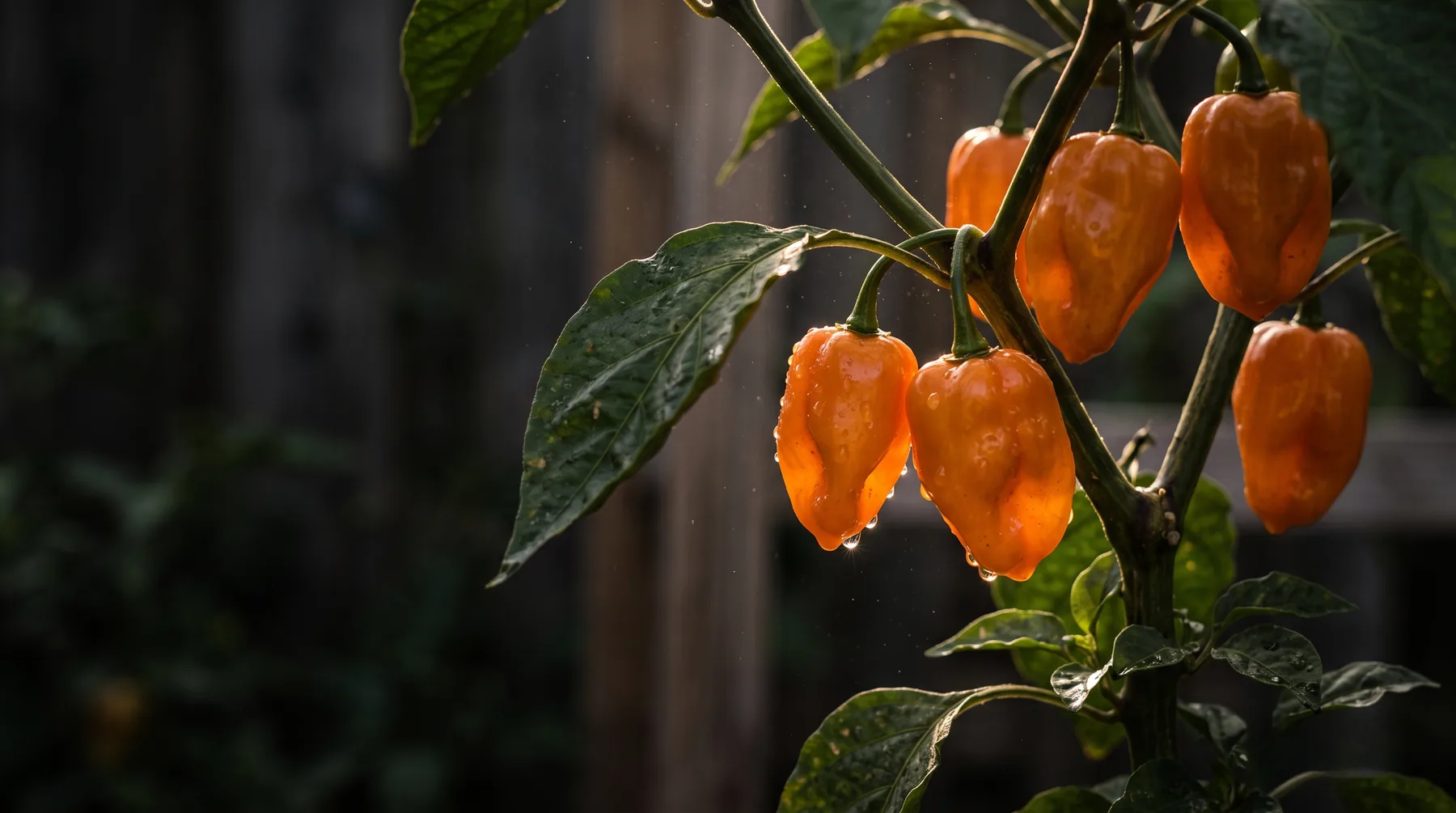 HabaneroOrange Habanero (Capsicum chinense)95 days from transplant
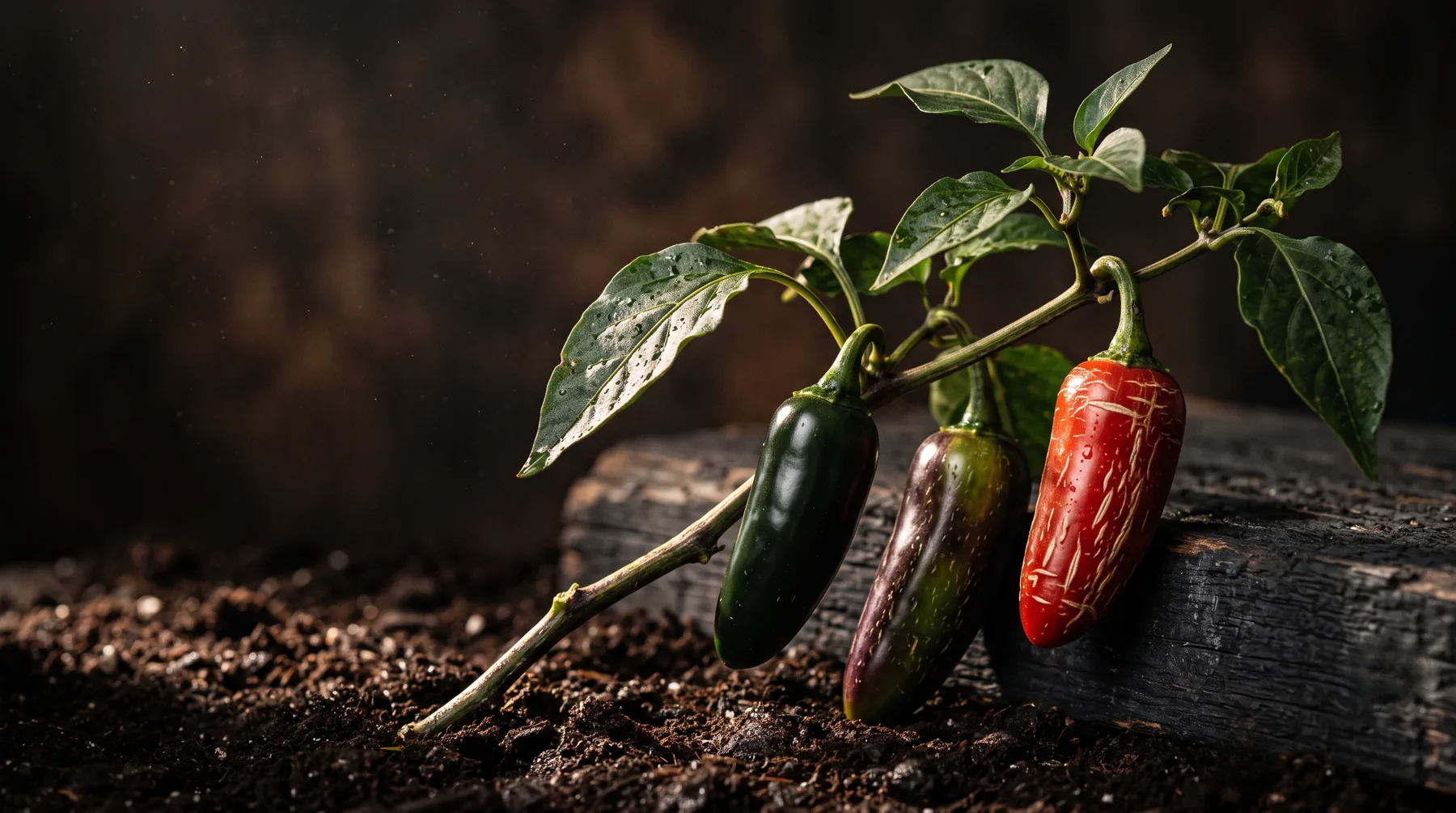 JalapeñoEarly Jalapeño (Capsicum annuum)75 days from transplant
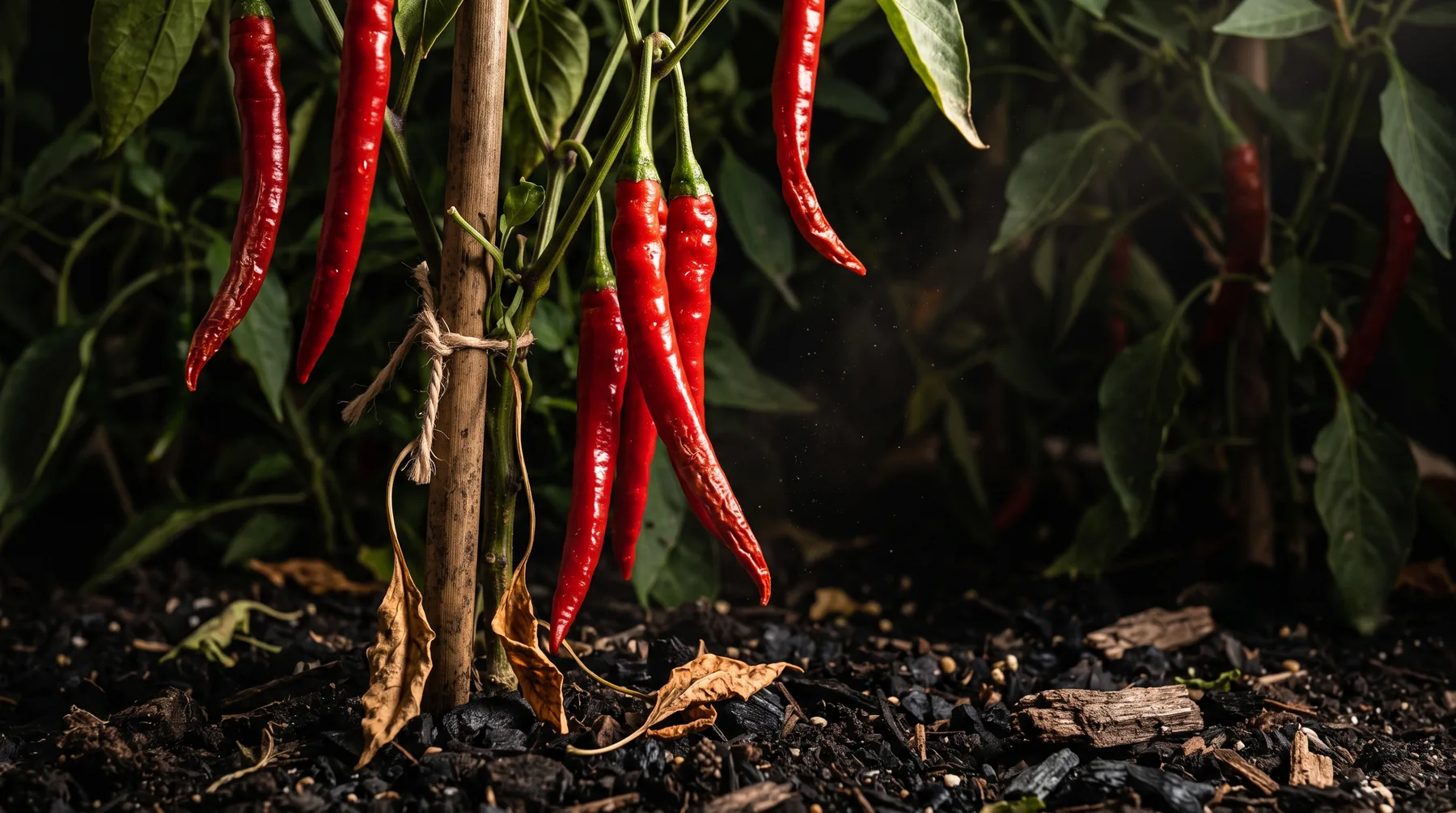 CayenneLong Slim Cayenne (Capsicum annuum)75 days from transplant
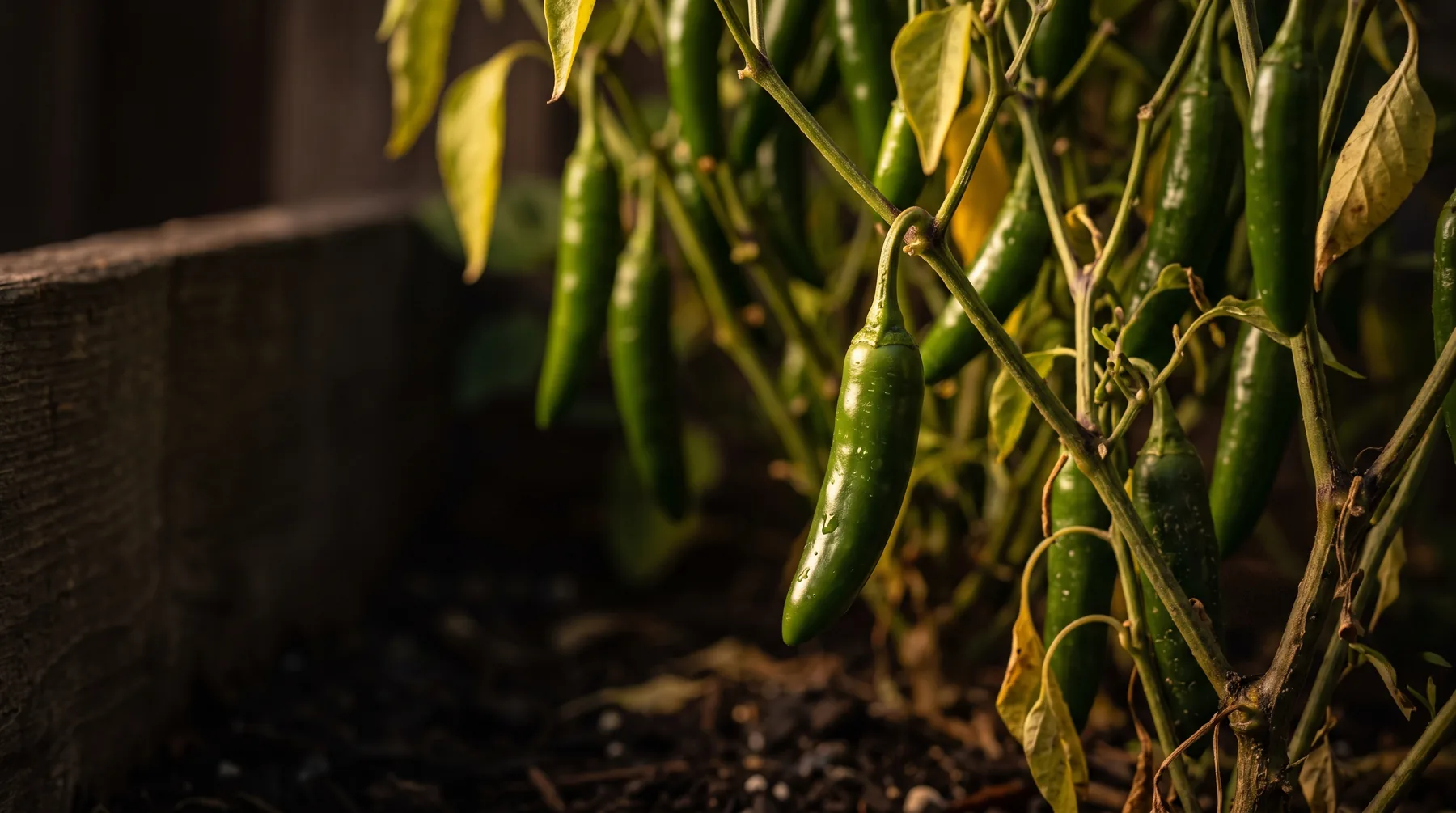 SerranoSerrano Tampiqueño (Capsicum annuum)80 days from transplant
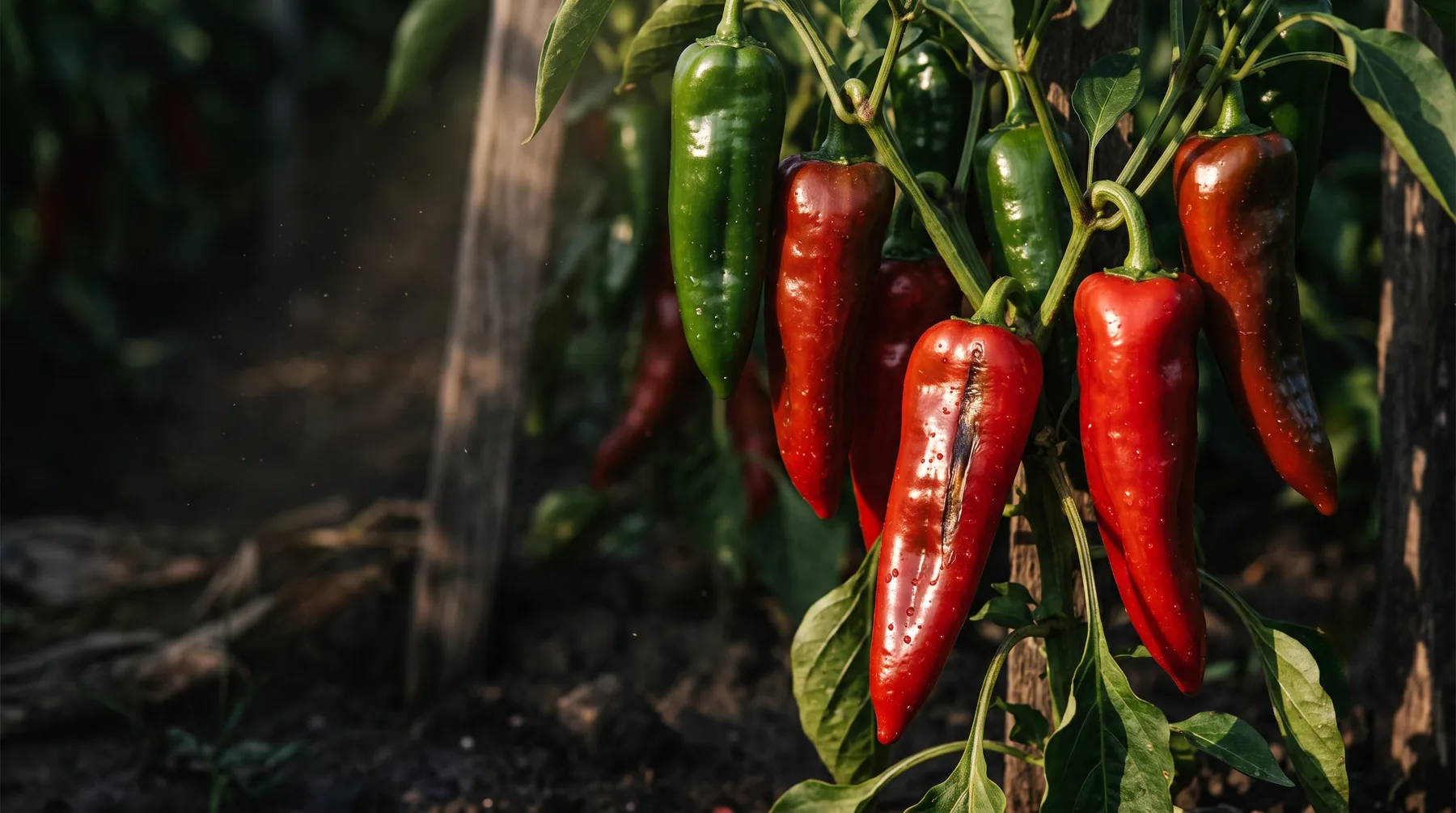 Marconi Red PepperMarconi Red (Capsicum annuum)80 days from transplant
Related sauces
Sources
Every food-safety number on this page traces to one of these. If you are going to trust one link on this site, trust these over us.
- University of Minnesota Extension — Growing peppers in home gardens
- Utah State University Extension — How to Grow Peppers in Your Garden
- Utah State University Extension — Starting Vegetable Seeds Indoors, Germination
- Utah State University Extension — Starting Vegetable Seeds Indoors, Seedling Culture and Transplanting
- NOAA NCEI — U.S. Climate Normals
- USDA Agricultural Research Service — 2023 Plant Hardiness Zone Map
The gear this guide assumes
Jalapeño Pepper Seed
The one you smoke into chipotle. Left on the plant to red and corked, then cold-smoked, a jalapeño stops being a taco garnish and becomes the backbone of an adobo.
Organic Cayenne (Long Slim) Seed
The long, thin, wall-thin cayenne that dries in a week and grinds to a clean red powder. If you want flakes and powder as well as sauce, this is the plant that does both.
Serrano Pepper Seed
Cleaner and greener than a jalapeño at roughly three times the heat. The correct chile for salsa verde and zhoug, where you want brightness rather than smoke.
Marconi Red Sweet Pepper Seed
A long Italian sweet pepper that roasts and peels far better than a bell. Romesco and any red-pepper paste wants this, not a supermarket bell.
Seedling Heat Mat + Digital ThermostatMust have
Peppers germinate on soil temperature, not air temperature. At 65 °F a habanero takes a month and half of them rot; at 85 °F it is up in eight days. The thermostat is the half that matters.
T8 Full-Spectrum Grow Lights, 1 ft 4-packMust have
A south window in March delivers a fraction of the light a pepper seedling needs, and the plant tells you by stretching. Two inches of LED above the canopy for 16 hours a day fixes it permanently.
7" Vented Humidity Domes, 5-Pack
A dome is the difference between checking moisture twice a day and checking it twice a week. The 7-inch height matters: a 2-inch dome is useless the moment a pepper puts up true leaves.
Organic Seed Starter Potting MixMust have
Seed-starting mix is finer, lighter, and low in nutrients on purpose, because a seedling's first roots want air and moisture, not fertiliser. Potting soil with a nicer label won't do that.
Fish Emulsion Liquid Fertilizer
Seed-starting mix runs out of nitrogen about two weeks after true leaves. Half-strength fish emulsion weekly from that point is the whole feeding programme until transplant.
T-Type Plant Labels, 200 pcs + Marker
Six pepper seedlings look identical for eleven weeks. Ask anyone who has planted a habanero where the Marconi should have gone.
Paid links. We earn a commission from Amazon if you buy; you pay the same. Disclosure.
Questions people actually ask
My packet says 7–14 days to germinate. Is day 14 a deadline?
No. Germination changes with seed quality, moisture and mix temperature. Check the mix temperature and moisture, then keep the tray warm while following the packet's guidance. Do not discard unsprouted habanero seed on a calendar deadline.
Does Zone 6b tell me when to sow?
No. A USDA hardiness zone describes average annual extreme minimum temperature, not the last spring freeze. Find a local frost date and choose an outdoor planting date after frost when nights are consistently above 50 °F. The site's crop calendars sow annuum peppers eight weeks and habanero ten weeks before the selected last frost date; these are planning inputs, not guarantees.
Can I sow pepper seeds outdoors?
Direct sowing is possible where soil and season allow, but transplants give peppers a head start in shorter seasons. Check local extension guidance, soil warmth and the time left before fall frost instead of deciding by hardiness zone alone.
What if seedlings are tall and leaning?
Move the light closer according to its manufacturer's safe distance and give seedlings a regular dark period. Utah State Extension recommends 12–14 or more hours of supplemental light, with ordinary fluorescent fixtures 2–3 inches above plants. Check the fixture's instructions before placing an LED that close.
Last reviewed 2026-10-29 by the SeedsToSauce Test Kitchen. Corrections welcome.