
Sauce · Water-bath canned
Roma Tomato Salsa for Canning (NCHFP Tested Recipe)
Seven quarts of chopped Roma, peppers, onion and bottled lime juice, simmered thick and processed 15 minutes. The tested paste-tomato salsa, with the garden sized to grow every ingredient in it.
Tested process
This is the National Center for Home Food Preservation's "Tomato Salsa with Paste Tomatoes", a tested recipe. Pint jars, 1/2-inch headspace, hot pack, boiling-water bath: 15 minutes at 0–1,000 ft, 20 minutes at 1,001–6,000 ft, 25 minutes above 6,000 ft. NCHFP: "The only change you can safely make in this salsa recipe is to change the amount of spices and herbs. Do not alter the proportions of vegetables to acid and tomatoes." Use bottled lemon or lime juice, never fresh juice and never vinegar as a substitute. You may swap one pepper type for another, but never increase the total volume of peppers.
If you started today, in Zone 6, in pots
9 plants. 34 jars. Sauce on Jul 31.
Worked from Zone 6's average last frost (Apr 21) and each cultivar's days to maturity. Your zone and your space change every date below — the builder does that for you.
- Jan 6Order seeds and starting supplies
- Jan 27Sow indoors under lights
- Apr 21Average last frost (Zone 6)
- May 22First Cilantro harvest
- Jun 12First Hardneck Garlic harvest
- Jul 12First Roma Tomato harvest
- Jul 12First Jalapeño harvest
- Jul 12First Spanish Onion harvest
- Jul 17First Marconi Red Pepper harvest
- Jul 31Sauce day — Canning Salsa
- Jul 31Process and seal
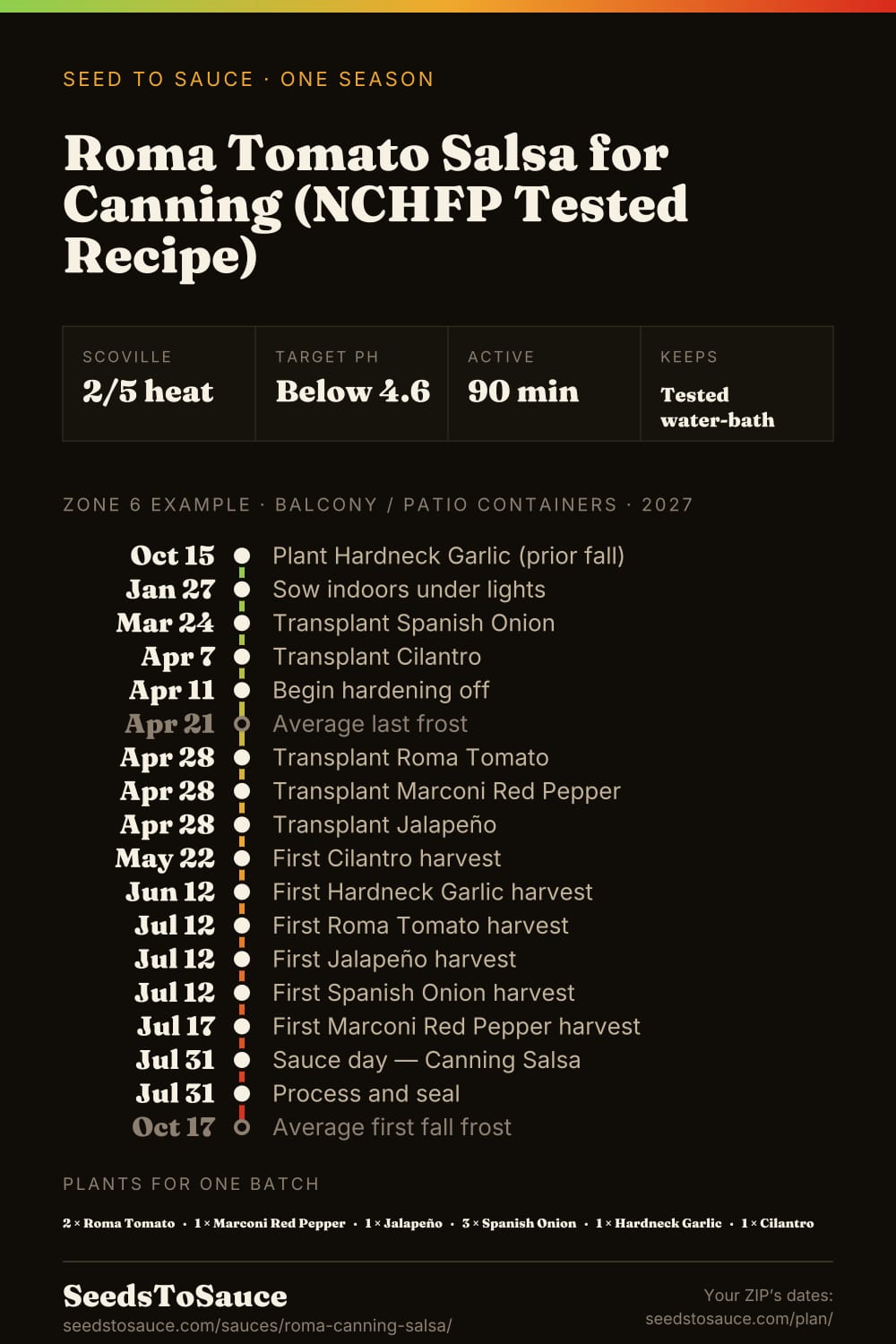
Save it
The whole season, one pin
| Yield | About 16–18 pints — 34 half-pint jars |
|---|---|
| Active time | 90 minutes |
| Total time | 90 minutes prep, 30 minutes simmering, 15 minutes processing |
| Heat | Mild to medium. Jalapeño (2,500–8,000 SHU) is about 1/9 of the pepper volume. |
| Target finished pH | Below 4.6 — fixed by the tested acid ratio |
| Preservation | Water-bath canned |
| Fruit this batch eats | 18 lb Roma Tomato1.3 lb Marconi Red Pepper0.2 lb Jalapeño1.75 lb Spanish Onion0.07 lb Hardneck Garlic0.02 lb Cilantro |
What you have to grow
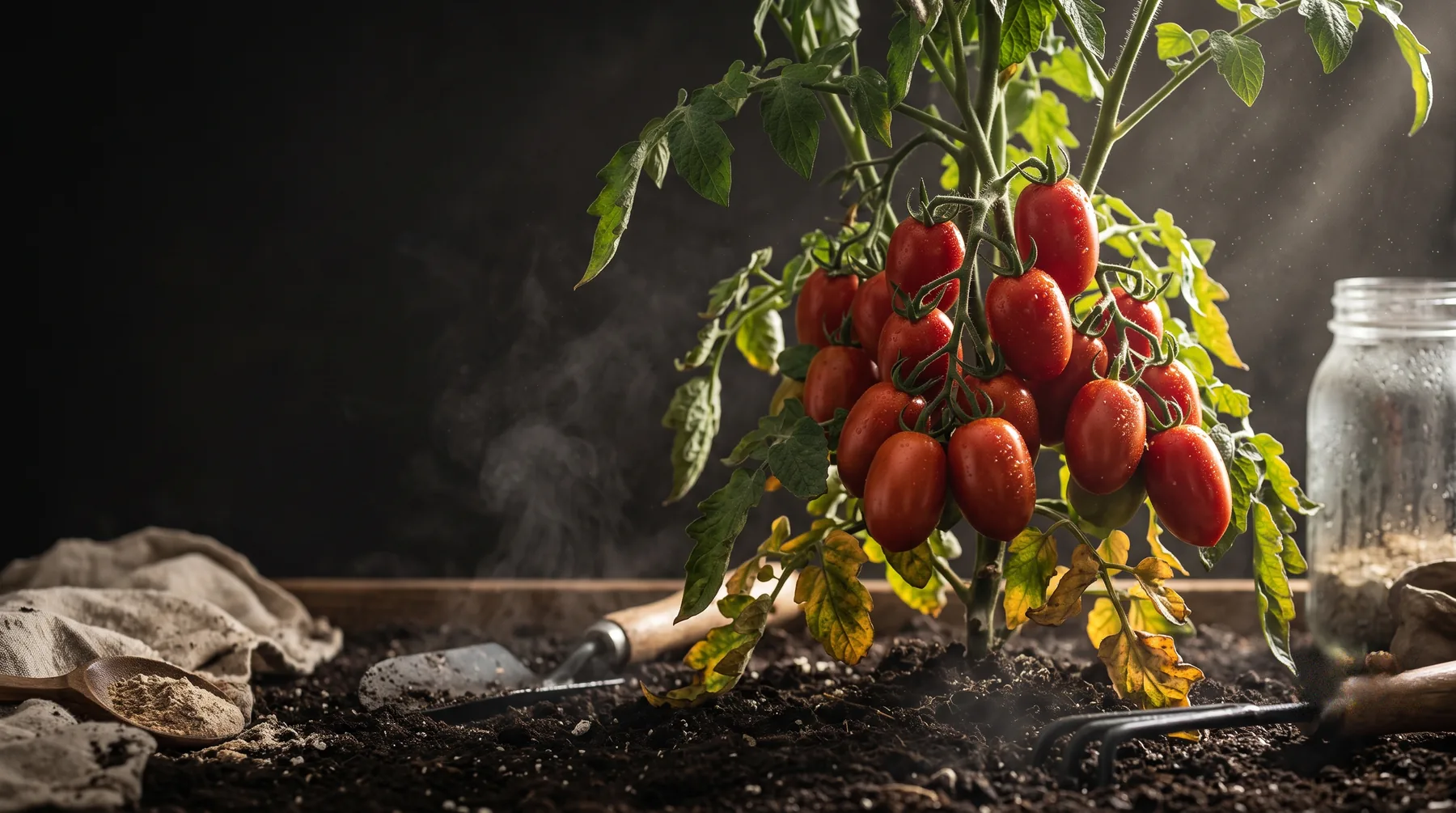 Roma TomatoRoma VF (determinate paste)75 days from transplant
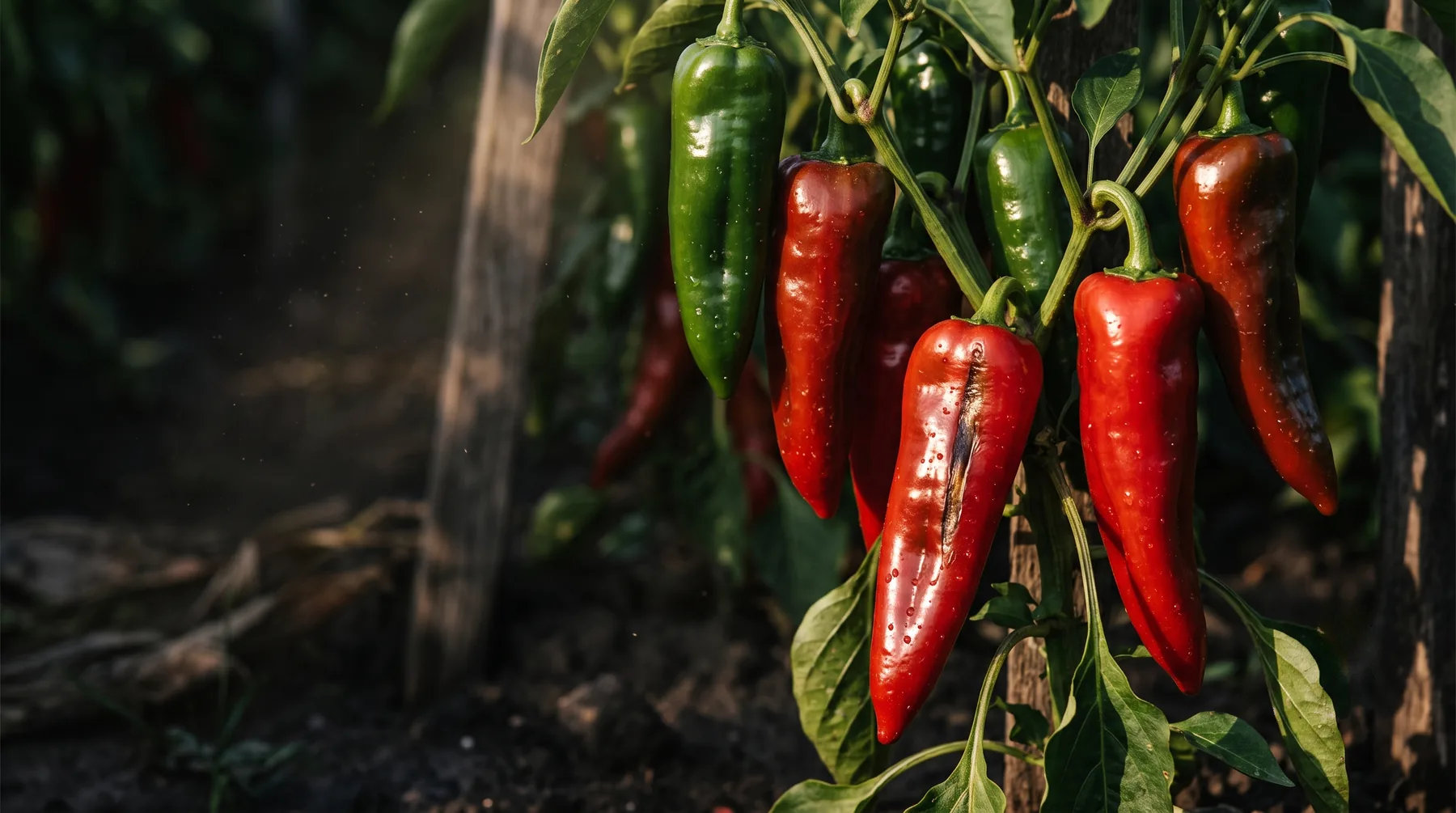 Marconi Red PepperMarconi Red (Capsicum annuum)80 days from transplant
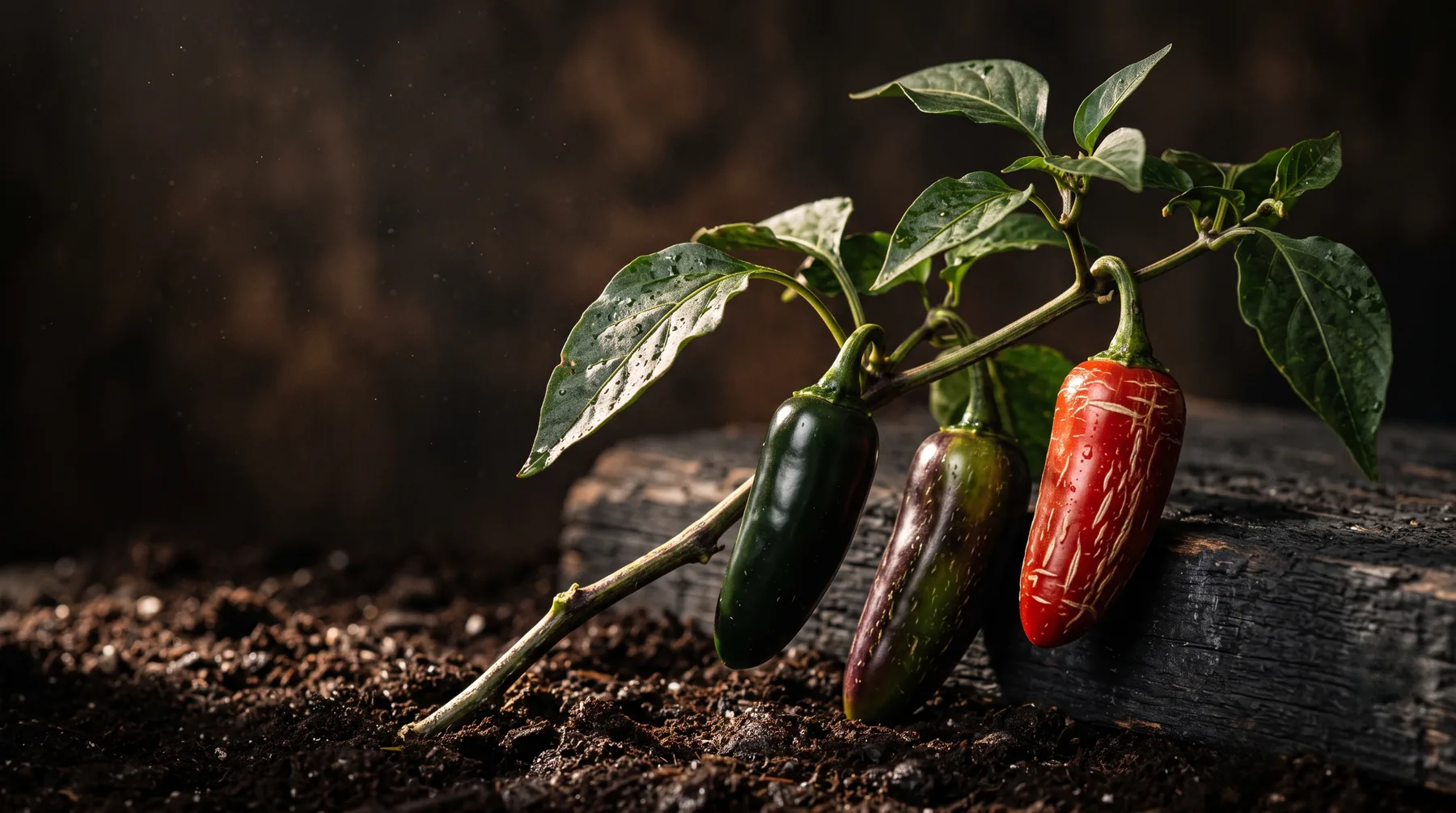 JalapeñoEarly Jalapeño (Capsicum annuum)75 days from transplant
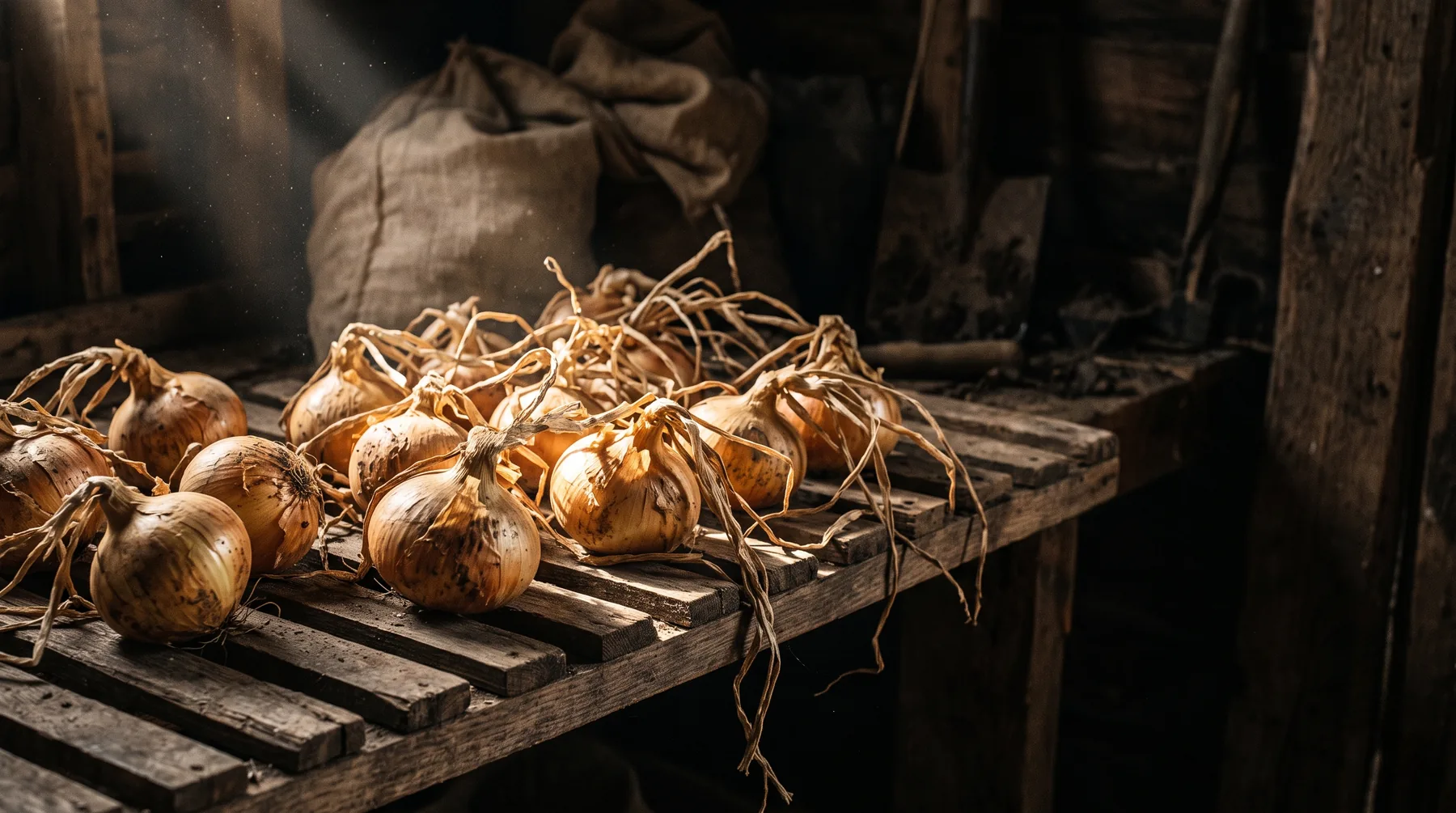 Spanish OnionYellow Sweet Spanish (long-day)110 days from transplant
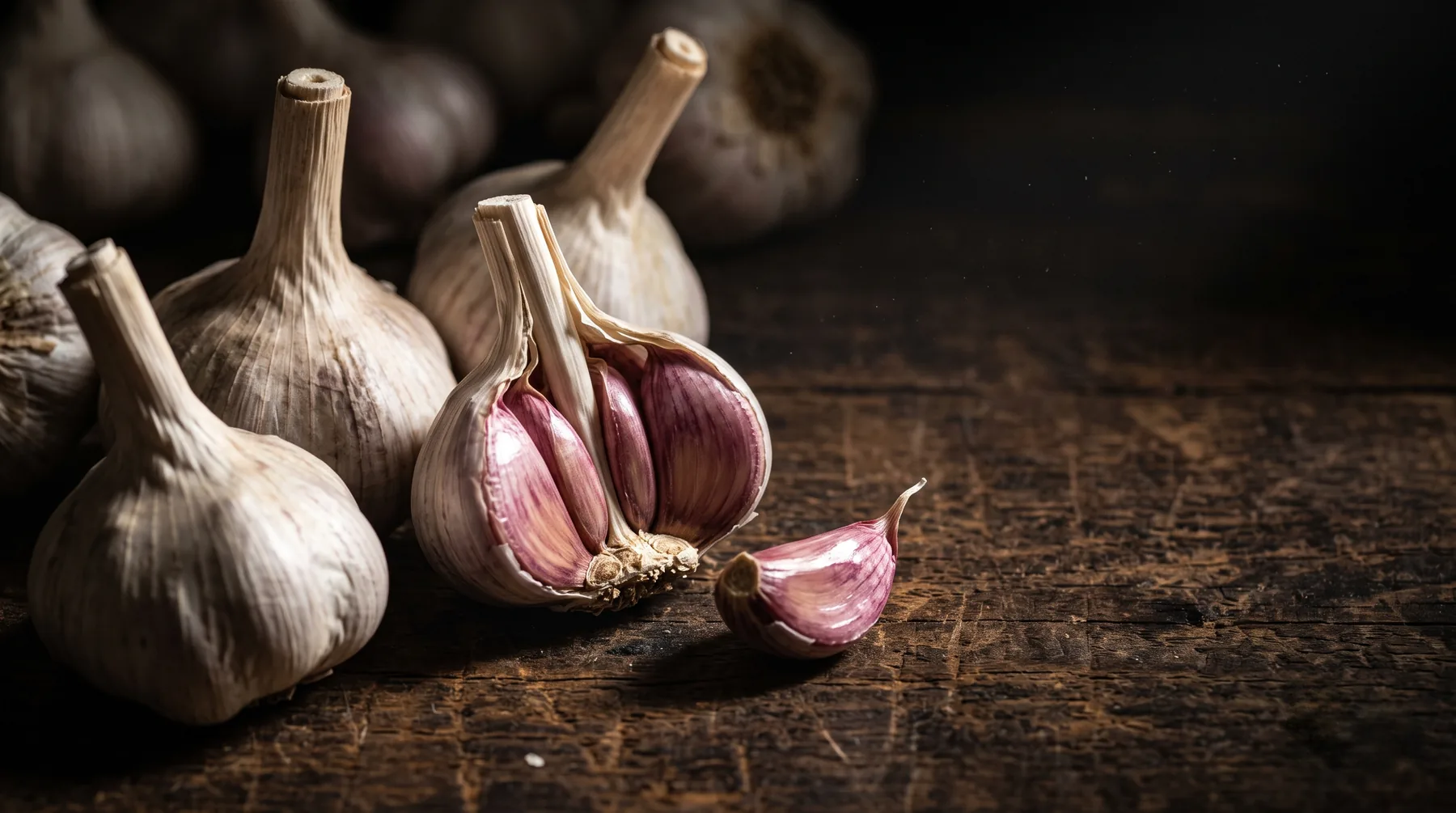 Hardneck GarlicSiberian (porcelain hardneck)240 days from sow
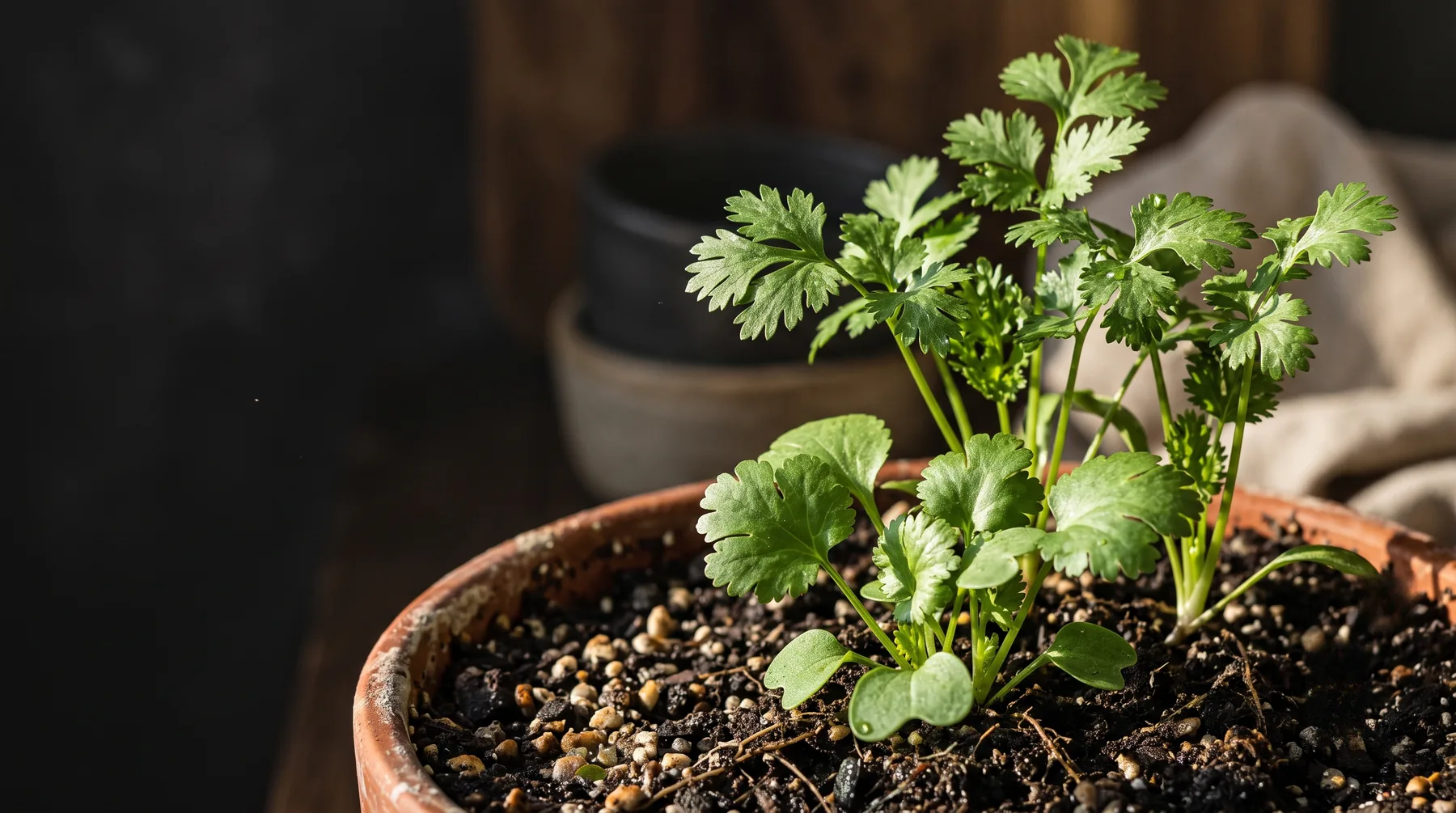 CilantroSlow Bolt (Coriandrum sativum)45 days from sow
Salsa is the reason most people buy a water-bath canner, and it’s also the jar most often made unsafely: a family recipe with extra peppers, a splash of vinegar, and no idea what the pH is. This is the other way. It’s a lab-tested ratio from the National Center for Home Food Preservation, and every input except the salt, juice and spices comes out of your own beds.
It’s also the best job a determinate Roma has. Two plants drop roughly 18 lb inside three weeks, and 18 lb is one canner day of salsa.
What you need
From NCHFP, exactly as tested. The weights in the right-hand column are our planning conversions for the garden math. Measure by the volume in the middle column.
| Ingredient | Tested amount | Garden weight, approx. |
|---|---|---|
| Paste tomatoes (Roma), peeled, cored, chopped | 7 quarts | 18 lb whole fruit |
| Long green chiles, seeded, chopped (Marconi picked green) | 4 cups | 1.3 lb |
| Onion, chopped | 5 cups | 1.75 lb |
| Jalapeño, seeded, finely chopped | 1/2 cup | 5–6 pods |
| Garlic, finely chopped | 6 cloves | |
| Bottled lemon or lime juice | 2 cups | |
| Salt | 2 tbsp | |
| Black pepper | 1 tbsp | |
| Ground cumin (optional) | 2 tbsp | |
| Oregano leaves (optional) | 3 tbsp | |
| Fresh cilantro (optional) | 2 tbsp |
Yield is about 16–18 pints, a full canner load and then some.
Method
- Peel the tomatoes. Dip them in boiling water for 30–60 seconds until the skins split, then plunge them into cold water. Slip off the skins, core, and chop. Measure 7 quarts.
- Prep the peppers. Gloves on. NCHFP blisters long green chiles at 400 °F for 6–8 minutes and slips the skins. A thin-walled Marconi picked green doesn’t need peeling. Seed and chop it, then measure 4 cups. Jalapeños don’t need peeling either.
- Combine everything except the cumin, oregano and cilantro in a 12-quart pot. Bring to a boil, stirring often.
- Simmer 10 minutes, stirring occasionally.
- Add the cumin, oregano and cilantro, then simmer 20 minutes more.
- Fill hot pint jars, leaving 1/2-inch headspace. Wipe the rims and fit the lids.
- Process in a boiling-water bath:
| Altitude | Pints |
|---|---|
| 0–1,000 ft | 15 min |
| 1,001–6,000 ft | 20 min |
| Above 6,000 ft | 25 min |
Start timing when the water returns to a full rolling boil over the jars. Let the jars sit in the water 5 minutes after you turn off the heat, then lift them out and leave them undisturbed for 12–24 hours.
What you can change, and what you can’t
The tested recipe gives you exactly this much room:
- Spices and herbs: anything. Change the cumin, oregano, cilantro and black pepper however you like, or leave them out.
- Pepper type: swap freely, same volume. The 4½ cups of pepper can be any mix of mild and hot. Trade a cup of Marconi for a cup of serrano and the salsa gets markedly hotter with the same acid math. Extension guidance allows this as long as the total volume doesn’t rise.
- Tomatoes, onion and peppers: never more. All three are low-acid. More of any of them raises the finished pH.
- The acid: never less, never vinegar. It’s 2 cups of bottled lemon or lime juice. NCHFP says not to substitute vinegar for the lemon juice.
- No corn, no beans, no mango. They aren’t in the tested recipe, so they can’t go in the jar.
If you want any of those, make a fresh batch on the side and refrigerate it. See canning acid math for why 4.6 is the line.
Why Roma, why Marconi
A paste tomato is about two-thirds flesh, so 7 quarts of chopped Roma cooks down to salsa you can scoop rather than drink. Slicing tomatoes would have to be drained or reduced for an hour, and NCHFP tests those in a different recipe anyway.
Marconi is the long pepper the planner already grows. Picked green at full length, it’s thin-walled, sweet and grassy, which fills the “long green chile” slot without the extra heat or the peeling step. The jalapeño row supplies the heat, and the pods you leave on the plant ripen red for chipotles en adobo.
Storage
Store sealed jars in a cool, dark cupboard and use them within a year for best quality. Once opened, refrigerate and finish within about a week. Any jar whose lid flexes, or that spurts or smells off when opened, gets thrown out without tasting.
The kit for this sauce
Each item is selected for a job in this recipe. Amazon listings, sellers, and prices can change; check the current details before you buy.
Roma Tomato Seed (300+)
The determinate paste tomato: it ripens most of its crop inside a three-week window. That is a liability for eating and an enormous advantage for sauce day.
Marconi Red Sweet Pepper Seed
A long Italian sweet pepper that roasts and peels far better than a bell. Romesco and any red-pepper paste wants this, not a supermarket bell.
Jalapeño Pepper Seed
The one you smoke into chipotle. Left on the plant to red and corked, then cold-smoked, a jalapeño stops being a taco garnish and becomes the backbone of an adobo.
Yellow Sweet Spanish Onion Seed
A long-day storage onion with enough sugar to sweat down without scorching. The aromatic base under every tomato sauce on this site.
Siberian Hardneck Seed Garlic, 1 lb
Planted in October, pulled in July. Hardneck garlic has bigger, easier-peeling cloves and gives you scapes in June — a free second crop that is itself excellent in green sauce.
Cilantro / Coriander Seed
Bolts in a heartbeat and there is nothing you can do about it — so you succession-sow instead of fighting it. Non-negotiable in salsa verde and zhoug.
58" Square Tomato Cages, 3-PackMust have
The conical wire tomato ring from the hardware store is 33 inches tall and an indeterminate San Marzano will laugh at it in July. Height and square geometry are what actually hold a loaded plant.
Garden Harvest Basket with Tool Caddy
A harvest basket that doubles as a colander means the hose rinse happens in the garden, and the dirt stays outside. On a 20-pound tomato day that is a genuine time saving.
Digital Kitchen Scale, 11 lb, g/ozMust have
Fermentation brine is a percentage of weight, not a number of spoons. Without a gram scale you are not following a fermentation recipe — you are guessing at the one number that determines whether it is safe.
Nitrile Exam Gloves, 200 pcs, food-safeMust have
Capsaicin is oil-soluble and does not wash off with soap. Seeding a pound of habaneros bare-handed means eight hours of burning hands and one unforgettable mistake involving your own eye.
Gourmet Stainless 12-Quart Stock Pot
For twenty pounds of tomatoes, the Dutch oven is too small. Twelve quarts of non-reactive stainless is the batch-scale vessel, and it doubles as a water-bath canner in a pinch.
9-Piece Enamelware Water Bath Canning SetMust have
Water-bath canning is the tested process for high-acid foods — anything reliably below pH 4.6. The rack is not optional: jars sitting on the pot floor crack from direct heat.
Canning Essentials SetMust have
A jar lifter is a safety tool, not a convenience: you are moving glass full of 212 °F sauce. The headspace gauge is the other half — wrong headspace is the most common reason a seal fails.
Pint (16 oz) Regular Mouth Mason Jars with Lids and Bands
The right size for marinara, where a jar is one dinner for a family. Same rules as the half-pints: the glass is forever, the flat lid is not.
Mason Jar Lids, Regular Mouth, 72 countMust have
The flat lid's sealing compound is designed for one heat cycle. Reusing it is the single most common cause of a jar that seals, then quietly unseals in November.
Canning Jar Labels, 360 pcs, removable
Date every jar. In March, three jars of red sauce are indistinguishable, and 'it's probably the one from August' is not a food-safety practice.
Paid links. We earn a commission from Amazon if you buy; you pay the same. Disclosure.
Questions people actually ask
Can I add more jalapeños to make it hotter?
You can make it hotter, but you can't make it bigger. NCHFP allows swapping one pepper type for another at the same total volume, so trade some of the 4 cups of mild pepper for serrano or habanero, cup for cup. Adding peppers on top of the 4½ cups raises the pH, and the tested process no longer applies.
Why bottled lime juice and not fresh?
Bottled juice is standardised for acidity and fresh juice isn't. The 2 cups of juice is what holds 7 quarts of tomato, onion and pepper below pH 4.6, so its strength can't be a variable. Lemon and lime are interchangeable here. NCHFP specifically says not to substitute vinegar for the lemon juice in this recipe.
Can I use slicing tomatoes instead of Roma?
Not in this recipe. It's written and tested for paste tomatoes. Slicers carry far more water, so you'd end up with thin salsa and different proportions. NCHFP has separate tested salsa recipes for slicing tomatoes. Grow Romas for this one.
Can I halve it?
Yes, if you halve every line exactly, the juice included. The safety comes from the ratio, not the batch size. What you can't do is round the juice down or the vegetables up.
It's thinner than restaurant salsa. Can I thicken it?
Not before canning. Flour or cornstarch in a jar slows heat penetration, and they aren't in the tested recipe. Paste tomatoes are already the fix for thin salsa. If you want it thicker, simmer an opened jar down in a pan, or drain it before serving.
Last reviewed 2026-10-17 by the SeedsToSauce Test Kitchen. Spotted something wrong?Tell us — corrections get published.