
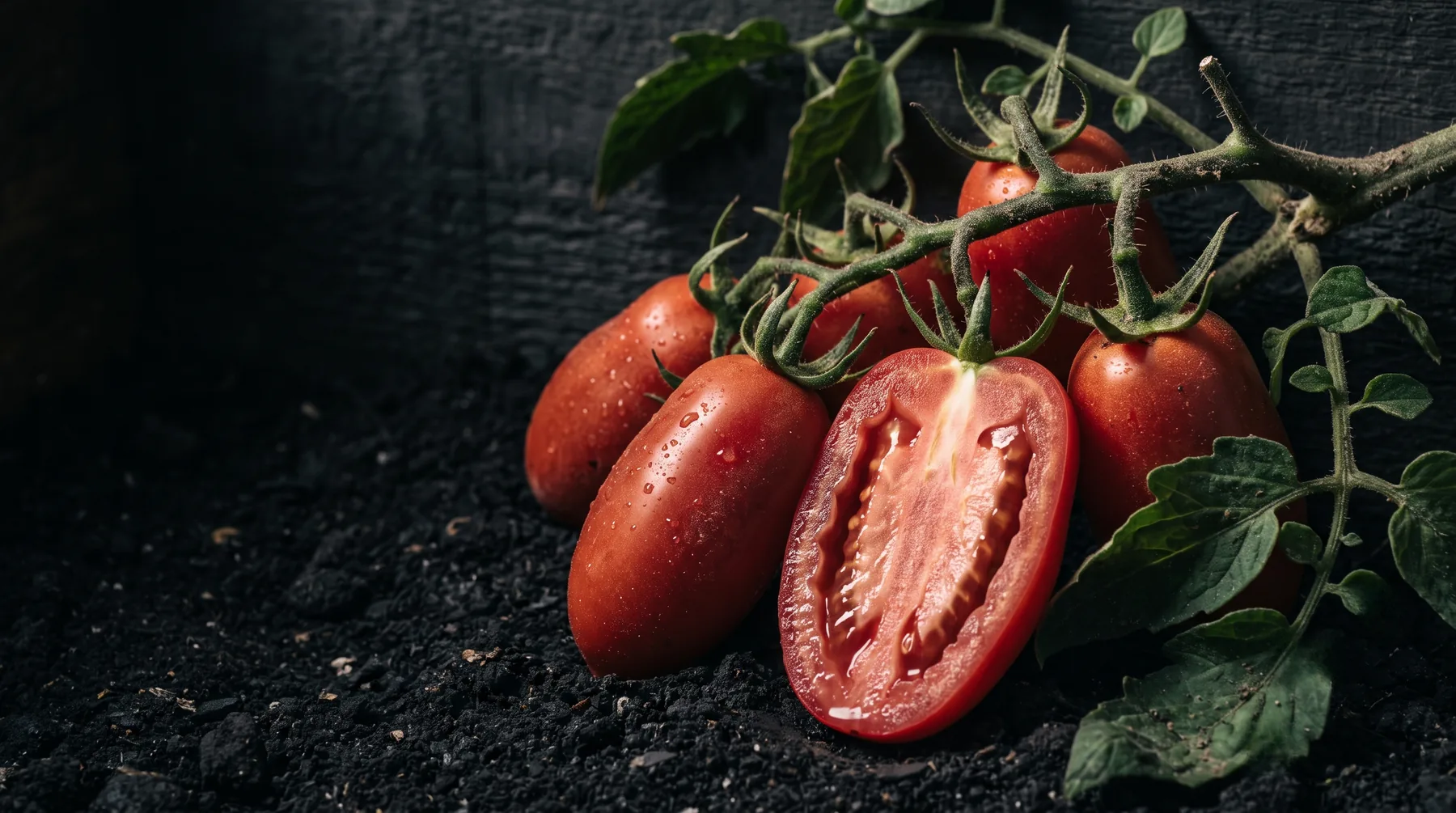
Grow file · San Marzano (indeterminate paste)
San Marzano Tomato
Solanum lycopersicum
The paste tomato Italian canners actually use — low water, low seed, high pectin. It reduces to sauce in half the time a slicer takes and never tastes thin.
| Days to maturity | 80 days from transplant |
|---|---|
| Days to germinate | 5–10 days at 78 °F |
| Germination soil temp | 75–85 °F |
| Start indoors | 6 weeks before last frost |
| Transplant | 1 weeks after last frost |
| Spacing | 24″ between plants |
| Sun | 8+ hours direct |
| Container size | 10 gal minimum per plant |
| Realistic yield | 12 lb per healthy plant, per season |
Your dates, by zone
Built from each zone's average last frost and this cultivar's 80-day maturity. Zone averages are not your garden — look up your city's NOAA frost dates or enter your ZIP in the builder to shift every row.
| Zone | Sow indoors | Transplant | First pick |
|---|---|---|---|
| Zone 3 | Apr 3 | May 22 | Aug 10 |
| Zone 4 | Mar 31 | May 19 | Aug 7 |
| Zone 5 | Mar 19 | May 7 | Jul 26 |
| Zone 6 | Mar 10 | Apr 28 | Jul 17 |
| Zone 7 | Feb 20 | Apr 10 | Jun 29 |
| Zone 8 | Feb 14 | Apr 4 | Jun 23 |
| Zone 9 | Jan 17 | Mar 7 | May 26 |
| Zone 10 | Dec 20 | Feb 7 | Apr 28 |
| Zone 11+ | Dec 4 | Jan 22 | Apr 12 |
Tight means first pick lands within two weeks of that zone's average first fall frost. It is doable, with zero slack in the indoor start.
Harvest visual
Ready when you see this
Harvest when the elongated fruit is fully red, glossy, and just soft enough to yield to a fingertip. Split fruit is still usable for sauce if processed the same day; moldy or leaking fruit is not.
Paste is not a marketing word
A beefsteak is roughly 94% water and full of seed gel. Boil it down for a sauce and you spend three hours evaporating water and end up with something acidic and thin. A San Marzano has thick pericarp walls, a small seed cavity and noticeably more pectin. It reduces in half the time and the result has body.
That is the entire reason to grow one. You cannot buy this quality of paste tomato fresh in most of the United States, because paste tomatoes ship and display poorly and supermarkets do not stock them.
Indeterminate means commit to support
San Marzano is indeterminate: it grows and sets fruit continuously until frost kills it, routinely reaching 6–8 feet. That is what you want for a multi-batch season — but it means real support from day one.
- 58-inch square cages minimum, installed at transplant. A conical wire ring will collapse by July.
- Or a Florida weave with posts and trellis netting for a row, which is cheaper and gives better airflow.
- Prune suckers below the first flower cluster. Above it, opinions differ and it matters less than airflow does.
Container growing
Ten gallons per plant is the honest minimum, and a 10-gallon fabric bag in July will need water every single day. Containers are where blossom end rot lives, and the cure is a drip timer, not a calcium product.
Harvest
Roughly 12 lb per plant across a season for an indeterminate in good conditions — which is why a single 12-lb marinara batch is one plant’s whole year, and two plants is the honest number to grow for it.
Pick fully red and slightly soft. For sauce, do not peel: run everything through a food mill and let it separate skins and seeds. That single decision removes blanching, ice baths and an hour of peeling from sauce day.
How this crop actually fails
Named, specific, and in the order you're most likely to meet them.
Black leathery patch on the bottom of every fruit in the first flush
Cause Blossom end rot. Calcium cannot reach the fruit fast enough when soil moisture swings, regardless of how much calcium the soil holds.
Fix Mulch heavily and put watering on a timer. The first flush is often lost and later fruit is clean once moisture stabilises — that alone tells you it was transport, not deficiency.
Yellow leaves with dark concentric-ringed spots, working up from the bottom
Cause Early blight (Alternaria). Splashing soil onto low leaves in humid weather.
Fix Mulch to stop the splash, remove the lowest 12 inches of foliage, water at the root, and use a copper protectant BEFORE symptoms in a wet season.
A branch is stripped bare overnight
Cause Tomato hornworm. A single caterpillar can defoliate a branch in a night and it is invisible against the stem.
Fix Find them at dusk with a UV torch — they fluoresce. Bt (Thuricide) if there are many. Insect netting from transplant prevents the moth laying at all.
Fruit splits across the shoulders after rain
Cause A dry spell followed by heavy water. The interior swells faster than the skin can grow.
Fix Consistent moisture again. Split fruit is still usable for sauce if processed the same day.
What san marzano tomato needs
San Marzano Tomato SeedMust have
The paste tomato Italian canners actually use. Low seed cavity, low water, high pectin: it reduces to a sauce in half the time a slicer takes and never tastes thin.
Organic Seed Starter Potting MixMust have
Seed-starting mix is not potting soil with a nicer label — it is finer, lighter, and low in nutrients on purpose, because a seedling's first roots want air and moisture, not fertiliser.
Seedling Heat Mat + Digital ThermostatMust have
Peppers germinate on soil temperature, not air temperature. At 65 °F a habanero takes a month and half of them rot; at 85 °F it is up in eight days. The thermostat is the half that matters.
T8 Full-Spectrum Grow Lights, 1 ft 4-packMust have
A south window in March delivers a fraction of the light a pepper seedling needs, and the plant tells you by stretching. Two inches of LED above the canopy for 16 hours a day fixes it permanently.
72-Cell Trays with 1020 Bottoms, 5-PackMust have
The cheap black nursery trays crack after one season and flex enough to break roots when you lift them. These do not. Over five seasons the price per use is lower than the throwaways.
5-Gallon Fabric Grow Bags, 5-Pack
Fabric pots air-prune roots and drain faster than a plastic pot can, which is the entire reason container tomatoes fail. Five gallons is the honest minimum for a pepper; a tomato wants ten.
Ocean Forest Potting SoilMust have
Pre-charged with enough nutrition to carry a transplant for its first month without feeding, which is exactly the window when most container plants stall.
Organic Tomato-Tone 3-4-6 with 8% CalciumMust have
The NPK ratio is the point: low nitrogen, higher potassium. Feed a tomato a high-nitrogen lawn fertiliser and you get a magnificent six-foot plant with four tomatoes on it.
Rot-Stop Blossom End Rot Concentrate
Blossom end rot is almost never a soil calcium shortage — it is a calcium *transport* failure caused by inconsistent water. A foliar calcium spray buys time while you fix the watering, which is the real cure.
58" Square Tomato Cages, 3-PackMust have
The conical wire tomato ring from the hardware store is 33 inches tall and an indeterminate San Marzano will laugh at it in July. Height and square geometry are what actually hold a loaded plant.
Drip Irrigation System with Timer, 16 Nozzles
Blossom end rot, split tomatoes and bitter fruit all trace back to the same thing: water that swings. A $50 timer removes the human from the loop and removes the swing.
Captain Jack Copper Fungicide, 16 oz
Early blight and septoria arrive with a wet July and work up the plant from the bottom. Copper is preventative — sprayed after you see it, you are already losing.
Thuricide BT Concentrate, 16 oz
Bacillus thuringiensis kills caterpillars and nothing else. For tomato hornworms — which can strip a plant in 48 hours — it is the most targeted tool that exists.
Stainless Steel Food Mill, 3 discsMust have
A blender pulverises tomato skins and seeds into the sauce, which is where bitterness comes from. A mill separates them out — no blanching, no peeling, no ice bath. It removes an entire hour from sauce day.
Paid links. We earn a commission from Amazon if you buy; you pay the same. Disclosure.
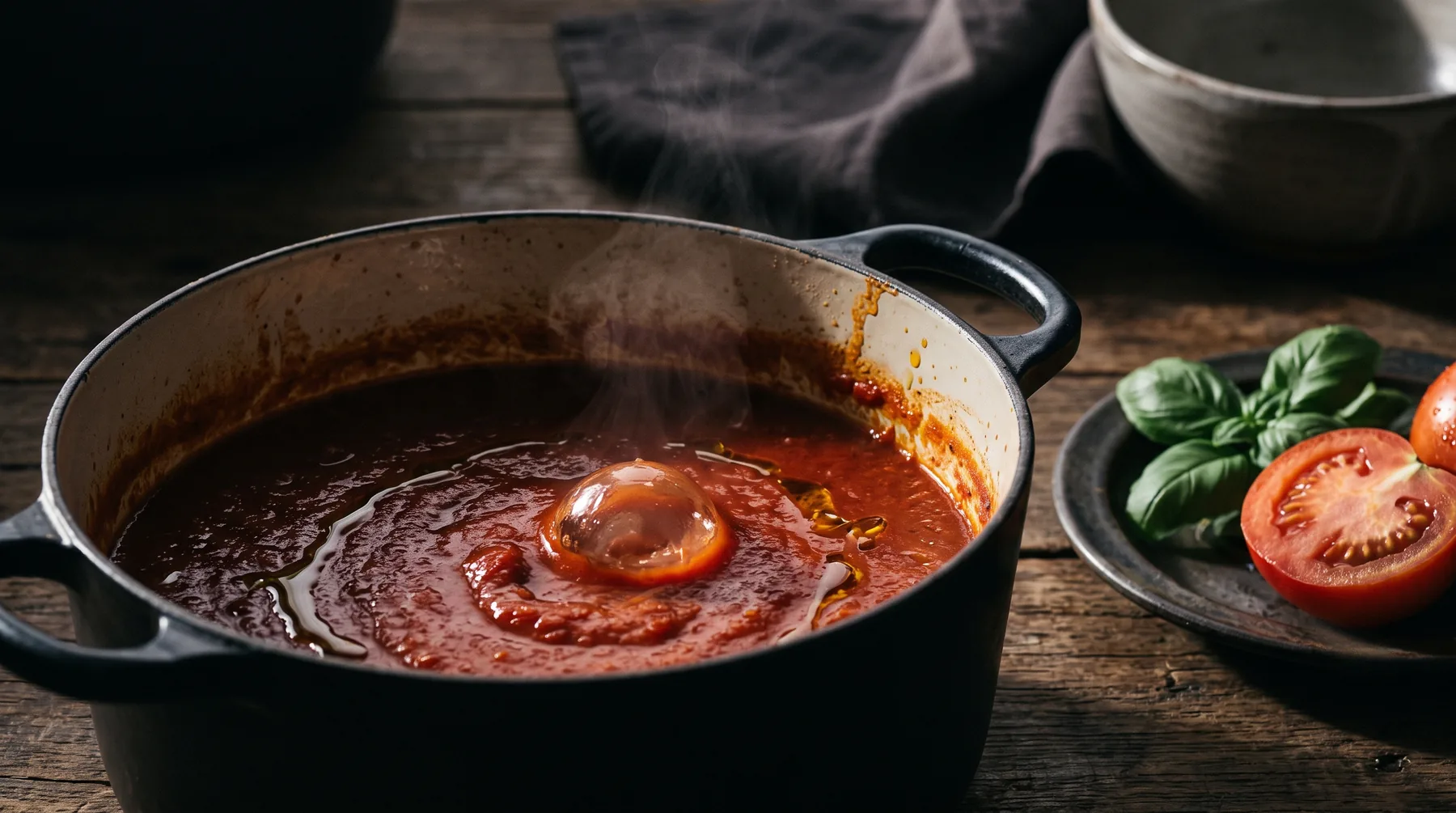
Sauces this plant is for
Last reviewed 2026-09-01. Numbers are cultivar-typical, not guarantees —tell us if yours ran different and we'll say so on the page.